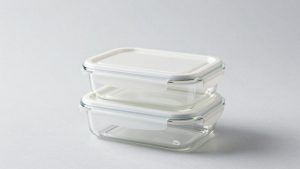
Choose a 1 quart glass container with lid by matching the seal and shape to the food you store most often. A 4-cup bowl with a press-on lid works for upright fridge storage. For soup in a bag, check for a leakproof claim on the exact model. If you pack a full measured quart, choose a larger dish with room below the lid.
What to check on a 1 quart glass container with lid
Start with the amount you need to store, then check the outside dimensions and how the lid closes. A nominal quart can suit three cups of leftovers with space to spare, while four measured cups plus toppings or room to stir can call for a larger dish. Decide which of those jobs you need it to do.
| If you usually store | Start with | Check before buying |
|---|---|---|
| Leftover rice, vegetables, or a side dish | A wide bowl with a press-on lid | Shelf depth and whether you can remove the lid comfortably |
| A lunch with several components | A wide, low rectangular container | Interior width and room for the tallest ingredient |
| Soup or dressing carried in a bag | A model explicitly rated leakproof | Whether the claim covers liquid transport and the exact lid included |
| Four measured cups of food | A dish with a rated capacity above one quart | The usable fill line and clearance under the lid |
| Dry pantry ingredients you pour | A narrow jar with a compatible screw lid | Opening size and room for a scoop or funnel |
How much fits in a 1 quart glass container with lid?
One U.S. liquid quart equals four U.S. cups or 32 U.S. fluid ounces. Search for all three labels when comparing containers. The listed capacity helps you compare sizes, but your usable capacity depends on the position of the lid, the shape of the food, and any room you need to leave for serving.
A wide bowl that comfortably holds three cups of rice can feel crowded with three cups of salad and a layer of toppings. A tall jar that holds a quart of dry ingredients might also be awkward if you want to scoop from the bottom with a measuring cup. For dense, pourable foods, the amount of clearance under the lid is often the deciding factor. For bulky foods, opening width and interior shape can matter as much as volume.
If you already have a similar container, pour in water from a measuring cup a little at a time. Compare the waterline with the underside of the lid and any marked fill line. Stop at the level where you would actually use the container, then record the total volume added. Use the result to see whether four cups is a good target for your next purchase. This measures your existing dish and tells you what to look for in the listing for the next one.
Which shape works best for your food?
Think about how the food will go in and how you will take it out. A round bowl suits spooning and stirring, a low rectangle gives flat foods more room to lie side by side, and a tall jar can work well for dry ingredients you pour. Compare dimensions with your actual portions before picking a shape.
For a lunch of roasted chicken, potatoes, and vegetables, a low rectangular dish makes it easier to arrange the ingredients in a single layer. A round bowl can be easier to use for oatmeal or leftovers you eat with a spoon. If you tend to store long items like asparagus or slices of cooked meat, compare the interior length at the base. A rim that measures wide enough may taper to a much smaller base.
Measure the outside width with the lid in place, including any tabs or handles. Measure shelf height with the dish closed and allow enough space to lift it out without sliding the lid against the shelf above. In a lunch bag, check the fit with your ice pack and any separate snack containers already inside. If the bag forces a bowl to sit diagonally, either choose a different shape or make seal performance a higher priority.
Choose the lid for storage or transport
A lid can make the container quick to use in the fridge, easier to carry, or simpler to clean. Look at how it attaches, what the manufacturer says it seals against, and whether you can buy an exact replacement. The lid you use every day matters more than an extra dish size you rarely take out.
When a press-on lid is enough
For upright storage of cooked grains, cut vegetables, or leftovers, a press-on lid is a sensible starting point. Check that it has a tab or edge you can grip and that you can close it all the way around without pressing hard on a single spot. Ease of opening matters when you reach for the dish often.
Anchor Hocking’s 4 Cup Round Food Storage with SnugFit lid, model 85907L20, illustrates this format. The manufacturer’s catalog pairs the round glass dish with a matching lid, and a U.S. food-service listing gives the dish a diameter of 6.25 inches and a height of 3 inches. Use those dimensions as a starting point for shelf planning and check the seller’s measurements for the complete closed container before ordering for a tight space.
A tab that releases gradually can be helpful if you have a firm grip on only one side of the bowl. In a store, try opening an empty display piece on a flat surface. If you shop online, inspect pictures of the underside and rim to see where the lid engages. When portioning foods at home, keep the rim clear so you can see and feel whether the lid is fully seated.
When a locking lid is worth the extra cost
Pay more for a locking design when your lunch includes liquids and the container may tip during a commute. Look for a leakproof statement for the exact dish and lid, then read the conditions attached to it. Tabs and a gasket show how a lid closes, while the stated use tells you what the seal is designed to handle.
Check whether the gasket can be removed for cleaning and whether the manufacturer sells a replacement. A removable gasket can make it easier to clean the channel after dressing or sauce gets underneath. It also adds a piece that needs to go back in the correct position. Follow the instructions for removing and reinstalling it so the lid seats properly.
For a model intended for liquid transport, check your particular unit at home using cool water before putting it into a bag. Close the lid as directed, wipe the outside dry, and briefly tip it over a sink. Check the edge and corners for droplets. A dry result helps verify that you assembled and closed the lid correctly on that attempt. Use the maker’s instructions to judge transport conditions, especially if you plan to carry hot food.
Match the container to your kitchen routine
Decide whether the same dish needs to move from the fridge to the microwave, oven, freezer, or dishwasher. Read the glass and lid instructions separately. If your routine uses only one or two of those appliances, shop for the compatibility you need and check any limits that apply to those specific uses.
Read the glass and lid care instructions separately
Look up the exact product’s care instructions before buying, especially if you plan to reheat food in the container. A listing may show a general appliance icon, while the manufacturer’s instructions specify whether to remove the lid, leave it ajar, or wash it on a particular dishwasher rack.
If you reheat lunches at work, look for a dish that fits the microwave and follow the manufacturer’s instructions for covering and venting it. If you want to use an oven, check the instructions for the glass vessel, including applicable temperature and preheating conditions. Check for restrictions on abrupt temperature changes before moving a dish between cold storage and a heated appliance.
If you freeze leftovers frequently, look for an explicit freezer rating for the relevant parts and follow the stated fill guidance. A soup portion you can fit in the dish for refrigerator use may need more room under the lid for freezing. When you routinely store measured batches, a larger container can make it easier to use the same portion size while leaving the clearance the manufacturer specifies.
Check stacking, washing, and lid storage
Measure both the space for filled dishes and the space for empty ones. A lid with tabs may take up more room than the glass body. A dish that nests neatly without its lid may sit differently when closed. If you plan to buy several, look for pictures showing the same size stacked both ways.
If you share the kitchen, consider how easily someone else can match each lid to its dish. A set of identical containers simplifies that task. A mixed set is useful when your portions vary and you already have a place for lids of several sizes. If lids will be stored in a drawer, check its depth and look for protrusions that make the lids catch when the drawer closes.
Consider what you usually wash. A simple press-on lid has fewer separate pieces to keep track of. A model with a detachable gasket may be worth the extra handling if you carry wet meals and can clean the channel easily. If you’re buying to replace a single dish, compare the rim profile and model number before counting on a lid you already own.
Where to spend more and where to save
Put your budget toward the feature you will use most often. For a dish that stays in the refrigerator, that may be a lid you can open with one hand while the bowl rests on the counter. For a weekly commuter lunch, a verified liquid seal and an available replacement gasket may justify the extra cost.
Compare sets by the number of complete dishes and lids in the size you need. A listing that calls a bundle a four-piece set may be counting two dishes and two lids. If the set includes assorted sizes, count only the dishes that match your intended job when judging the cost of solving it. If you will regularly use the other sizes, include that value separately in your decision.
If you already know you want identical containers for several lunches, look for a set that lists the per-dish capacity and includes one matching lid per dish. If you are still deciding between shapes or closures, buying one can let you check how it fits your shelf, bag, and washing routine before purchasing more. Compare the delivered total at checkout when weighing a single piece against a set.
Conclusion
For everyday leftovers, start with a 4-cup glass dish that fits your shelf and has a lid you can open easily. For meals that travel, prioritize a leakproof claim for the exact model and check the closed dimensions against your bag. Size up when you need room for a full quart of food plus space below the lid.
More from Amazon
Programs that pair well with the guide above. Offers and eligibility are set by Amazon and may change.
Set up recurring deliveries of everyday items on eligible products. Terms and savings are set by Amazon.
Explore Subscribe & SaveCollect the home and kitchen items you want in one registry that guests can shop from.
Create a wedding registryFree shipping on eligible items, Prime Video and more. Eligible new members can start with a free trial.
Start a Prime free trialAudiobooks and podcasts to listen to on the go. Eligible new members can start with a free trial.
Try Audible freeAs an Amazon Associate we earn from qualifying purchases.