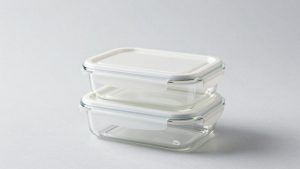
Choose 12 oz glass containers with lids for snacks, side dishes, and small leftovers that leave space below the lid. For dressing or soup in a lunch bag, look for a model explicitly rated leakproof. If you regularly pack a full 1½ cups plus toppings or need room to stir, buy a 2-cup container instead.
What fits in 12 oz glass containers with lids?
Twelve U.S. fluid ounces equal 1½ U.S. cups, or about 355 milliliters. Use that conversion to compare listings, then allow room for the underside of the lid and the food you pack. The same labeled capacity can feel quite different in a shallow dish and a narrow jar.
How to check the usable space in 12 oz glass containers with lids
Start with the portion you actually serve and decide whether the food needs room for a spoon, toppings, or a secure closure during travel. A small allowance is enough for some dry snacks, while a full scoop of yogurt with granola can make a nominal 12-ounce dish feel crowded.
For an existing dish, add a measured cup of water and check the clearance below the rim and the lowest part of the lid. Add water by the tablespoon until you reach the level you would comfortably use. Pour the water back into the measuring cup and record that amount. Compare it with your usual portion, including anything you add before closing the lid. This is a fit check for a dish you own. Use the manufacturer’s instructions to determine an appropriate fill level for freezing or transport.
The measurement also helps when you already own a dish advertised in cups and want to know whether buying a nominal 12-ounce set would change anything. If your current dish holds the same usable portion and fits the lunch bag, a better lid or a different footprint may solve the problem with less glass to store.
Food shape matters even when the measured serving stays the same. A cup of rice settles against the bottom, while apple wedges or broccoli florets can rise unevenly near the rim. Measure bulky food in the form you usually pack it. A bowl that fits a cup of chopped fruit may feel cramped when you pack the same fruit in large wedges.
When a 2-cup dish makes more sense
Move up to a 2-cup dish when your portion routinely reaches 1½ cups before you add toppings, sauce, or a second ingredient. The extra room makes it easier to mix at your desk or serve from the same dish, though the larger container may take up more space in a lunch bag.
For overnight oats, consider the finished serving and what you add in the morning. If oats and milk already fill most of a small jar, fruit or nuts can make it difficult to close, and the narrow opening may leave little space to mix. A wider 2-cup dish is a better fit when you eat directly from the container. If you add a small topping from a separate cup and eat the oats in layers, the smaller jar may be convenient.
Think in terms of the meal you carry. A 12-ounce bowl can serve as the side dish beside a sandwich or as a dedicated yogurt container. Two small bowls work well if you need to keep ingredients apart. When the entire meal gets mixed and reheated together, a single larger dish usually saves a lid and gives you more room to stir.
Match the closure to how you carry food
Start with where the container will spend most of its time. A press-on lid can be convenient for upright fridge storage, while a manufacturer-rated leakproof closure matters when liquids share a lunch bag with other items. Check that the claim applies to the exact dish and lid you plan to buy.
| Typical use | Look for | Trade-off to check |
|---|---|---|
| Cut fruit or cooked sides in the fridge | A wide opening and an easy-to-remove lid | A simple closure may be intended for upright storage only |
| Dressing or soup in a commute bag | A model explicitly rated leakproof | A gasket and latches add parts to clean and check |
| Overnight oats with toppings | A wide opening and room above the finished portion | Moving up a size increases the bag footprint |
| Dry toppings for several lunches | An easy-to-open dish with enough matching lids | A large set can leave extra dishes and lids to store |
| Frozen portions for later use | A freezer-rated dish with explicit fill guidance | Required headspace reduces usable volume |
What an airtight label tells you
Airtight and leakproof can appear in the same listing, so read the manufacturer’s description of how the closure is meant to be used. If the dish will carry a liquid beside a notebook or laptop, look for an explicit transport claim and check any conditions attached to it.
For a mostly upright container, think about what happens when the bag tips on the car floor or gets set on its side. A well-fitting lid makes a difference for a liquid lunch. For dry pretzels or a sandwich topping, you may care more about opening the dish easily and getting all the crumbs out of the rim.
Latches alone tell you how the lid closes. Check the gasket design, whether the rim is clean when the lid goes on, and whether every latch seats without force. A grain of rice caught along the rim is easy to miss. For a model intended to carry liquids, try room-temperature water over a sink before taking it out. Start upright, then tilt it briefly with the lid secured as directed. A dry towel around the outside can reveal a small drip. This checks the fit of your particular lid on that day. Continue following the manufacturer’s instructions after cleaning and as the closure wears.
When the gasket is worth maintaining
A removable gasket is useful when you regularly pack sauce, yogurt, or soup and want to clean the area beneath the seal. Check how the maker says to remove and reinstall it. A simpler lid may suit you better if the dishes stay in the refrigerator and mostly hold dry snacks.
Look for a groove you can reach with a soft sponge and enough space to dry the separate pieces. If the manufacturer allows gasket removal, follow its instructions and check the entire perimeter after reinstalling it. A twisted corner can change how a lid sits. For a household that rotates several similar dishes, matching lids by size or marking the outside can save time when you pack lunch.
One example close to the requested size is the OXO Good Grips Smart Seal 1.6-Cup Glass Rectangle Container. Its 1.6-cup label converts to 12.8 fluid ounces. OXO lists a removable silicone gasket, a locking lid rated leakproof, and dimensions of 6.25 by 4.35 by 2.55 inches. That combination gives you a concrete comparison if a near-size rectangle works and you plan to carry liquids. A full 12-ounce serving leaves just 0.8 fluid ounces of nominal capacity before accounting for how the lid sits. For mixing or toppings, go wider or larger as your portion requires.
Choose a shape that fits your storage and routine
Compare exterior dimensions with the lid on, especially if the containers need to sit in a shallow refrigerator drawer or lie flat in a lunch bag. When a listing gives only one set of dimensions, confirm how it was measured before buying a set for a tight space.
When a wide dish is easier to use
A low, wide dish makes it easier to scoop a side, stir yogurt, or reach the last bites of hummus. Measure the lid across its widest point, including tabs, because a base that fits neatly on a shelf can still have a lid that catches on the drawer frame or its neighbors.
Rectangular dishes are worth considering if you line several portions up on a shelf or in a drawer. A round bowl may be easier to scrape with a spoon, particularly for thick food that settles into corners. The practical choice depends on whether you spend more time arranging the containers or eating from them. If you regularly scoop straight from the dish, check the interior shape as closely as the exterior footprint.
For lunch bags, measure the base inside the bag, where the corners and padding narrow the available space. Include the ice pack, utensils, and anything else that usually sits next to the dish. If a rigid container fits only when placed diagonally, check whether that leaves enough room for the rest of the lunch and whether the bag still closes without pressing against a latch.
When a jar is a better fit
A jar works well for upright storage, layered oats, or a shelf where depth is limited and height is available. Check the opening against the spoon you use. A narrow mouth can make it harder to add bulky toppings, reach the bottom, and wash away food that dries below the shoulder.
If you prepare several jars on Sunday and carry one each morning, measure the shelf height with the lid on and the bag pocket where it will ride. A tall narrow jar can stand neatly beside a drink. A shallow dish may be easier to pack under a sandwich. For freezer or microwave use, verify that the specific jar and closure are approved for those tasks, even if a visually similar jar works elsewhere in your kitchen.
Stacking and nesting solve different problems. Stacking saves refrigerator space when the dishes are filled and closed. Nesting saves cabinet space after washing. If both matter, check photos or dimensions showing how the filled dishes sit on each other and how much height a stack of empty bases takes. For lidded storage in a shallow drawer, measure the complete stack as well as the footprint of a single dish.
Check the care instructions for the base and lid
A glass base and its lid can have different freezer, microwave, oven, and dishwasher instructions. Read both before paying extra for a dish you plan to use for reheating. The most useful specification is the one that covers your actual routine, including how you get from cold storage to the table.
What to verify before reheating
Look for microwave approval for the glass base and read the separate directions for the lid. The manufacturer may call for removing, venting, or loosening it during reheating. If you need oven use, confirm the approved oven type and any temperature or preheating requirements for the exact model.
Snapware’s Total Solution instructions illustrate the distinction. For its compatible plastic lids, the maker directs users to unlatch and offset the lid during microwave use, and it excludes those lids from conventional and convection ovens. Its Pyrex glass instructions also call for avoiding sudden temperature changes and setting hot glass on a dry cloth, potholder, or cooling rack. Apply the directions supplied with the specific dish you buy, especially if you own several products with similar-looking lids.
If lunch is heated at work, plan for where the lid will go and how you will carry the warm dish back to the table. A wide dish may leave room to stir without spilling over the edge. With a shallow portion of leftovers, the ability to stir comfortably can matter more in daily use than an oven rating you rarely use. Choose a size that fits your microwave and the dishwashing space available afterward.
How to plan for freezing and cleaning
For soup, sauce, or other liquids you intend to freeze, choose a freezer-rated model and follow its fill guidance. Leave the expansion space specified for the vessel. If a regular portion reaches that limit before the full serving is in the dish, buy a larger size for the freezer.
Set up a routine that you can maintain after a busy day. If the lid is top-rack-only, see how many lids can fit in the rack alongside your normal load. Check whether lids or removable gaskets need handwashing. Wide openings help when you wash by hand. A batch of eight small dishes can take up a surprising amount of space on a drying rack if each dish also has a lid and a loose seal.
Inspect the glass rim when you unload or nest the dishes. A smooth rim helps the lid sit evenly, and visible damage is a reason to consult the manufacturer’s guidance before reuse. The Snapware instructions for its Pyrex vessels direct users to stop using damaged glass when it is chipped, cracked, or severely scratched. Store compatible lids together so a close-looking lid from a different set is less likely to end up on the wrong dish.
Spend on the features you will use
Set your budget around the number of correctly sized dishes you will use in a normal week. An inexpensive mixed bundle can be poor value if most of the bases are too large or small for your portions. Compare the delivered cost per suitable dish, along with the cost of replacing a lid.
How to compare bundles at checkout
Read the contents list and count glass bases, matching lids, and bases in the capacity you need. A listing that says 12 pieces might include six bases and six lids, and a mixed set may contain just two dishes near 12 fluid ounces. Compare those two dishes against a dedicated set or singles.
Suppose a hypothetical eight-piece set costs $24 delivered, includes four bases and four lids, and only two bases fit your target portion. If the other two will sit in the cupboard, the useful cost is $12 per dish. A hypothetical pair of suitable singles at $10 each delivered would cost less for that job. If you also need the larger bases for dinner leftovers, the bundle might make more sense. Apply the same calculation to whichever tax and shipping amounts appear at checkout.
Count how many portions you prep at once and how many dishes are likely to be dirty when you need the next one. Three dishes may cover the week if you pack one snack and wash it each evening. If you assemble five lunches in advance and want the sides in separate containers, five identical dishes make portioning and lid matching simpler. If you only need one small serving bowl at work, start with a single that fits the bag.
Which upgrades justify the cost
Pay first for the feature that fixes a recurring problem. For dressing that travels, that may be a lid with a specific leakproof rating. For meal prep, it may be five matching dishes that stack neatly. For a container you already use often, replacement-lid availability can extend its useful life.
Before counting on spare lids, search by model or series, shape, and capacity. Even dishes with similar outer widths can have different rim profiles. Confirm whether the manufacturer lists the lid separately and whether it matches the exact base you intend to buy. If a replacement would cost almost as much as a complete dish, compare those options using actual delivered prices before ordering a larger bundle.
One easy way to narrow your purchase is to identify the task that fails with your current containers. If they close securely but do not fit the lunch bag, extra latches will not solve the footprint problem. If they fit the bag but leave no space to stir, buy more usable volume. For a cabinet already full of lids, a pair that shares an existing compatible closure may be more useful than a new assortment.
Conclusion
Buy a 12-fluid-ounce glass dish when your usual snack or side fits below the lid with room to spare. Choose a leakproof model for liquids that travel and check the care directions for both parts. If you pack a full 1½ cups and still need room to mix or add toppings, choose a wider 2-cup dish.
More from Amazon
Programs that pair well with the guide above. Offers and eligibility are set by Amazon and may change.
Set up recurring deliveries of everyday items on eligible products. Terms and savings are set by Amazon.
Explore Subscribe & SaveCollect the home and kitchen items you want in one registry that guests can shop from.
Create a wedding registryFree shipping on eligible items, Prime Video and more. Eligible new members can start with a free trial.
Start a Prime free trialAudiobooks and podcasts to listen to on the go. Eligible new members can start with a free trial.
Try Audible freeAs an Amazon Associate we earn from qualifying purchases.