Key takeaways
- One dish can store and reheat the meal. You can refrigerate leftovers, remove the lid, and reheat the food in the same container instead of transferring it to a baking dish.
- Better resistance to stains and odors. Glass is less likely than plastic to retain tomato sauce, curry, garlic, or other strong food smells.
- Useful for batch cooking. Oven-safe bases let you portion casseroles, roasted vegetables, baked pasta, and similar dishes directly into individual containers.
- Easy to inspect. Clear glass makes it simple to identify meals in the refrigerator or freezer without opening every container.
- Durable for daily storage. With reasonable handling, glass can stay clear and usable longer than plastic containers that become scratched or cloudy.
- Broad temperature range. Many sets are suitable for refrigerator and freezer storage as well as microwave reheating, giving you more flexibility than a single-purpose storage tub.
- Good for people avoiding heated plastic. If you prefer not to microwave food in plastic, a glass base offers a practical alternative. The lid still needs to be removed or vented according to the instructions.
The Short Answer
It depends: you need oven-safe glass meal prep containers only if you plan to heat or cook your meals in a conventional oven. If you will use the containers for refrigerator storage, cold lunches, or microwave reheating, regular microwave-safe glass may be enough.
The important condition is that the container itself must be specifically labeled oven-safe by the manufacturer. A glass container can look sturdy and still crack or shatter when exposed to high heat or a sudden temperature change. “Glass” does not automatically mean “safe for the oven,” and an oven-safe base does not make the plastic lid oven-safe.
Our top picks
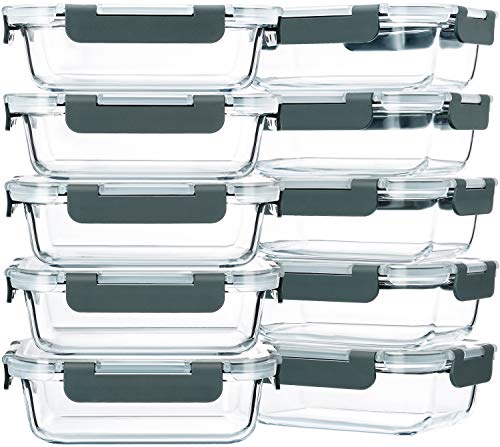
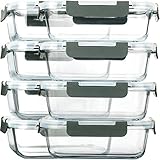
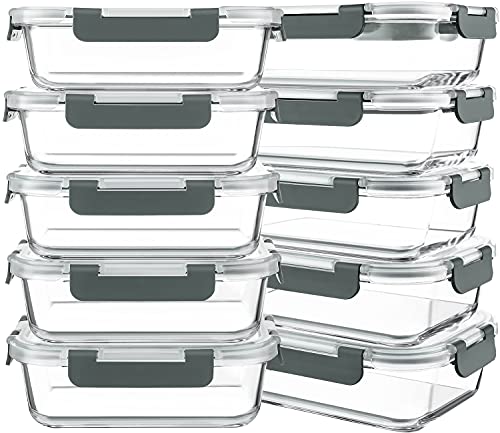 KOMUEE 10 Packs 30 oz Glass Meal
- Buying our versatile glass containers sets (10 plastic…
- Our glass meal prep containers are made of…
- Convenient to use and easy to take care…
As an Amazon Associate we earn from qualifying purchases at no extra cost to you. Ratings are shown as listed on Amazon.
What You Actually Get
Oven-safe glass meal prep containers are usually made from tempered soda-lime glass or, less commonly, borosilicate glass. They are designed to handle the heat of a conventional oven within a stated temperature limit. Many are also microwave-, refrigerator-, freezer-, and dishwasher-safe, but you should verify each claim on the packaging.
Most meal prep sets pair a glass base with a snap-on plastic lid. The glass base goes from the refrigerator to the microwave or oven, while the lid is removed before heating. Some lids include silicone seals and locking tabs to reduce leaks. Those features are helpful for commuting, but they do not change the lid’s heat limitations.
Capacity is one of the biggest practical differences. A 22-ounce container is generally suited to a single serving of pasta, rice with vegetables, salad, or a modest portion of leftovers. Its footprint is often around 7 by 5 inches, although exact dimensions vary by brand and shape. A 30-ounce container gives you more room for a larger entrée, layered meal, or entrée-plus-side combination; many are roughly 8 by 6 inches and 2 to 3 inches tall.
As a reference point, the M MCIRCO 10-pack of 22-ounce glass containers is listed at $35.99, or about $3.60 per container. The KOMUEE 10-pack of 30-ounce containers is listed at $46.79, or about $4.68 per container. Those prices are typical of entry-level to midrange sets, where you are paying for reusable glass bases, lids, and the convenience of having several matching portions.
Weight matters more than many shoppers expect. A glass container with a lid can weigh roughly 1 to 2 pounds depending on its size and construction, compared with only a few ounces for a plastic meal-prep tub. A 10-pack may take up considerable cabinet space and may be awkward to carry if you pack several meals at once.
Also check the oven instructions before buying. Some manufacturers allow use up to 400°F or 425°F, while others specify a different limit. The instructions may prohibit broiling, stovetop use, toaster-oven use, or placing the container directly on an oven rack. Never assume that an oven-safe container is safe under every heating method.
Pros
- One dish can store and reheat the meal. You can refrigerate leftovers, remove the lid, and reheat the food in the same container instead of transferring it to a baking dish.
- Better resistance to stains and odors. Glass is less likely than plastic to retain tomato sauce, curry, garlic, or other strong food smells.
- Useful for batch cooking. Oven-safe bases let you portion casseroles, roasted vegetables, baked pasta, and similar dishes directly into individual containers.
- Easy to inspect. Clear glass makes it simple to identify meals in the refrigerator or freezer without opening every container.
- Durable for daily storage. With reasonable handling, glass can stay clear and usable longer than plastic containers that become scratched or cloudy.
- Broad temperature range. Many sets are suitable for refrigerator and freezer storage as well as microwave reheating, giving you more flexibility than a single-purpose storage tub.
- Good for people avoiding heated plastic. If you prefer not to microwave food in plastic, a glass base offers a practical alternative. The lid still needs to be removed or vented according to the instructions.
Cons
- Breakage is the main risk. Dropping a glass container, knocking it against a sink, or exposing it to thermal shock can cause cracks or shattering.
- They are heavy. Carrying two or three full containers can add several pounds to a work bag. A 30-ounce glass container filled with food may be noticeably heavier than a comparable plastic one.
- Oven use requires planning. You usually need to remove the lid, allow frozen food to thaw, and avoid moving a cold container directly into a hot oven unless the manufacturer expressly permits it.
- Plastic lids are the weak point. Lids can warp, stain, crack, or lose their seal. They are generally not designed for oven use, and many should not be used in a microwave unless vented.
- They take up more storage space. Thick glass bases and rigid lids do not nest as compactly as flexible plastic bags or collapsible containers.
- Higher upfront cost. A 10-piece glass set commonly costs about $30 to $55, while a basic plastic set may cost $10 to $25.
- Not every meal benefits from oven reheating. Rice, vegetables, soup, and many leftovers reheat faster in a microwave. Buying oven-safe glass for meals you never bake can add cost and weight without much benefit.
Who Should Buy It
Buy oven-safe glass meal prep containers if you regularly make baked meals or want to reheat refrigerated food in a conventional oven. They are especially useful for casseroles, enchiladas, roasted chicken, baked oatmeal, lasagna, and meal portions that need gentle, even heating.
They also make sense if you cook several servings on the weekend and want to divide the food into ready-to-reheat portions. A 22-ounce size works well for moderate meals, while 30-ounce containers are better for larger appetites or meals with separate starch, protein, and vegetables.
Choose them if you value stain resistance and do not mind washing heavier dishes. A set such as the $35.99 M MCIRCO option may appeal to shoppers who want smaller portions at a lower per-container price. The $46.79 KOMUEE set offers more capacity, which can be worthwhile if 22 ounces feels cramped.
Who Should Skip It
Skip oven-safe glass if you mainly pack cold salads, sandwiches, snacks, or meals that you reheat in a microwave at work. In that case, lighter plastic containers may be more convenient and less expensive.
You may also prefer plastic if you commute by bicycle, carry several meals, have limited cabinet space, or are likely to drop containers. Glass is not automatically a better choice; it is a better fit for people who will use its heat tolerance and prefer its feel and longevity.
Cheaper Alternatives
| Option | Cost | Trade-off |
|---|---|---|
| Basic plastic meal prep set | $10–$25 | Lightweight and inexpensive, but more prone to staining, odors, scratches, and warping. |
| Single microwave-safe glass container | $5–$12 each | Lets you test whether glass suits your routine without buying a 10-pack; may not be oven-safe. |
| Reusable silicone food pouch | $8–$20 each | Light and space-saving, but less stable for saucy meals and usually unsuitable for conventional-oven meal prep. |
| Glass baking dish plus inexpensive storage tubs | $20–$45 total | Use the baking dish for oven cooking and plastic tubs for portions; requires transferring food after cooking. |
| Repurposed food jars | $0–$10 | Nearly free for cold storage, but shapes are awkward, capacities are limited, and oven safety is not guaranteed. |
FAQ
Can I put a glass meal prep container straight from the freezer into the oven?
Usually, no. A frozen container exposed to a hot oven can experience thermal shock and crack or shatter. Thaw the food and container according to the manufacturer’s instructions. Even if the glass is labeled oven-safe, that label may not cover freezer-to-oven transfers.
Can the plastic lid go in the oven?
Almost never. Remove the lid before placing the glass base in a conventional oven. If you need to cover the food, use an oven-safe cover or foil only if the manufacturer allows it. Do not assume that a silicone seal or vent makes a plastic lid oven-safe.
Are oven-safe glass containers safe in a microwave?
Often, yes, but check the product instructions. Remove or loosen the lid as directed, and avoid heating an empty container. Microwave ovens commonly range from about 700 to 1,200 watts, so dense or oily foods may heat quickly even when the glass itself remains stable. Use oven mitts because the container and food can become very hot.
What temperature should I look for?
Look for a clearly stated maximum temperature, often somewhere around 350°F to 425°F, along with warnings about broiling, stovetops, toaster ovens, and direct contact with heating elements. If the packaging only says “microwave-safe” or “heat-resistant,” treat the container as unsuitable for a conventional oven. When in doubt, use a dedicated baking dish instead.