Key takeaways
- Sealing the lid: Trapped steam creates pressure. Vent or remove the lid every time.
- Using damaged glass: Chips, cracks, and deep scratches can worsen during heating.
- Moving frozen glass directly into heat: Thaw in the refrigerator first whenever possible.
- Using metal: Remove foil, metal clips, metallic trim, and decorative accents.
- Overfilling: Leave 1 to 2 inches of headspace for liquid foods.
- Heating for too long: Short cycles prevent burned edges, boiling over, and unnecessary stress on the glass.
- Touching the container bare-handed: Glass can remain dangerously hot even when the lid looks cool.
- Rapidly cooling hot glass: Do not place it in cold water, on ice, or in the freezer immediately after microwaving.
- Assuming all lids are microwave-safe: Some are intended only for storage and may warp or release odors when heated.
Glass meal prep containers can make reheating leftovers simple, but using them carelessly can cause cracked glass, spilled food, burns, or a sudden breakage known as thermal shock. A container taken directly from a cold refrigerator or freezer and placed into a hot microwave may fail when its temperature changes too quickly. Sealed lids can also build pressure, while unevenly heated food may stay cold in the center and become dangerously hot around the edges.
The safest method is straightforward: confirm that the container is microwave-safe, remove or vent the lid, warm food in short intervals, stir when possible, and let the glass cool before washing it. Whether you use a compact 22-ounce container or a larger 30-ounce model, these steps apply in 2026 and help protect both your cookware and your hands.
As an Amazon Associate we earn from qualifying purchases at no extra cost to you. Product prices and availability are accurate as of the date shown and are subject to change.


What You Need
| Item | Why | Optional? |
|---|---|---|
| Microwave-safe glass meal prep container | Provides a stable vessel for reheating food. Common capacities range from 22 to 30 ounces, enough for an individual meal. | No |
| Microwave-safe lid or microwave cover | Reduces splatters while allowing steam to escape. A loose paper towel can work for short reheating cycles. | Yes |
| Oven mitts or a dry kitchen towel | Protects your hands from hot glass and steam. Dry fabric grips better than a damp towel. | No |
| Microwave-safe plate | Catches spills and provides a backup surface if the container becomes too hot to handle. | Yes |
| Food thermometer | Helps verify that meat, poultry, egg dishes, and leftovers are heated thoroughly rather than merely warm on top. | Yes |
| Stirring utensil | Moves colder food from the center to the edges so the meal heats more evenly. | Yes |
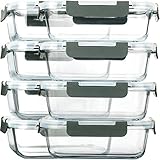
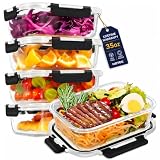
When shopping, look for clear microwave-use instructions from the manufacturer. For example, a 10-pack of 30-ounce KOMUEE glass meal prep containers may suit batch cooking, while a five-pack of 22-ounce Vtopmart glass storage containers is more compact for single portions. Reference prices are roughly $45 to $50 for the larger multipack and $20 to $30 for the smaller one, depending on the seller and current discounts. Capacity is not the same as microwave safety, so always check the product markings and instructions.
Step-by-Step
1. Check the container and food — about 1 minute
Inspect the glass before heating. Do not microwave a container with a chip, hairline crack, rough rim, or deep scratch, especially around the corners and base. Glass that appears sound at room temperature can still fail under heat if it has been damaged.
Confirm that the container is labeled microwave-safe. Do not assume that every glass food-storage dish is suitable. Remove any metal decorations, foil seals, twist ties, or metallic trim. Also check the food: thick sauces, frozen blocks, and dense dishes need slower heating than soup or rice with added moisture.
2. Bring very cold glass toward room temperature — 10 to 30 minutes
If the container is in the refrigerator, you can usually begin with a controlled, short heating cycle, provided the manufacturer allows it. If it is frozen, use extra caution. The safest approach is to thaw the food in the refrigerator first, generally overnight or for several hours, rather than putting a frozen glass container directly into a hot microwave.
Never move a container straight from a freezer into a preheated oven or onto a hot stovetop. Microwave heating is gentler than an oven, but a frozen dish can still experience damaging temperature differences. Do not use hot water to warm the glass quickly.
3. Loosen, remove, or vent the lid — 30 seconds
Never microwave a sealed container. Pressure from steam can force the lid off, spray hot food, or damage the container. Remove the lid completely when the instructions require it. If the lid is specifically labeled microwave-safe, loosen it or open its vent so steam can escape.
Keep plastic lids from touching hot food unless the manufacturer says they are designed for that use. If you are unsure, cover the glass with a microwave-safe plate, vented cover, or paper towel instead. A cover should sit loosely rather than forming an airtight seal.
4. Leave room for expansion — 30 seconds
Do not fill the container to the rim. Leave at least 1 inch of space above liquids, sauces, and foods likely to expand or bubble. For soup or very liquid meals, 1 to 2 inches is more practical. Stir thick food so it is distributed evenly, and add a tablespoon or two of water to dry rice, pasta, or vegetables if appropriate.
Place the container on a microwave-safe plate, centered on the turntable. The plate is especially useful if the meal bubbles over or if the glass becomes too hot to pick up safely.
5. Heat at moderate power — 1 to 3 minutes initially
Use the microwave’s normal high setting for a small, refrigerated portion, but start with 60 to 90 seconds rather than entering a long cooking time. For a dense 22- to 30-ounce meal, begin with 2 minutes at a typical 700- to 1,000-watt microwave. Exact timing varies with food volume, starting temperature, moisture, and appliance wattage.
For especially dense meals, use 50% to 70% power for 2 to 4 minutes, checking every 60 seconds. Lower power reduces the risk of scorching the edges while the center remains cold. Do not heat an empty container.
6. Pause, stir, and rotate — 30 to 60 seconds
When the first cycle ends, leave the door closed for about 30 seconds so heat can continue to spread. Then carefully remove the cover, watching for escaping steam. Stir from the center outward, or turn solid pieces over. Rotate the container if your microwave does not have a turntable.
Re-cover loosely and continue in 30- to 60-second intervals. Stirring is particularly important for rice, pasta, casseroles, ground meat, and meals with thick gravy. Avoid stirring if the food is too hot or splashing is likely; instead, use shorter cycles and let it stand longer.
7. Check the temperature and stand — 1 to 3 minutes
Use a food thermometer in the thickest part of the meal, avoiding the glass. Leftovers should reach 165°F when reheated for food safety. Check in more than one spot because microwaves can create hot and cold areas. If the food is not hot enough, continue in 30-second increments.
Let the uncovered or loosely covered meal stand for 1 to 3 minutes before eating. Use dry oven mitts to lift the container, and remember that the glass may be hotter than the food. Place it on a trivet or cool, dry surface—not directly on a wet countertop, cold stone, or sink.
Mistakes to Avoid
- Sealing the lid: Trapped steam creates pressure. Vent or remove the lid every time.
- Using damaged glass: Chips, cracks, and deep scratches can worsen during heating.
- Moving frozen glass directly into heat: Thaw in the refrigerator first whenever possible.
- Using metal: Remove foil, metal clips, metallic trim, and decorative accents.
- Overfilling: Leave 1 to 2 inches of headspace for liquid foods.
- Heating for too long: Short cycles prevent burned edges, boiling over, and unnecessary stress on the glass.
- Touching the container bare-handed: Glass can remain dangerously hot even when the lid looks cool.
- Rapidly cooling hot glass: Do not place it in cold water, on ice, or in the freezer immediately after microwaving.
- Assuming all lids are microwave-safe: Some are intended only for storage and may warp or release odors when heated.
How Often
You can microwave a suitable glass container whenever you need to reheat a meal, provided it remains undamaged and you follow the manufacturer’s care instructions. Inspect it briefly before each use, especially after it has been dropped, frozen, washed in a dishwasher, or used with acidic foods.
For routine meal prep, reheat only the portion you plan to eat. Repeatedly warming and cooling the same food can affect quality and may increase food-safety risks if it sits at room temperature. Refrigerate leftovers promptly and follow the storage time recommended for the specific food.
When to Call a Pro or Replace
There is generally no repair for cracked or chipped food-storage glass. Replace the container immediately if you see a crack, chip, starburst mark, cloudy stress line, sharp edge, or a lid that no longer vents or fits securely. Do not attempt to glue the glass or continue using it after a break.
You do not need a professional for an ordinary container problem. Contact the manufacturer or retailer if a new container breaks during normal, instructed use, or if the microwave-safety labeling is unclear. If your microwave sparks, smells of burning, repeatedly overheats food unevenly, or damages multiple microwave-safe items, stop using it and have the appliance inspected by a qualified technician.
FAQ
Can I microwave glass meal prep containers with the lid on?
Only if the lid is specifically labeled microwave-safe, and it must be loosened or vented. Never microwave a fully sealed container. When in doubt, remove the lid and use a loose microwave cover or paper towel.
Can a glass container go from the freezer to the microwave?
It is safer to thaw frozen food in the refrigerator first. A frozen container can experience thermal shock when heated quickly. Follow the container maker’s instructions, and never use a frozen glass dish in an oven unless it is explicitly rated for that purpose.
How long should I microwave a 30-ounce meal?
Start with about 2 minutes in a 700- to 1,000-watt microwave, then stir and continue in 30- to 60-second intervals. A dense or frozen meal may take 4 minutes or longer, while a small moist portion may need less. Use temperature and texture—not time alone—to judge doneness.
Why did my glass container crack in the microwave?
Common causes include an existing chip or scratch, rapid temperature change, uneven heating, an empty or nearly empty container, or a product not rated for microwave use. Stop using the container after any crack appears, even if it still holds food.