Key takeaways
- Better for reheating. Glass bases are generally microwave safe when the lid is removed or vented as directed. You can reheat food directly in the storage container instead of dirtying a separate bowl.
- Less staining and odor retention. Tomato sauce, curry, chili, and strongly seasoned foods are less likely to permanently discolor or scent glass than plastic.
- A more durable everyday surface. Quality glass does not become cloudy or scratched as readily as many inexpensive plastic containers. With careful handling, a set can remain useful for years.
- Good for hot food storage. Glass does not soften or flex around warm leftovers in the same way some thin plastic containers can. It also feels more stable when carrying saucy meals.
- Easy to inspect and clean. The transparent base lets you see what is inside, and smooth glass usually cleans well by hand or in a dishwasher.
- Useful for batch cooking. A 10-piece set can cover several lunches and dinners at once, reducing the need for mismatched containers.
- Fewer concerns about disposable-container habits. Reusable glass can replace single-use takeout tubs and worn-out plastic storage pieces, particularly for people who meal prep several times a week.
The Short Answer
Yes—glass meal prep containers are worth the extra weight if you reheat food often, store acidic meals, or want containers that can last for years. The one condition is that you are willing to carry roughly twice as much container weight and handle glass more carefully than plastic.
For many households, that trade-off is reasonable. A glass container typically feels sturdier, resists odors and stains, and can go from the refrigerator to the microwave without transferring the same “old leftovers” smell that plastic sometimes holds. But if you walk, bike, or commute with several meals every day, the added weight may become more annoying than the benefits are useful.
Our top picks


As an Amazon Associate we earn from qualifying purchases at no extra cost to you. Ratings are shown as listed on Amazon.
What You Actually Get
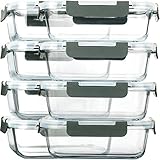
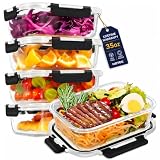
A typical glass meal prep set includes tempered glass bases, snap-on plastic lids, and a mix of small and medium containers. The products shoppers commonly compare in this category include 22-ounce single-compartment containers, such as the 10-pack Skroam set priced around $38.49, and larger 30-ounce two-compartment containers, such as the 10-pack KOMUEE set priced around $39.99.
Capacity matters more than the number of pieces in the box. A 22-ounce container is suitable for a modest lunch, a serving of pasta, a grain bowl, or leftovers with a side of vegetables. A 30-ounce divided container gives you more room for a full entrée and sides, but it also takes up more refrigerator and lunch-bag space.
Expect most individual glass bases to weigh approximately 1.2 to 2 pounds before adding the lid, depending on their size and construction. A packed lunch may therefore weigh 2 to 3 pounds—or more if you use multiple containers. By comparison, a similar plastic container may weigh only a few ounces.
Most glass meal prep bases are roughly 7 to 9 inches long, 5 to 7 inches wide, and 2 to 3 inches tall. Dimensions vary enough that you should measure your lunch bag, refrigerator shelf, and cabinet before buying a large set. “Stackable” does not always mean every container nests tightly when the lids are attached.
The glass itself is usually tempered for better resistance to ordinary temperature changes, but “oven safe” does not mean indestructible. A cold container can crack when placed directly into a very hot oven, under a broiler, or on a stovetop. Lids generally need to be removed before heating and are often not oven safe. Always follow the care instructions for the specific set.
Pros
- Better for reheating. Glass bases are generally microwave safe when the lid is removed or vented as directed. You can reheat food directly in the storage container instead of dirtying a separate bowl.
- Less staining and odor retention. Tomato sauce, curry, chili, and strongly seasoned foods are less likely to permanently discolor or scent glass than plastic.
- A more durable everyday surface. Quality glass does not become cloudy or scratched as readily as many inexpensive plastic containers. With careful handling, a set can remain useful for years.
- Good for hot food storage. Glass does not soften or flex around warm leftovers in the same way some thin plastic containers can. It also feels more stable when carrying saucy meals.
- Easy to inspect and clean. The transparent base lets you see what is inside, and smooth glass usually cleans well by hand or in a dishwasher.
- Useful for batch cooking. A 10-piece set can cover several lunches and dinners at once, reducing the need for mismatched containers.
- Fewer concerns about disposable-container habits. Reusable glass can replace single-use takeout tubs and worn-out plastic storage pieces, particularly for people who meal prep several times a week.
Cons
- The weight is real. A full set can add several pounds to a cabinet, and carrying two or three packed glass containers may be uncomfortable for commuters, students, or anyone who walks long distances.
- Breakage is possible. Tempered glass is stronger than ordinary glass, but it can still chip or shatter if dropped, knocked against a sink, or exposed to an extreme temperature change.
- Lids are often the weak point. Hinges, locking tabs, and silicone seals can wear out before the glass does. Replacement lids may be difficult to find, especially for budget sets.
- They take up more space. Glass bases do not compress, and thick rims can make stacking less efficient than stacking flexible plastic containers.
- They heat up. The base can become hot in the microwave, so you may need oven mitts or a towel when removing it. That is less convenient than lifting a room-temperature plastic container.
- They may cost more initially. A useful 10-piece glass set commonly costs about $35 to $60, while a basic plastic set may cost $10 to $30.
- Not every glass container is freezer- or oven-ready. A container may be microwave safe but unsuitable for the freezer, broiler, toaster oven, or sudden temperature changes. Product labels matter.
Who Should Buy It
Buy glass meal prep containers if you reheat lunch at work, cook acidic or strongly flavored foods, and usually drive to your destination. They are especially practical for people who prepare three to five meals at once and want one consistent set instead of a collection of takeout containers.
Glass also makes sense if you use a microwave frequently. A 22-ounce container works well for moderate portions, while a 30-ounce divided model is better for an entrée plus sides. Dividers can help separate wet and dry foods, though they do not always create a truly leakproof barrier between compartments.
Families may appreciate glass for refrigerator organization because contents are easy to see and containers can be washed repeatedly. If you have enough cabinet space and are comfortable lifting a heavier lunch bag, the higher upfront cost can be reasonable over time.
Who Should Skip It
Skip glass if you routinely carry meals in a backpack, ride a bike, travel by public transportation, or pack food for young children. A plastic container is more forgiving when dropped and much easier to carry in multiples.
Glass may also be a poor choice if you have limited cabinet space, frequently eat away from a microwave, or tend to leave containers in a car. A hot car can affect lids and seals, while a cold container moved directly into high heat can be damaged. People who lose lids regularly should also consider a cheaper container system with widely available replacements.
Cheaper Alternatives
| Option | Cost | Trade-off |
|---|---|---|
| Basic reusable plastic meal prep set | $10–$30 | Much lighter and less expensive, but more likely to stain, scratch, retain odors, or warp over time. |
| Premium BPA-free plastic set | $25–$55 | Better lids and durability than bargain plastic, but still offers less resistance to stains and odors than glass. |
| Single glass containers purchased as needed | $6–$15 each | Higher per-container cost, but you avoid buying ten pieces when you only need two or three. |
| Stainless-steel lunch containers | $15–$40 each | Durable and often lighter than glass, but usually not microwave safe and harder to inspect without opening. |
| Repurposed food jars or takeout containers | $0–$15 | Nearly free, but sizes, lids, durability, and microwave safety are inconsistent. |
The best value is not necessarily the lowest price. If you only need two work lunches per week, buying two dependable containers may be smarter than purchasing a 10-pack. If you batch-cook daily, a larger set can reduce washing and make portion planning easier.
FAQ
Are glass meal prep containers safer than plastic?
Glass is nonporous and does not absorb food color or odor as readily as many plastics. However, safety depends on using the container as directed. Do not microwave a sealed lid, place a cold container into a hot oven, or use a damaged base. If you prefer plastic, choose a reputable BPA-free product labeled for food storage and microwave use.
How much heavier are glass meal prep containers?
A medium glass base and lid often weigh about 1.2 to 2 pounds, while a comparable plastic container may weigh only 3 to 8 ounces. The exact difference depends on capacity, wall thickness, and lid design. For a packed three-container lunch, glass can add several pounds before you include a lunch bag, utensils, or a drink.
Can you put glass meal prep containers in the oven?
Some can, but you must confirm the manufacturer’s instructions. Remove plastic lids, avoid broiling unless expressly permitted, and do not move a container directly from the freezer into a hot oven. Set the container on a dry, room-temperature surface after heating, since a wet or cold counter can create thermal shock.
Is a 10-pack worth buying?
It is worth buying when you meal prep frequently, have storage space, and want matching portions. A 10-pack priced around $35 to $45 can be economical per container, but only if you will use most of the pieces. For occasional meal prep, two to four containers—glass or plastic—are usually the more sensible purchase.
Bottom line: glass is worth the extra weight for home cooks who value clean reheating, easy cleanup, and long-term reuse. For highly portable lunches or rough daily handling, lightweight plastic remains the more practical choice in 2026.