Key takeaways
- The listing says “microwave-safe” but never states an oven temperature rating.
- The product description calls the set “oven safe” without clarifying whether that applies to the base, lid, or both.
- Capacity is listed only as a maximum brimful volume, with no dimensions or usable portion guidance.
- The glass has chips, cloudy stress marks, sharp corners, or an uneven base.
- The lid gasket is permanently trapped in a narrow channel that cannot be cleaned.
- Clips feel loose, require excessive force, or do not close evenly on all sides.
- The set count includes lids, dividers, or accessories but does not clearly state the number of food containers.
- There is no information about thermal shock, dishwasher use, replacement lids, or warranty coverage.
What's inside
Oven-safe meal prep containers sound simple: choose a glass dish, add a lid, and put dinner in the oven when you are ready. In practice, many buyers choose the wrong size, assume the lid is oven-safe, or overlook the temperature limits that make a container vulnerable to thermal shock. A container can be labeled “oven safe” while its plastic lid must be removed, its maximum temperature applies only to the glass, or its shape leaves too little room for a complete meal.
The best choice depends on how you cook, store, reheat, and transport food. A person who batch-cooks casseroles needs a different format from someone who portions chicken, rice, and vegetables for five workday lunches. Use the following guide to compare capacity, materials, construction, comfort, and total cost before buying a set.
As an Amazon Associate we earn from qualifying purchases at no extra cost to you. Product prices and availability are accurate as of the date shown and are subject to change.


Decide These 3 Things First
1. How much food will each container hold? For most individual meals, 24 to 36 ounces is the useful range. Choose 14 to 20 ounces for snacks, sauces, or small sides; 40 to 했습니다? 50 ounces for family portions or leftovers. Remember that stated capacity is often measured to the rim. A container that holds 30 ounces at maximum may be more practical at 24 to 26 ounces when you leave room for a lid and prevent spills.
2. Will you cook, reheat, or only store in it? True oven use requires heat-resistant cookware, not merely a food-storage container that tolerates a microwave. Check the glass temperature rating, whether the lid must be removed, and whether the dish can move from refrigerator to a hot oven. If you mainly reheat food, microwave compatibility and venting may matter more than a high maximum oven temperature.
3. How often will the set travel? For desk lunches, look for locking clips, a flexible gasket, and a lid that stays attached securely. For home-only batch cooking, a simpler lid may cost less and stack more efficiently. Count the number of usable containers rather than the number of pieces in the box; a set with ten lids and only five dishes is not a ten-container set.
Size and Portion Capacity
Start with the dimensions of your refrigerator shelves, lunch bag, and oven rack. A 30-ounce rectangular container commonly measures roughly 7 to 8 inches long, 5 to 6 inches wide, and 2 to 3 inches high, though actual dimensions vary by brand. Measure the interior of your lunch carrier, especially if it has an insulated divider.
For balanced meal prep, 28 to 36 ounces is a versatile target. It accommodates a protein, grain, and vegetables without forcing food into a deep pile. Single-compartment designs are easiest to clean and provide more usable volume. Divided containers are convenient for keeping wet and dry foods apart, but each section may be too narrow for larger ingredients.
Consider the container’s footprint when stacking. Matching rectangular shapes waste less refrigerator space than a mixture of round and square dishes. A useful set may include four to six containers of 28 to 36 ounces plus two smaller 12- to 16-ounce containers for dressings or snacks. Check weight as well: a glass container can weigh 1.5 to 2.5 pounds when filled, which may be uncomfortable in a bag alongside a laptop.
Material: Glass, Plastic, or Stainless Steel
Borosilicate or tempered glass is popular because it resists stains and odors better than many plastics and can usually go from refrigerator to oven when the manufacturer permits it. It is also easy to inspect for cracks. Its drawbacks are weight and breakage risk. Do not assume every glass formula has the same thermal-shock resistance.
Plastic is lighter and less likely to shatter in a work bag. Look for food-contact labeling, a clearly stated microwave rating, and a temperature limit in degrees Fahrenheit. “BPA-free” addresses one chemical concern but does not automatically mean the container is oven-safe. Most plastic lids and many plastic bases must stay out of a conventional oven, even when they are microwave-safe.
Stainless steel is durable and light, but it is generally not microwave-compatible and may not be suitable for conventional ovens unless specifically rated. It works well for cold meals and transport but is less convenient for a routine cook-chill-reheat cycle.
For a glass container, look for a stated oven rating of at least 400°F if you bake or roast in it. Some products list ratings around 450°F or higher, but the exact number is less important than following the manufacturer’s instructions. Never put a cold dish directly into a fully heated oven unless the instructions specifically allow that transition.
Construction and Heat Safety
Construction determines whether a container is merely convenient or genuinely useful for oven meal prep. Favor thick, even walls and a stable base that does not rock on a flat surface. Rounded interior corners make it easier to scrape out rice, sauces, and roasted vegetables, while straight sides stack more neatly.
Inspect the rim closely. A smooth, chip-resistant rim creates a better seal and is more comfortable to wash. Avoid using any glass dish with a chip, hairline crack, or deep scratch. Thermal shock can occur when a hot container meets a cold countertop, cold water, or frozen food. Set hot cookware on a dry trivet or towel and allow it to cool before washing.
Lids deserve separate scrutiny. A four-sided locking lid with a silicone gasket is more reliable for soups and saucy meals than a loose press-on lid. However, removable gaskets can trap food residue if the channel is narrow. Confirm whether the lid is oven-safe; in many designs, the answer is no. Remove it completely before baking, and do not place a silicone seal or plastic clip near heating elements unless explicitly approved.
Comfort, Cleaning, and Everyday Performance
A good container should be easy to grip when full and simple to clean after a week of use. Look for side walls that leave enough room for fingers and lids with clips that do not require excessive force. Four locking tabs can improve leak resistance, but they also add parts that may break or collect grease.
Dishwasher compatibility is helpful, but check whether it applies to the lid, gasket, and base separately. High heat and repeated drying cycles can warp plastic lids. A lid that is 1/8 inch out of shape may no longer seal properly. Dishwasher-safe glass is usually less troublesome, though hand-washing can protect printed markings and reduce chips caused by contact with other dishes.
For microwave reheating, a vented lid or a lid that can be left slightly ajar helps release steam. Follow the stated wattage and time limits when provided. A 1,000- to 1,200-watt microwave heats food rapidly, so stir dense meals halfway through a two- to three-minute reheat. Never microwave a fully sealed container.
Price Tiers and Cost per Usable Container
Budget sets typically cost about $1 to $3 per container, or roughly $10 to $25 for eight to ten plastic pieces. They are light and inexpensive, but lids may be less durable and oven use may be unavailable.
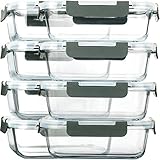
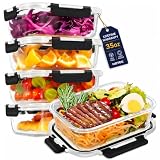
Midrange glass sets generally run about $5 to $9 per container, with common four- to six-piece sets priced around $25 to $45. The HOTEC 35-ounce, four-pack listed at $24.47 works out to about $6.12 per dish, while the PrepNaturals five-pack listed at $29.99 is about $6 per dish. These examples show why dividing the price by actual bases—not total lids and accessories—is useful.
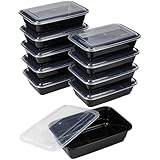
Larger or more specialized sets can cost about $45 to $80 or more. The HOMBERKING 10-pack listed at $29.41 is a low per-piece price, but check how the 36-ounce and 14-ounce sizes are divided before comparing it with a set of ten full-size containers. For a very low-cost option, the GoodCook 10-pack listed at $9.87 is about $0.99 per container, but verify whether the product is intended for oven use before purchasing.
Warranty and Replacement Parts
A warranty is most valuable for lids, clips, and manufacturing defects—not for damage caused by drops, overheating, or thermal shock. Look for a stated warranty period of at least 30 days, with one year being more reassuring for reusable meal-prep products. The policy should explain whether replacement lids or gaskets are available.
Replacement parts can extend the life of a set. Ask whether lids are sold separately and whether one lid fits multiple container sizes. A missing gasket should not force you to discard a perfectly good glass base. Keep the receipt and record the model or size information, since similar-looking dishes may not share compatible lids.
Delivery, Packaging, and Assembly
Glass containers need protective packaging. Inspect every base and lid when the order arrives, before washing or using the set. Look for chips along corners and rims, cracks beneath labels, warped lids, and gaskets that sit unevenly. Photograph damage immediately and keep the shipping box until the issue is resolved.
There is little assembly beyond inserting silicone gaskets or attaching clips, but that step matters. A gasket should lie flat in its channel without twisting. If a set includes removable clips, make sure each one moves freely and closes without excessive pressure. Delivery cost can change the value of a heavy glass set; compare the final price, including shipping, rather than the listed product price alone.
Spec Checklist
| Spec | Budget | Mid | Premium |
|---|---|---|---|
| Typical price | $10–$25 per set | $25–$45 per set | $45–$80+ |
| Useful meal capacity | 20–32 oz | 28–36 oz | 28–50 oz, often mixed sizes |
| Material | Plastic or basic glass | Tempered or heat-resistant glass | Thicker glass with refined fit and finish |
| Oven rating | May be unavailable; verify | About 400°F–450°F when stated | About 450°F or higher when stated |
| Lid features | Press-on or basic snap lid | Locking tabs and removable gasket | Secure seal, venting, replaceable parts |
| Weight per empty container | About 0.3–1 pound | About 1–1.75 pounds | About 1.5–2.5 pounds |
Red Flags
- The listing says “microwave-safe” but never states an oven temperature rating.
- The product description calls the set “oven safe” without clarifying whether that applies to the base, lid, or both.
- Capacity is listed only as a maximum brimful volume, with no dimensions or usable portion guidance.
- The glass has chips, cloudy stress marks, sharp corners, or an uneven base.
- The lid gasket is permanently trapped in a narrow channel that cannot be cleaned.
- Clips feel loose, require excessive force, or do not close evenly on all sides.
- The set count includes lids, dividers, or accessories but does not clearly state the number of food containers.
- There is no information about thermal shock, dishwasher use, replacement lids, or warranty coverage.
FAQ
Can I put a glass meal-prep container straight from the refrigerator into the oven?
Only if the manufacturer specifically approves that transition. Otherwise, let the container sit at room temperature, place it in a cool oven, or follow the product’s stated instructions. Avoid sudden temperature changes, which can crack even heat-resistant glass.
Are oven-safe lids included with meal-prep containers?
Usually not. Most plastic lids, clips, and silicone seals must be removed before conventional oven use. Treat the lid as oven-safe only when the manufacturer gives a clear temperature rating and instructions.
What size container is best for one meal?
A 28- to 36-ounce container suits most adult meal portions. Choose about 14 to 20 ounces for snacks or small sides and 40 ounces or more for large portions. Leave headspace for foods that expand and for secure lid placement.
Is glass better than plastic for meal prep?
Glass is usually better for oven cooking, stain resistance, and odor control. Plastic is lighter and less likely to break during transport. If you need one set for cooking and commuting, glass bases with carefully designed, removable plastic lids offer a practical compromise.