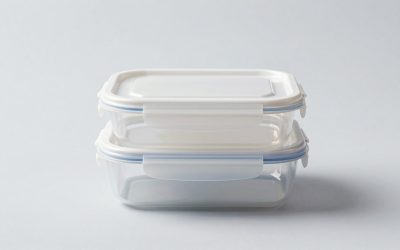
Our Top Picks
 VERONES 10 PACK Glass Meal Prep Containers Set8 inches (L) x 3 inches (H)8 x 6.5 x 3 inches5.4 poundsCheck on Amazon
 Liuruiyu 8 Pack Glass Food Storage Containers withMIX7.6 x 5.2 x 2.5 inches6.6 poundsCheck on Amazon
Pros & cons
- Mixed sizes support meal prep, leftovers, and packed lunches
- Transparent design makes it easy to identify contents
- Stackable shape helps maximize fridge and cabinet space
- Glass set weighs around 6.6 pounds altogether
- Only one transparent color option is offered
Best Glass Meal Prep Container Sets With Lids
The best glass meal prep container set with lids is usually a mixed-size borosilicate set with leak-resistant locking lids, at least 12 total containers, and roughly 15–25 cups of combined capacity; tempered glass can be the better value if you mainly refrigerate, microwave, and wash containers in a dishwasher.
Quick picks by meal-prep situation
| Situation | Best choice | What to prioritize | Typical 2026 market range |
|---|---|---|---|
| Daily lunches and dinners | Mixed 10–18-piece set | 2–4 cup entrée containers, dependable seals, stackable footprints | $35–$75 |
| Freezer-heavy batch cooking | Borosilicate set with straight-sided containers | Thermal-shock tolerance, expansion room, freezer-safe lids | $45–$100 |
| Small refrigerator or shared kitchen | Uniform rectangular set | Nesting, vertical stacking, matching footprints | $30–$70 |
| Lowest upfront cost | Tempered-glass set | Simple lids, replaceable components, useful size mix | $25–$55 |
| Meal prep for one or two people | Set totaling 16–22 cups | Several 1.5–2.5 cup pieces plus two small containers | $30–$80 |
Borosilicate versus tempered glass
Borosilicate glass contains boron compounds that reduce expansion when temperature changes. In practical terms, it is generally more resistant to thermal shock than ordinary soda-lime glass. That makes it attractive if you regularly move containers between refrigerator, freezer, and oven, although you still need to follow the manufacturer’s temperature and preheating instructions.
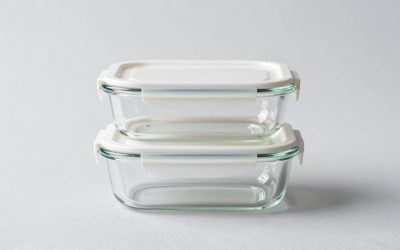
VERONES 10 PACK Glass Meal Prep Containers Set with Lids, Grey | Airtight & Stackable Glass Food Storage Containers Set with Lids, for Microwave, Oven, Freezer & Dishwasher Friendly
Chosen because it specifies Grey and for Microwave.
View on AmazonLiuruiyu 8 Pack Glass Food Storage Containers with Lids, Meal Prep Containers, Airtight Bento Boxes with Leak Proof Locking for Microwave, Oven, Freezer and Dishwasher, BPA Free
Chosen because it specifies Meal Prep Containers and Airtight Bento Boxes with Leak Proof Locking for Microwave.
View on Amazon
Skroam 10 Pack Glass Meal Prep Containers, 22 OZ Glass Airtight Food Storage Containers with Lids, Pantry Kitchen Storage Containers for Lunch, Food Storage, Meal Prep, Lunch Bento Boxes
Chosen because it specifies 22 OZ Glass Airtight Food Storage Containers with Lids and Pantry Kitchen Storage Containers for Lunch.
View on Amazon
VERONES 10 PACK 22 OZ Glass Meal Prep Containers Set with Lids, Grey | Airtight Glass Lunch Containers Set, Glass Food Storage Containers, for Microwave, Oven, Freezer & Dishwasher Friendly
Chosen because it specifies Grey and Airtight Glass Lunch Containers Set.
View on AmazonTempered glass is heat-treated soda-lime glass. It is usually less expensive and is well suited to refrigerated meals, microwave reheating, and ordinary dishwasher use. Its main ownership advantage is availability: replacement containers and compatible lids may be easier to find for established lines such as Pyrex, Anchor Hocking, and Glasslock.
Neither material is unbreakable. Tempered glass can shatter if a damaged container experiences a severe temperature change, while borosilicate can still crack from a hard impact, a sudden cold surface, or an existing chip. “Oven-safe” does not mean safe under a broiler, on a stovetop, or when heated empty.
Which glass should you buy?
- Choose borosilicate if oven-to-fridge convenience is central to your routine and the price difference is acceptable.
- Choose tempered glass if your normal path is refrigerator to microwave to dishwasher.
- Do not choose solely by glass type. A well-designed lid, useful dimensions, and readily available replacements often matter more over several years.
Container sizes that cover real meals
Set counts can be misleading because a “16-piece set” may mean eight glass bases and eight lids. Compare the number of containers, not just the headline piece count. A practical everyday assortment contains several capacities rather than many tiny snack cups.
| Nominal capacity | Approximate metric volume | Best use | Useful quantity in a set |
|---|---|---|---|
| 1 cup | 237 ml | Sauces, nuts, fruit, small breakfasts | 2–4 |
| 1.5–2 cups | 355–473 ml | Side dishes, yogurt, light lunches | 2–4 |
| 2.5–3 cups | 591–710 ml | Most single-serving lunches and dinners | 3–5 |
| 4–5 cups | 946 ml–1.18 L | Large salads, leftovers, batch portions | 1–3 |
For one person preparing five lunches, five containers in the 2.5–3 cup range are more useful than a set dominated by 1-cup pieces. A family may benefit from larger 4–5 cup containers for shared food, but those pieces consume substantial refrigerator shelf space.
Recommended set types and notable product lines
Best all-around: mixed rectangular borosilicate set
A mixed borosilicate set is the strongest choice for cooks who portion meals, reheat them, and occasionally bake in the same vessel. Look for rectangular containers with relatively straight sides, because they use shelf space efficiently and are easier to scrape clean than sharply rounded corners.
Pyrex’s FreshLock line and OXO’s glass food-storage collections are examples of established product families to investigate in this category. Verify the exact glass specification and oven instructions for the particular set, since product materials can vary between collections and regions.
Best value: tempered-glass locking set
Tempered-glass sets from brands such as Glasslock, Snapware, Pyrex, and Anchor Hocking can offer a lower entry price while covering normal meal-prep tasks well. Their locking lids often use two or four hinged tabs. Four-tab designs can provide more even pressure around the rim, but they also add hinges that may collect food residue or eventually loosen.
This category is a sensible choice when your containers will remain chilled or go into the microwave with the lid vented. It is less compelling if you routinely transfer a frozen container directly into a hot oven.
Best for compact storage: nesting, uniform-footprint set
Sets with several containers sharing two or three base widths are easier to organize than collections of unrelated shapes. The smallest containers nest inside larger ones, while filled containers stack without excessive overhang. IKEA 365+ food containers and comparable modular collections illustrate this space-saving approach, though buyers should check whether the glass, lid, and temperature ratings match their intended use.
Lid seals: the feature most likely to affect satisfaction
A glass base may last for years, but lids are usually the first component to show wear. Silicone gaskets can stretch, retain odors, discolor from tomato sauces, or fail to sit flat. Hinges and clips can weaken from repeated bending, and a lid that seals well when new may become merely splash-resistant over time.
For transport, prioritize a removable gasket and a lid with a visible sealing channel. A gasket that can be removed for washing is easier to clean thoroughly, but it must be reinstalled evenly. Four-sided locking lids are preferable for soups and sauces; simple snap-on lids may be sufficient for dry food or upright storage.
- Check whether replacement lids and gaskets are sold separately.
- Do not force a lid onto an overfilled container; pressure can deform the seal.
- Leave roughly 1–2 cm of headspace for liquid foods and more for foods that will freeze.
- Open one corner or use the vent when microwaving to release steam.
- Carry liquid meals upright even when the lid is advertised as leak-resistant.
Oven-to-fridge use without damaging the glass
Follow the instructions printed for the exact container. In general, remove plastic lids before oven use, avoid placing cold glass on a hot metal surface, and allow food and glass to cool before refrigeration. Never move a hot container directly onto a wet countertop or into cold water.
For freezer storage, do not fill a container to its rim. Water-based food expands as it freezes, and a rigid glass vessel leaves little room for that expansion. Straight-sided containers are also preferable because food is less likely to become wedged as it freezes.
How much total capacity do you need?
Capacity is more useful than piece count. Suppose your weekly plan includes five lunches of 3 cups each, two portions of cooked grains at 2 cups each, and three sauce portions of 1 cup each:
5 × 3 + 2 × 2 + 3 × 1 = 22 cups of food capacity.
You do not necessarily need a set rated for exactly 22 cups. Some meals may be eaten before the next cooking session, and a large container can hold multiple side portions. However, a set totaling only 10–12 cups will force you to reuse containers or store food in mismatched bowls. For this plan, a set with approximately 18–24 cups across 8–12 containers is a more workable target.
Ownership costs and durability
Glass bases are heavier than plastic, so a full lunch can add noticeable weight to a work bag. They are also less forgiving when dropped. The tradeoff is that glass does not absorb food odors as readily as many plastics and is less likely to become visibly scratched through normal use.
Before buying, inspect three long-term details: whether lids are dishwasher-safe, whether gaskets are replaceable, and whether individual containers can be purchased later. A $60 set that needs a complete replacement after one lost lid may cost more than a $45 set with inexpensive spare parts.
Wash gaskets separately, dry lids with the seal removed when the manufacturer permits it, and avoid abrasive cleaners on both glass and plastic. Replace any container with a chip, crack, or sharp edge. Small damage can worsen during heating or repeated washing.
Bottom line
For most households, the best glass meal prep container set with lids is a 10–12-container collection containing several 2.5–3 cup rectangles, two or more 1–2 cup pieces, and one or two larger containers. Choose borosilicate for frequent temperature changes, tempered glass for economical everyday storage, and judge the lids by their gasket design, locking pressure, cleanability, and replacement availability. A set that matches your weekly portions and refrigerator layout will outperform a larger set whose shapes and capacities do not fit your routine.
FAQ
How much total capacity do you need?
More from Amazon
Programs that pair well with the guide above. Offers and eligibility are set by Amazon and may change.
Set up recurring deliveries of everyday items on eligible products. Terms and savings are set by Amazon.
Explore Subscribe & SaveCollect the home and kitchen items you want in one registry that guests can shop from.
Create a wedding registryFree shipping on eligible items, Prime Video and more. Eligible new members can start with a free trial.
Start a Prime free trialAudiobooks and podcasts to listen to on the go. Eligible new members can start with a free trial.
Try Audible freeAs an Amazon Associate we earn from qualifying purchases.