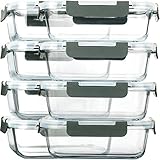
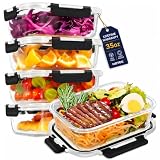
Key takeaways
- 20 to 24 oz: snacks, smaller cutting meals, breakfast, or a single-protein meal.
- 28 to 32 oz: the best all-around size for most bodybuilding meal prep.
- 38 to 40 oz: high-calorie lunches and larger post-training meals.
- 48 to 50 oz: serious bulk meals, double portions, or meals with bulky vegetables.
What's inside
The Short Answer
For most bodybuilders, a 32-ounce, 2-compartment container is the most useful everyday meal-prep size. It gives you enough room for a substantial protein serving and a carbohydrate or vegetable side without packing food so tightly that it becomes difficult to reheat or mix.
Choose a 28- to 32-ounce container for cutting, maintenance calories, and standard work lunches. Move up to 38 to 50 ounces if you are bulking, eat large post-workout meals, or regularly pack 7 to 10 ounces of cooked meat plus rice, potatoes, pasta, vegetables, and a sauce. A 3-compartment container is especially helpful when you want protein, carbs, and vegetables separated.
As an Amazon Associate we earn from qualifying purchases at no extra cost to you. Product prices and availability are accurate as of the date shown and are subject to change.

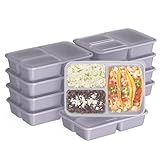


As a practical starting point, use these container capacities:
- 20 to 24 oz: snacks, smaller cutting meals, breakfast, or a single-protein meal.
- 28 to 32 oz: the best all-around size for most bodybuilding meal prep.
- 38 to 40 oz: high-calorie lunches and larger post-training meals.
- 48 to 50 oz: serious bulk meals, double portions, or meals with bulky vegetables.
Capacity matters more than the number of compartments. A divided container that holds 32 ounces total may have one 20-ounce main section and one 12-ounce side section; that works well for chicken and rice with vegetables, but not for a large two-part meal where both foods need equal space.
Standard Sizes
Meal-prep containers are usually sold by total volume, but their outside dimensions determine whether they fit your refrigerator shelf, lunch bag, microwave, and dishwasher. Dimensions vary slightly by brand and lid design, so always check the listed measurements before ordering. The ranges below reflect common reusable and disposable meal-prep container formats.
| Container size | Typical outside dimensions | Common compartment layout | Best for |
|---|---|---|---|
| 20–24 oz | 7.0–8.0 in L × 5.0–5.8 in W × 1.8–2.2 in H 17.8–20.3 cm × 12.7–14.7 cm × 4.6–5.6 cm |
1 or 2 compartments | Breakfast, snacks, cutting meals, 4–6 oz cooked protein portions |
| 28–32 oz | 8.0–9.0 in L × 5.5–6.5 in W × 2.0–2.5 in H 20.3–22.9 cm × 14.0–16.5 cm × 5.1–6.4 cm |
2 compartments; often about 2/3 main and 1/3 side | Standard bodybuilding lunches and dinners |
| 38–40 oz | 8.5–9.5 in L × 6.0–7.0 in W × 2.3–2.8 in H 21.6–24.1 cm × 15.2–17.8 cm × 5.8–7.1 cm |
1, 2, or 3 compartments | Bulking meals, large rice or potato servings, mixed meals |
| 48–50 oz | 9.0–10.5 in L × 6.5–7.5 in W × 2.5–3.2 in H 22.9–26.7 cm × 16.5–19.1 cm × 6.4–8.1 cm |
1 or 2 large compartments | High-calorie meals, double servings, meal replacement-sized portions |
A 32-ounce 2-compartment format is widely available in both reusable and disposable styles. For example, sets in this category may cost roughly $20 to $30 for five durable containers or about $18 to $25 for 50 disposable 32-ounce containers with lids. Basic 3-compartment sets are often around $12 to $20, while an insulated lunch-box system with containers can run approximately $40 to $55.
For portion planning, remember that food volume depends on density. A 32-ounce container does not mean it holds 32 ounces by food weight. As a rough packing guide, 6 ounces of cooked chicken breast, 1 to 1½ cups cooked rice, and 1 cup broccoli generally fit comfortably in a 28- to 32-ounce divided container. Meals built around pasta, roasted potatoes, salads, or high-volume vegetables usually need more space than meals based on denser foods.
How to Measure Your Space
- Measure the refrigerator shelf depth. Measure from the front edge of the usable shelf to the back wall, not to the refrigerator door. Leave at least 1 inch (2.5 cm) of clearance so containers do not press against the rear wall or block airflow.
- Measure shelf width and height. Record the clear width between side walls and the vertical space beneath the shelf above. A container that is 2.5 inches tall may become nearly 3 inches tall once its lid is snapped on.
- Plan for stacks. If you prep 10 meals, determine whether you will stack them two or three high. Three 2.5-inch containers require at least 7.5 inches (19.1 cm) of vertical clearance, plus a little room for lifting the top one out.
- Check your lunch bag interior. Measure the usable interior, including the space lost to insulation. A common lunch bag fits containers up to about 9 inches long and 6.5 inches wide, but thick zipper seams can reduce that space.
- Measure the microwave turntable. Round microwave plates are commonly 10.5 to 12.5 inches across. An 8- to 9-inch rectangular container normally fits, but handles, thick lids, or a narrow microwave door can be limiting factors.
- Account for ice packs. If you carry meals for several hours, reserve about 0.75 to 1 inch (1.9 to 2.5 cm) of bag space for a slim ice pack. A larger 40-ounce container may fit alone but leave no room for cooling.
By Room or Use Case
Home Refrigerator Meal Prep
For a weekly refrigerator setup, choose uniform 28- to 32-ounce containers with flat, stackable lids. Their typical 8- to 9-inch length makes them efficient on standard refrigerator shelves. Two-compartment versions simplify the usual bodybuilding formula: protein in the larger compartment and vegetables, rice, potatoes, or fruit in the smaller section.
If you prepare meals for two people or make more than 10 meals at a time, use a mix of sizes rather than buying every container in the largest format. Keep 32-ounce containers for main meals and add 20- to 24-ounce containers for overnight oats, yogurt bowls, pre-weighed fruit, cooked vegetables, or a smaller final meal of the day.
Office, Campus, or Jobsite Lunches
A 28- to 32-ounce container is usually the easiest size to carry and reheat away from home. Look for a secure lid and a footprint no larger than about 9 by 6.5 inches if it needs to share a lunch bag with utensils, a shake bottle, and an ice pack. A 3-compartment design is worthwhile if you dislike vegetables touching rice or want to keep a sauce separate until lunch.
For long shifts, pack two containers instead of one oversized 50-ounce box. Two 24- to 32-ounce meals are easier to refrigerate, fit more flexibly in a bag, and let you spread calories across the day.
Bulking and High-Calorie Meals
Bulking meals often need 38 to 50 ounces, particularly when they include 8 to 10 ounces of cooked meat, 2 cups of cooked rice or pasta, vegetables, and calorie-dense additions such as avocado, cheese, olive-oil dressing, or a sauce. A single-compartment container is often better for these meals because the food can be mixed and packed to the edges.
Use deeper containers, around 2.5 to 3.2 inches high, for saucy foods and large potato portions. Avoid overfilling: leave roughly 0.5 inch (1.3 cm) below the rim to reduce leaks and prevent food from pressing into the lid.
Cutting, Macro Tracking, and Food Separation
For cutting, 20- to 28-ounce containers can make portions easier to control. A 3-compartment container works well for meals such as 5 to 6 ounces of chicken, ¾ to 1 cup cooked rice, and a large vegetable serving. The compartments give a visual boundary, but weigh your food when precise macro tracking matters; compartment size is not a reliable substitute for a food scale.
Choose shallow containers for lean proteins and rice, but use a deeper 28- to 32-ounce option for salad-heavy meals. Leafy greens, cauliflower rice, zucchini, and roasted vegetables take up more physical room than their calorie count suggests.
Common Sizing Mistakes
- Buying by compartment count alone. A 3-compartment container can still be too small for a high-calorie meal. Check total ounces and the size of the main compartment.
- Confusing fluid ounces with food weight. Container capacity measures volume. Eight fluid ounces of space does not automatically hold 8 ounces of chicken, rice, or potatoes by weight.
- Using oversized containers for every meal. A 50-ounce container wastes refrigerator and bag space when your actual lunch is 28 ounces. Empty space can also let foods shift and sauces spread.
- Forgetting lid height. The listed base may fit a shelf, but the closed container may be taller than expected. Measure with the lid in place.
- Packing hot food immediately. Let cooked food cool briefly before sealing and refrigerating according to safe food-handling practices. Steam trapped under a lid can create excess condensation and soften food.
- Ignoring microwave clearance. Large containers may fit the turntable but strike the interior wall as it rotates. Check both width and diagonal clearance.
FAQ
Is a 32-ounce container big enough for bodybuilding meal prep?
Yes, for most people. A 32-ounce container generally suits a meal with 5 to 8 ounces of cooked protein, a moderate carb serving, and vegetables. If you are in a calorie surplus and regularly eat 2 cups of rice, pasta, or potatoes at one meal, choose 38 to 50 ounces instead.
Should bodybuilders use 2- or 3-compartment containers?
Choose 2 compartments for protein plus a main side, such as chicken with rice and vegetables combined. Choose 3 compartments when you want protein, carbs, and vegetables separated. For very large meals, a 1-compartment or 2-compartment container usually provides more usable room than a divided 3-compartment tray.
How many meal-prep containers should I buy?
For five weekday lunches, start with 10 containers: five main-meal containers and five smaller containers for breakfast, snacks, or a second meal. If you prep lunches and dinners for five days, 15 to 20 containers is more practical, especially if you do not want to wash containers daily.
What container size fits most insulated lunch bags?
Most medium insulated lunch bags handle one or two containers around 8 to 9 inches long, 5.5 to 6.5 inches wide, and up to 2.5 inches high. A 28- to 32-ounce rectangular container is the safest all-purpose choice. Measure the bag’s interior before choosing 40- or 50-ounce containers, especially if you also carry an ice pack and shaker bottle.