Key takeaways
- A large piece count without a clear breakdown of containers, lids, and accessories.
- No stated capacity, dimensions, material, or microwave instructions.
- A gasket that cannot be removed or cleaned around its entire perimeter.
- “Leakproof” language with no locking mechanism or testing instructions.
- Containers too tall for your lunch bag or too wide for your microwave turntable.
- Portion-control colors without actual cup measurements.
- Lids that are difficult to align, especially when you are packing several meals at once.
- No replacement lids, no warranty information, or vague care instructions.
What's inside
- Decide These 3 Things First
- Size and Portion Capacity
- Material: Plastic, Glass, or a Combination
- Construction and Leak Protection
- Comfort, Microwave Performance, and Cleaning
- Price Tiers and Cost per Usable Container
- Warranty and Long-Term Durability
- Delivery, Assembly, and Everyday Setup
- Spec Checklist
- Red Flags
- FAQ
Choosing meal prep containers for weight loss is less about finding the smallest box and more about creating portions you can repeat comfortably. The wrong set can encourage oversized servings, leak in your work bag, stain after a few uses, or make healthy food so inconvenient that you stop prepping.
- Decide These 3 Things First
- Size and Portion Capacity
- Material: Plastic, Glass, or a Combination
- Construction and Leak Protection
- Comfort, Microwave Performance, and Cleaning
- Price Tiers and Cost per Usable Container
- Warranty and Long-Term Durability
- Delivery, Assembly, and Everyday Setup
- Spec Checklist
- Red Flags
- FAQ
Common mistakes include buying containers based only on the number of pieces, choosing one large compartment for every meal, and assuming “portion control” labels guarantee appropriate serving sizes. Shoppers also overlook lid compatibility, freezer space, microwave instructions, and how many containers they actually need between grocery trips. A useful system should make balanced portions visible, easy to transport, and simple to clean.
As an Amazon Associate we earn from qualifying purchases at no extra cost to you. Product prices and availability are accurate as of the date shown and are subject to change.



This guide explains how to choose meal prep containers for weight loss in 2026, with practical size targets, material guidance, price expectations, and a checklist for comparing sets.
Decide These 3 Things First
- Define your meal pattern. Decide whether you are packing one meal per day, three meals, snacks, or a full week of food. Five containers may be enough for weekday lunches; a three-meal schedule generally requires 15 containers, or a combination of reusable containers and freezer storage.
- Choose your portion strategy. A two-compartment container works well for a main dish plus vegetables or fruit. Three compartments separate protein, carbohydrates, and produce. If you track calories, select containers with stated volume measurements rather than relying on colored lids alone.
- Set your storage and reheating limits. Measure your refrigerator shelf, freezer drawer, lunch bag, and microwave turntable before buying. A container that holds 3 cups may be practical for dinner but excessive for a lighter lunch. Confirm that the base, lid, and any divider are approved for the way you plan to use them.
Size and Portion Capacity
For weight loss, capacity should support a satisfying meal without making oversized portions automatic. A useful starting range is 1.5 to 2.5 cups for lunch, 2 to 3 cups for dinner, and 0.5 to 1 cup for snacks. Exact needs vary by person, meal composition, and dietary goals, so treat these as shopping benchmarks rather than prescriptions.
Compartmented containers are especially useful when one section is approximately 1 to 1.5 cups and smaller sections are about 0.5 to 1 cup. That arrangement can help you reserve space for vegetables without weighing every ingredient. A 2.85-cup, two-compartment Rubbermaid Brilliance example gives enough room for a substantial entrée and a side, while a three-compartment design can make separate portions easier to see.
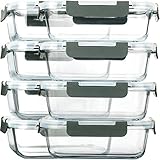
Check whether the advertised capacity includes the full container or only usable space below the lid. Also look at exterior dimensions. A container around 7 to 8 inches long, 5 to 6 inches wide, and 2 inches high may fit many lunch bags, but even a half-inch difference can affect stacking. Nested storage matters if cabinet space is limited: look for sets that reduce to roughly one-third of their assembled height.
Material: Plastic, Glass, or a Combination
Plastic is usually the most practical choice for work, school, and commuting because it is lightweight and less likely to break. Look for food-contact plastic identified as BPA-free, and follow the manufacturer’s instructions for microwaving, freezing, and dishwasher cleaning. “BPA-free” addresses one chemical, not every possible performance or safety question, so clear care instructions still matter.
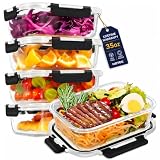
Glass resists food odors and staining better than many plastics and is useful for tomato sauces, curries, and meals that go from refrigerator to oven. Its disadvantages are weight and breakage. A glass container can add several pounds to a multi-meal load, while a plastic container may weigh only a few ounces. Do not place a cold glass container directly into a hot oven unless the manufacturer specifically approves that use.
Silicone is flexible and often helpful for collapsible storage, but it may be less rigid for stacking or carrying saucy meals. For most weight-loss meal prep, a BPA-free plastic set is the value choice; glass is worth considering if stain resistance and oven use are priorities. If PFAS-free construction is important to you, look for that claim on the specific product and verify what parts of the set it covers.
Construction and Leak Protection
A secure lid is more important than a clever color system. Look for a gasket, locking tabs, or another clearly described seal. Leak-resistant does not always mean leakproof, so test new containers at home with water before packing soup, dressing, or sauce. Turn them upside down over a sink for 30 seconds, then shake gently.
Rounded interior corners make food easier to scrape out and reduce residue around seams. Smooth, removable gaskets are preferable to permanently trapped seals because they can be washed and dried properly. Inspect the lid for thin hinge points, sharp plastic edges, and tabs that require excessive force.
Separate sauce cups or small inserts can prevent a salad from becoming soggy, but they take up room and add cleaning. Dividers are convenient for dry foods, although many are not truly leakproof from one compartment to another. If you pack meals with different textures, choose a design that lets you remove the divider or use separate compartments as needed.
Comfort, Microwave Performance, and Cleaning
The best container is one you will use repeatedly. For a daily lunch, aim for a container that is comfortable to carry when filled and fits inside your lunch bag without forcing the zipper. A full 2.5-cup meal with liquid can weigh well over a pound, so a lighter plastic base may be preferable for commuting.
Microwave instructions should specify whether the lid must be removed, vented, or placed loosely on top. Many people reheat meals at 700 to 1,100 watts, but wattage alone does not determine safe use. Start with short intervals, stir food when appropriate, and let steam escape. Never microwave a sealed container.
Dishwasher compatibility can save substantial time. Check whether only the base is dishwasher-safe or whether the lid and gasket are included. Place lightweight lids on the top rack if directed. Staining, odors, and warped lids are common reasons people abandon a set, so cleaning convenience is part of weight-loss adherence, not a minor detail.
Price Tiers and Cost per Usable Container
Budget sets generally cost about $10 to $20 for 10 to 20 pieces, though “pieces” may count lids, sauce cups, and dividers separately. For example, the 20-piece Bentgo Prep Meal Prep Containers listing is around $12.53, while the three-compartment version is around $14.99. These sets can be excellent for building a rotation, provided the usable base count and capacity suit you.
Midrange sets usually run about $20 to $40 for five to 10 containers. The five-pack Rubbermaid Brilliance two-compartment example is listed around $26.99, or roughly $5.40 per container. You may be paying for stronger seals, more consistent sizing, clearer labeling, and better stacking rather than simply more pieces.
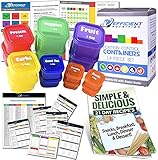
Specialty portion-control kits can cost about $10 to $30. The Efficient Nutrition DELUXE kit example is listed around $11.50 and emphasizes color coding, a guide, and planning materials. Those extras can be useful if you want a structured system, but calculate the price based on containers you will actually use. A bonus ebook does not compensate for tiny portions, awkward lids, or poor durability.
Premium glass or highly modular systems often start around $35 and can exceed $70. Compare total usable capacity, not the headline piece count. A 10-container set with five small sauce cups may offer less everyday value than five full-size containers.
Warranty and Long-Term Durability
Check the warranty before assuming a premium set will last indefinitely. A one-year limited warranty is common for consumer storage products; some brands offer longer coverage, but it may exclude staining, accidental damage, dishwasher misuse, or normal wear. Save the receipt and confirm whether replacement lids can be purchased separately.
Durability depends on the weakest component. A sturdy base is not useful if the lid tabs crack after a few months. Look for thick hinges, flexible but not flimsy tabs, and a gasket that can be removed without stretching. Replacement-lid availability may extend the useful life of a container and reduce the cost of replacing an entire set.
Delivery, Assembly, and Everyday Setup
Meal prep containers rarely require true assembly, but sets may include removable dividers, gaskets, clips, or sauce cups that must be fitted correctly. Before the return window closes, wash every part, check that lids seal, and stack the containers in your refrigerator and lunch bag.
For online orders, inspect the delivery packaging for cracked bases or warped lids. Count the pieces against the product description: a 20-piece set may contain 10 containers and 10 lids, not 20 containers. If you need five lunches, confirm that you are receiving at least five full-size bases.
Allow an extra 10 to 15 percent of refrigerator and cabinet space so the set is not packed tightly. This makes it easier to see prepared meals and reduces the temptation to skip them because everything is difficult to reach.
Spec Checklist
| Spec | Budget | Mid | Premium |
|---|---|---|---|
| Typical price | $10–$20 | $20–$40 | $35–$70+ |
| Useful meal capacity | 1.5–2.5 cups | 1.5–3 cups | 1.5–4 cups, often modular |
| Compartment layout | One or two | Two or three | Adjustable or multiple sizes |
| Material | BPA-free plastic | Thicker plastic or mixed materials | Glass, advanced plastic, or a combination |
| Seal | Snap lid | Gasket and locking tabs | Replaceable gasket and robust locking system |
| Cleaning | Top-rack dishwasher compatibility | Removable seals and dishwasher-safe parts | Fully specified dishwasher care and replacement parts |
Red Flags
- A large piece count without a clear breakdown of containers, lids, and accessories.
- No stated capacity, dimensions, material, or microwave instructions.
- A gasket that cannot be removed or cleaned around its entire perimeter.
- “Leakproof” language with no locking mechanism or testing instructions.
- Containers too tall for your lunch bag or too wide for your microwave turntable.
- Portion-control colors without actual cup measurements.
- Lids that are difficult to align, especially when you are packing several meals at once.
- No replacement lids, no warranty information, or vague care instructions.
FAQ
What size meal prep container is best for weight loss?
A 1.5- to 2.5-cup container is a practical starting range for many lunches, while 2 to 3 cups may suit larger dinners. Choose based on the meal and your nutrition plan rather than forcing every meal into one size.
Are three-compartment containers better than two-compartment containers?
Three compartments can make it easier to separate protein, starch, and vegetables, while two compartments provide more room for a single entrée and side. Neither is automatically better; select the layout that matches the meals you actually prepare.
Is plastic or glass better for meal prep?
Plastic is lighter and safer for commuting. Glass is better at resisting stains and odors and may support oven use when specifically approved. For most portable weight-loss meal prep, BPA-free plastic offers the best balance of convenience and price.
How many meal prep containers do I need?
For five weekday lunches, start with five full-size containers. Add five to 10 snack or side containers if you prep those separately. People preparing three meals per day may need 15 containers, but freezing part of the batch can reduce the number required.