Key takeaways
- Excellent stain and odor resistance: Glass is less likely than inexpensive plastic to turn orange after tomato sauce or retain the smell of chili, fish, or garlic. That makes it appealing for people who rotate strongly flavored meals.
- Reliable reheating: You can usually remove the lid and warm the glass base directly in the microwave. For typical leftovers, a moderate setting around 700 to 1,000 watts works well, but use shorter intervals and stir when possible. Always follow the manufacturer’s instructions and avoid heating a sealed container.
- Clear portion control: Two- and three-compartment layouts separate a main dish, side, fruit, or snack. A 32- to 36-ounce capacity is substantial enough for many lunches without requiring a second container.
- Sturdy, long-term value: Glass does not warp as easily as thin plastic when exposed to hot food. With reasonable handling, a set can remain useful for years, potentially reducing the need to replace cloudy, cracked plastic containers.
- Food-contact confidence: Glass is nonporous and does not absorb flavors. It is also free of the common concern that old plastic can become scratched, cloudy, or misshapen after repeated heating.
- Easy visual organization: Transparent bases let you see the meal immediately in the refrigerator. This can reduce forgotten leftovers and make weekly meal prep easier to manage.
- Versatile storage: The same container can move from refrigerator to microwave to dishwasher, provided the product is labeled for those uses. Some glass bases are also oven-safe without their lids, but that feature must be confirmed for the specific set.
The Short Answer
Yes—glass bento meal prep containers are a smart choice if you want durable, stain-resistant dishes for reheating and do not mind carrying more weight than plastic. Their divided layout makes portioning simple, but the best set is one with genuinely leak-resistant lids, useful compartment sizes, and containers that fit your microwave, refrigerator, and lunch bag.
What You Actually Get
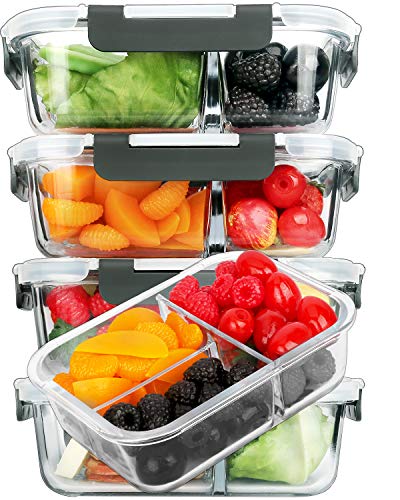
A glass bento meal prep set usually includes three- or four-compartment containers made from tempered or borosilicate glass, plus snap-on plastic lids. Common capacities range from 28 to 36 ounces, with three-compartment models often measuring roughly 8.5 to 10 inches long, 6.5 to 7.5 inches wide, and 2 to 2.5 inches high. Exact dimensions vary, so check them against your lunch bag before buying.
Our top picks

As an Amazon Associate we earn from qualifying purchases at no extra cost to you. Ratings are shown as listed on Amazon.
The glass base is designed for food storage, reheating, and sometimes oven use. The lid is a separate matter. Many lids include a silicone gasket and locking tabs, but the container is not automatically leakproof just because it has compartments. A divided tray may keep rice separate from vegetables, while thin sauces can still migrate through gaps around the dividers or under a loose seal.
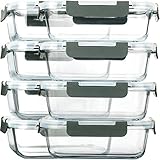
Weight is the biggest physical difference from plastic. A 30- to 36-ounce glass container commonly weighs about 1.5 to 2.5 pounds with its lid, compared with a fraction of that for a plastic container. A five-pack can therefore add significant bulk to a work bag, especially when filled. Sets such as the M MCIRCO five-pack of 36-ounce, three-compartment containers sell for about $29.99, while a four-pack of 32-ounce, two- and three-compartment containers may cost about $27.99. Prices can change with color, promotions, and retailer.
Expect a practical, reusable system rather than a perfectly sealed bento box. Glass bases are generally easy to wash and do not hold onto curry, tomato, or garlic odors as readily as many plastics. Lids may require more care because their gaskets and vents can trap food residue.
Pros
- Excellent stain and odor resistance: Glass is less likely than inexpensive plastic to turn orange after tomato sauce or retain the smell of chili, fish, or garlic. That makes it appealing for people who rotate strongly flavored meals.
- Reliable reheating: You can usually remove the lid and warm the glass base directly in the microwave. For typical leftovers, a moderate setting around 700 to 1,000 watts works well, but use shorter intervals and stir when possible. Always follow the manufacturer’s instructions and avoid heating a sealed container.
- Clear portion control: Two- and three-compartment layouts separate a main dish, side, fruit, or snack. A 32- to 36-ounce capacity is substantial enough for many lunches without requiring a second container.
- Sturdy, long-term value: Glass does not warp as easily as thin plastic when exposed to hot food. With reasonable handling, a set can remain useful for years, potentially reducing the need to replace cloudy, cracked plastic containers.
- Food-contact confidence: Glass is nonporous and does not absorb flavors. It is also free of the common concern that old plastic can become scratched, cloudy, or misshapen after repeated heating.
- Easy visual organization: Transparent bases let you see the meal immediately in the refrigerator. This can reduce forgotten leftovers and make weekly meal prep easier to manage.
- Versatile storage: The same container can move from refrigerator to microwave to dishwasher, provided the product is labeled for those uses. Some glass bases are also oven-safe without their lids, but that feature must be confirmed for the specific set.
Cons
- They are heavy: A filled 32-ounce container can be noticeably cumbersome, and carrying two or three to work may add several pounds. Glass is less convenient for cycling, commuting on foot, or packing into a child’s backpack.
- Breakage remains possible: Tempered glass is durable, not indestructible. A drop onto tile, a hard impact against a sink, or sudden thermal shock can cause chips or cracks. Do not use a base with a damaged rim.
- Lids are the weak point: Plastic tabs can loosen, crack, or stop closing securely. Silicone gaskets can collect crumbs and grease. Even a lid advertised as leakproof may perform poorly if the container is overfilled or stored on its side.
- Not every compartment handles liquids: Dividers are useful for dry foods, but soup, dressing, gravy, and very thin sauces are best carried separately unless the product specifically provides sealed individual compartments.
- They take up more cabinet space: Glass bases do not nest as efficiently as flexible plastic, particularly when each has a molded divider. Lids may need to be stored separately to prevent a crowded, unstable stack.
- Reheating requires extra attention: A cold glass container should not go straight into a very hot oven, and a hot container should not be placed on a wet or cold surface. Thermal shock is a real breakage risk. Never microwave a sealed lid or use a container with a metal component.
- Portions may not suit everyone: A 32- or 36-ounce container is generous for a light lunch. If you eat smaller meals, the large footprint may waste refrigerator room even when the food inside is modest.
Who Should Buy It
Buy glass bento containers if you meal prep at home several times a week, reheat leftovers often, and value easy cleaning over minimum weight. They are especially useful for adults packing substantial lunches, families dividing dinner leftovers, and anyone tired of stained plastic. They also suit people who want a single container for a main course and two sides, such as chicken with rice and vegetables, pasta with fruit, or a grain bowl with toppings.
Look for a capacity between 28 and 32 ounces if you want a balanced everyday lunch. Choose 36 ounces if you regularly pack larger meals. Prioritize a removable silicone gasket, four-sided locking tabs, rounded interior corners, and clear instructions for microwave, dishwasher, freezer, and oven use. Before ordering, measure your lunch bag: a container around 9 by 7 inches may fit poorly in a narrow vertical bag despite having a reasonable capacity.
Who Should Skip It
Skip glass bento containers if you need an ultra-light lunch kit, frequently eat outdoors, or tend to drop dishes. They are also a poor match for young children unless the container will be handled by an adult. If your meals contain soup, dressing, or other liquids every day, a container with fully sealed individual sections—or separate leakproof jars—will be more practical.
People with limited cabinet space may prefer stackable plastic or silicone containers. Likewise, if you regularly freeze meals, check the manufacturer’s freezer guidance rather than assuming every glass base is safe. Some designs tolerate freezing well, while others need empty space around the food to allow expansion.
Cheaper Alternatives
| Option | Cost | Trade-off |
|---|---|---|
| Basic plastic divided containers | $8–$18 for a four- to five-pack | Much lighter and often easier to replace, but more likely to stain, absorb odors, scratch, or warp with repeated heating. |
| Single-compartment plastic meal prep boxes | $10–$20 for a five-pack | Usually stack efficiently and cost less, but foods touch unless you add silicone cups or separate containers. |
| Reusable silicone containers | $15–$30 for a two- to four-pack | Lightweight, flexible, and useful for compact storage; they can be harder to clean and may hold onto odors or collapse in a crowded bag. |
| One glass base plus reusable silicone dividers | $12–$25 per setup | Offers glass for reheating and adjustable separation, but dividers may shift and usually do not create leakproof compartments. |
FAQ
Are glass bento meal prep containers leakproof?
Some are leak-resistant, but none should be treated as universally spillproof without checking the design. A silicone gasket and locking tabs improve the seal. Keep liquids in a sealed section, leave headspace, close the lid evenly, and transport the container upright whenever possible.
Can you microwave glass bento containers?
Usually, yes, with the lid removed or vented according to the instructions. Do not microwave a sealed container, and do not microwave lids containing metal or unapproved materials. Heat in short intervals, especially when the glass is cold, and inspect the base for damage before use.
Are glass containers better than plastic for meal prep?
They are better for stain resistance, odor control, durability against warping, and frequent reheating. Plastic is better for portability, impact resistance, and low cost. The right choice depends on whether a clean, sturdy container matters more to you than carrying the lightest possible lunch.
How long do glass bento containers last?
The glass base can last for many years if it avoids chips, cracks, and thermal shock. Lids and gaskets typically wear sooner. Replace any piece that no longer seals, has a damaged rim, or shows a crack; do not try to extend its life with tape or glue.