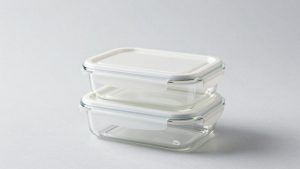
Choose 3 cup glass containers with lids for compact lunches and leftover portions that fit with room to close the lid. A shallow rectangle works well for sliced foods and grain bowls. If you carry soup or dressing, look for a leakproof rating on the exact model. For three full cups plus toppings, size up.
How to size 3 cup glass containers with lids
Three U.S. cups equal 24 fluid ounces by volume. Treat that number as a way to compare listings, then check how much food fits below the lid. The space you need depends on what you pack, whether you mix the food in the dish, and whether the lid projects into the opening.
A cup of rice and a cup of chopped vegetables leave more room to work with than a lunch that already measures three cups before you add a topping. Bulky food introduces a second constraint. A sandwich half or a piece of chicken might need more width or height even when the overall volume looks right.
| What you pack | What to check first | When to change sizes |
|---|---|---|
| Rice bowl or pasta lunch | Interior width and room to stir | Size up if the lid touches toppings |
| Sliced leftovers | Flat space inside the base | Choose a wider shape if pieces overlap |
| Soup or stew | Leakproof claim and usable fill level | Size up if the serving reaches the rim |
| Snack and side dishes | Space in the lunch bag | Size down if you routinely leave half the dish empty |
How can you estimate usable capacity before buying?
Portion a typical lunch into a dish you already own and note the space above it. Pay attention to where a fork needs to move and how tall the bulkiest ingredient is. Use that dish as a reference when you compare the capacity, depth, and interior shape of the model you plan to buy.
If the listing gives exterior dimensions only, treat them as a fit check for your bag or cabinet. Wall thickness, rounded corners, and a tapered base reduce the space available inside. When you need to lay food flat, ask for the inside base dimensions or compare the dish in person.
Pick a shape and lid for the way you pack
Measure the bag or shelf where the container will spend most of its time. A shallow rectangular dish gives food more room to spread out, while a deeper profile can suit a narrower space. Allow extra clearance for tabs, lid overhang, or an ice pack when you check the fit.
Pyrex lists the dishes in its Simply Store four-piece pink-lid set at approximately 7.25 by 5.5 by 1.75 inches, with three cups of capacity per dish. That gives you a concrete example of a wide, shallow format. Measure the opening of your lunch bag as well as the space inside it. A dish can fit the interior and still catch at the zipper.
When do leakproof 3 cup glass containers with lids matter?
A leakproof claim is worth looking for if you regularly carry a lunch with broth, dressing, or a thin sauce. Look for that claim on the listing or instructions for the exact glass base and lid. A snug fit can be enough for upright refrigerator storage and lunches with dry contents.
Locking tabs make it easy to see which sides you have closed. A gasket adds a surface you may need to clean, especially after packing an oily sauce. Check whether the manufacturer allows you to remove it, and whether a replacement is available. If you usually pack salad, a separate small leakproof cup for dressing may meet the need while letting you buy a simpler main dish.
What makes a lid easy to use every day?
Consider how often you open the container, how you wash dishes, and who needs to use it. Check for a lift tab on a press-on lid or enough space to grip the latches on a locking lid. If you pack multiple lunches at once, lids that interchange within the same model can save time.
If you already own a compatible dish, compare the cost of a replacement lid with the cost of a new set. Search by model or part number, because capacity alone gives you little information about rim shape. When shopping for a replacement, check that the listing actually includes the lid and that the pictured color or bundle matches the selected option.
Check care instructions for the base and lid
The glass base and the lid can have different care instructions. Check both before buying a dish for freezer storage, microwave reheating, or routine dishwasher use. Pay particular attention to how the manufacturer tells you to handle the lid and whether it specifies a dishwasher rack.
For example, Pyrex lists the glass base of its Simply Store 3-cup rectangle with plastic lid as microwave-, freezer-, and dishwasher-safe. It lists the lid as microwave- and freezer-safe and specifies the top rack for dishwashing. Consult the exact model’s use instructions for reheating and lid placement. If you plan to move food directly from the freezer to the microwave, check whether the manufacturer permits that transition.
How should you compare freezer and cabinet fit?
Check how many full containers fit on the shelf you use for meal prep and how the empty dishes store between batches. Measure the height of a closed stack separately from the height of nested bases. If you use a freezer bin, leave space to lift the dish out without tugging on the lid.
For liquid portions, follow the manufacturer’s instructions about leaving expansion room. A larger container may be a better fit when your target serving approaches the brim. If you often thaw only one portion, a stack of individually labeled containers can be easier to work with than one big dish.
Compare price per matching dish and lid
Count complete containers in your target size, then divide the total cost by that count. Include tax and shipping when you know them. A four-piece listing can mean two glass dishes and two lids, as it does for the Pyrex pink-lid set, while a mixed assortment may have fewer dishes in the size you need.
For example, a hypothetical $18 set with three matching containers costs $6 per container before tax and shipping. A hypothetical $22 mixed set with two 3-cup dishes costs $11 per dish if you assign no value to the other sizes. A mixed set can still be the better buy when you also need smaller dishes for sides or larger ones for batch leftovers.
Buy enough for the number of portions you store at the same time. If you pack three lunches ahead and wash the dishes before the next batch, three matching containers cover the usual cycle. If you also freeze portions, count those dishes separately so you can still pack lunch while part of the set is in the freezer.
Conclusion
Choose a shallow 3-cup dish when lunch needs room to spread out and the closed container fits your bag. Pay for a verified leakproof lid when you carry liquids, and size up when your usual portion crowds the rim. Compare sets by the number of complete dishes you will use in a typical week.
More from Amazon
Programs that pair well with the guide above. Offers and eligibility are set by Amazon and may change.
Set up recurring deliveries of everyday items on eligible products. Terms and savings are set by Amazon.
Explore Subscribe & SaveCollect the home and kitchen items you want in one registry that guests can shop from.
Create a wedding registryFree shipping on eligible items, Prime Video and more. Eligible new members can start with a free trial.
Start a Prime free trialAudiobooks and podcasts to listen to on the go. Eligible new members can start with a free trial.
Try Audible freeAs an Amazon Associate we earn from qualifying purchases.