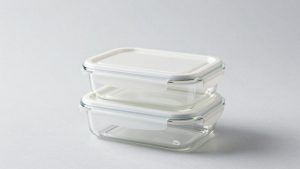
Choose 32 oz glass containers with lids for lunches, leftovers, and meal prep when you need a dish that holds about four cups. For a commute, check the assembled dimensions and look for an explicit leakproof claim if you pack liquids. Size up for a full four-cup portion that needs room for toppings, stirring, or freezing.
When 32 oz glass containers with lids fit your meals
A 32-fluid-ounce container holds four U.S. cups by stated volume. The same capacity can describe a shallow dish for a rice bowl, a deep container for chopped vegetables, or a tall jar for pantry storage. Start with what you pack and how you serve it, then check how much of the stated volume you can use comfortably.
| Main use | What to look for | When to choose a different size or shape |
|---|---|---|
| Rice or grain bowls | A wide, single compartment with room to stir | Go larger if you add greens or dressing after reheating |
| Soup or stew to go | An explicitly leakproof model that fits upright in your bag | Use a dedicated soup container if you need a taller, narrower footprint |
| Salad and crunchy toppings | A wide bowl plus a separate small cup for dressing or toppings | Size up when leafy greens reach the lid before the rest of the meal fits |
| Batch-cooked sides | A shallow dish you can label and stack after cooling | Use smaller dishes for portions you thaw one at a time |
| Dry ingredients on a shelf | A jar or canister with an opening that suits your scoop | Choose a wide food-storage bowl if you frequently serve straight from it |
Check usable space in 32 oz glass containers with lids
The nominal four-cup capacity helps compare listings. Your working capacity depends on how much room the food needs below the lid and whether you intend to stir, pour, or add toppings later. A container that closes over a level four-cup portion may still be too full to use comfortably as a lunch bowl.
Measure a meal you actually eat before buying a set. For a grain bowl, you might use a cup of rice, a cup of cooked vegetables, and another cup for the protein and toppings. That leaves some space in a nominal four-cup dish, although large pieces may stick up higher than their measured volume suggests. For a pasta salad that already fills four measured cups, choose a larger dish if you want to toss it with dressing or add greens at lunch. If the extra ingredient can travel in its own cup, you may be able to stay with the smaller bowl.
You can check a dish you already own with room-temperature water. Place it level on the counter, pour in measured cups one at a time, and see where the water sits relative to the rim and the underside of the lid. Use that as a reference, then repeat the fit check with your usual food. The water check helps estimate clearance. The food check shows whether an uneven portion touches the lid or leaves enough room to stir. When shopping online, treat the published capacity as nominal unless the maker explains how it was measured.
Decide between a single compartment and a divided dish
A single cavity gives you room to scoop, stir, and pack foods of different proportions throughout the week. A divider can keep two sides arranged for serving, but the size of each compartment matters more than the advertised total. Check whether the lid seals over each section if you need to keep wet and dry foods apart.
A compartment that’s ideal for roasted vegetables on Monday may be too narrow for a sandwich half on Tuesday. Check the internal length and width, and consider whether you can get a fork or spoon into each section. If the listing only gives overall dimensions, look for a diagram showing each compartment. For lunches that change frequently, a plain four-cup bowl and a small separate dressing cup let you adjust the proportions without buying several specialized trays.
Treat liquid containment at the outer rim and separation inside a divided dish as two separate questions. A lid can seal around the entire perimeter while leaving room above a divider for sauce to move between sections. If keeping crackers crisp matters, pack them separately unless the manufacturer explicitly describes individual compartment seals for the version you intend to buy. For a meal you reheat with a cold side, a separate small container also makes it easier to take the cold item out first.
Measure the container where you will carry and store it
An advertised capacity gives you very little information about whether the container fits through the opening of a lunch bag or under a refrigerator shelf. Compare dimensions with the lid attached, including any tabs that project past the glass. Measure the tightest point and leave clearance to lift the dish out.
Compare round, square, and rectangular footprints
Round dishes are comfortable for meals you eat with a spoon, and square dishes can line up with other containers on a shelf. A rectangle can fit a narrow bag or accommodate longer pieces of food. Compare the actual measurements before choosing a shape, since two four-cup containers can differ in width and height.
As a concrete example, the Snapware Total Solution Pyrex Glass 4-cup Square Food Storage container, SKU 1109304, is listed at approximately 6.75 inches wide, 6.75 inches deep, and 3 inches high. A bag advertised as seven inches wide could still be tight if its zipper narrows at the top, its lining takes up room, or an ice pack sits beside the bowl. Measure the opening and the floor of the bag with your usual accessories in place. A cardboard cutout based on the listed footprint can help you see whether a rigid dish will fit.
At home, consider whether you can pull out a full dish without tilting it. A shallow, wide bowl may be easier to slide onto a low shelf, while a deeper dish can leave more room beside it. For a narrow drawer, tabs can matter more than the body shape. In the microwave, check the clear opening and the usable space on the turntable. If you use a separate microwave cover, check the total height with the cover in place.
Account for empty weight and how the dishes stack
Glass adds weight to a packed lunch, and two containers can use most of the room in a small bag before you add a drink or cold pack. Check the listed empty weight if you carry lunch far. For home storage, distinguish between nesting the empty bases and stacking the filled containers with their lids on.
The Snapware square example is listed at about 23.1 ounces by weight. The four-cup figure is its capacity, so the numbers answer different questions. If you walk to work with a laptop and a full water bottle, weigh a comparable empty dish at home and add your typical meal. This gives you a sense of the load before you buy multiple containers. If weight or impact is a recurring problem, consider carrying a lighter container intended for your lunch and using glass for storage at home.
For stacks in the refrigerator, look at how the base of the upper bowl sits on the lower lid. Measure the shelf height with one stack assembled, leaving enough space to get a hand around the top dish. Empty nested bowls may save cabinet space, but you still need a spot for lids. If the bases jam when stacked empty or the lids are hard to match, a uniform set with one lid size can simplify everyday use more than a large assortment.
Choose a lid for transport, storage, and cleanup
A lid that is easy to press into place can be convenient for upright fridge storage. For soup, stew, or a dressed salad that could tip during travel, check whether the maker explicitly calls the exact container leakproof. Then consider the space needed to operate the tabs and how you will wash the sealing surfaces.
Look for the claim on the exact model
Product families can include several shapes, sizes, and closure styles, so verify the description of the item you plan to order. A photograph of a gasket or four locking tabs shows how the lid closes. The manufacturer’s wording and instructions tell you more about the uses the assembled container is intended to handle.
For the four-cup square Snapware Total Solution model, the manufacturer describes a four-tab lid as airtight and leakproof. That makes it a relevant design to evaluate for a commute. For upright storage of dry snacks or leftovers, the Pyrex Simply Store six-piece four-cup round set illustrates a simpler snug-fitting closure. Choose between the designs based on how you carry the contents, whether you can close the lid easily, and how frequently you want to clean around the seal. Check the original instructions for any restrictions on what you can pack and at what temperature.
Before the first trip with a product marketed as leakproof, follow the maker’s closure instructions and try cool water over the sink. Leave space above the water, wipe the rim, and close each tab completely. Gently tip the bowl to check the edges, then inspect the seal for food or folds if you notice moisture. This can catch a lid that was seated unevenly. For commuting, use a bag that keeps the dish upright where possible and protects the glass from hard objects that could strike it.
Check gasket access and replacement compatibility
A lid that comes apart as designed can be easier to clean thoroughly, especially if you store tomato sauce or oily marinades. Check the instructions for which pieces are removable and where each part goes in the dishwasher. Also look for a replacement lid reference if you expect to keep the glass bases for years.
The four-cup round Pyrex Simply Store set lists replacement lid model 7201PC. The square Snapware example instead points buyers to its compatible medium square Total Solution lid. Those are useful search details when a lid wears out or goes missing. Compare the model or compatibility information for the base you already have. Capacity alone cannot tell you whether the rim profile and corners match a replacement lid.
When washing a gasket, follow the model’s instructions for removal and reassembly. On designs with a fixed seal, use a cleaning method the maker allows and check whether you can reach the groove with the tools you normally use. Give lids space to drain and dry. If you mainly store foods upright at home and wash several containers every evening, ease of cleaning and closure may be worth more than a more elaborate lid system.
Plan for refrigeration, freezing, and reheating
Check the glass and lid separately before you use either part in an appliance. Freezer, microwave, oven, and dishwasher instructions describe different uses. Pick a container that supports the steps you actually repeat, and read the directions for moving the dish between cold and warm environments.
Choose a practical shape for freezing batches
For sauces and soups, look for freezer approval and leave room for liquid expansion according to the manufacturer’s fill guidance. A shallow dish may suit food you divide into several servings, while a smaller dish can be easier to thaw one meal at a time. Estimate the number of dishes using the actual freezer fill level.
Two 32-fluid-ounce containers give you a combined nominal capacity of eight cups. A batch with eight measured cups of liquid may still require a third dish for freezer headroom. Follow any fill line or limits for the product you use, and label the portion with its contents and date before it disappears behind another stack. If you routinely use only a little pasta sauce at once, split the batch across smaller approved containers so you can thaw what you need.
CDC recommends refrigerating perishable food within two hours, or within one hour when exposed to temperatures above 90°F, and keeping the refrigerator at 40°F or colder. Divide warm leftovers into several shallow containers to help them cool. Follow the glassmaker’s limits for hot filling and sudden temperature changes. If a batch is too hot for the glass storage you own, use suitable shallow containers for prompt refrigeration.
Verify the microwave and oven instructions separately
For weekday lunches, microwave approval for the glass base may cover your needs. Check whether the lid must be removed or vented, and use a suitable cover if the instructions call for removing it. Check oven use separately if you plan to bake in the dish or move it from the refrigerator to the oven.
A bowl can carry both freezer and microwave ratings while its care instructions limit sudden temperature changes. Read the maker’s directions for thawing, preheating, and setting down hot glass. When in doubt about a particular transition, thaw safely in the refrigerator and follow the product instructions before heating. Set hot glass on a suitable dry surface as directed. Retire glass with visible chips or cracks. For cooked leftovers, CDC advises reheating to 165°F. With a dense meal, check the temperature in more than one place and stir where practical.
Compare set contents and the cost per usable container
A set is only useful if it includes enough complete dishes in the shape and capacity you need. Count the four-cup bases and their matching lids before looking at the advertised piece count. Include delivery and any replacement lids you need when comparing options you would actually use through a normal week.
Count the four-cup bowls in mixed packs
Look for a written breakdown by size and shape. A large set might include four-cup bowls, smaller snack containers, and several lids that all contribute to the total piece count. If you want five identical work lunches, confirm that the set contains five matching dishes with the same footprint and closure.
The Snapware Total Solution Pyrex Glass 24-piece set illustrates why counting matters. The manufacturer’s list shows four four-cup dishes in total: two square and two round. The remaining dishes are smaller. That can suit a household that needs a mix of lunches and snack portions. If your bag fits only the square dishes, you would get two usable lunch containers from that particular set. The Pyrex Simply Store six-piece four-cup round set illustrates the uniform approach, with three matching bases and three lids.
To compare purchases, divide the checkout total by the number of complete dishes you expect to use. In a hypothetical example, a $28 set with four usable pairs costs $7 per pair. A $24 set with three costs $8 per pair. The cheaper checkout total may still make sense if you only use three and have little space for spares. If a mixed set also replaces smaller dishes you planned to buy, compare its total cost against buying those sizes separately.
Decide how much to pay for the features you use
Spend first on the features that solve a problem you encounter regularly, such as a documented leakproof closure, a shape that fits your bag, or compatible lids you can replace. If the dishes mostly hold leftovers upright at home, a simple matching set may cover your needs with less washing and less drawer clutter.
When you pack two lunches every weekday, count how many dishes are full at the same time and when the empties return. Four might be enough if you wash them every night and only pack one day ahead. If you prep several days at once, count the dishes already in the freezer and any that stay at work. Check safe refrigerated storage times and freeze portions intended for later. Buying enough containers for the way you rotate meals usually matters more than paying for features you rarely use.
Conclusion
Choose a four-cup dish that fits your usual portion and the place you carry or store it. Check the lid claim for liquids, confirm separate care instructions for the glass and lid, and count the actual four-cup pairs in each set. Go larger when your meal needs space to stir or your frozen batch needs headroom.
More from Amazon
Programs that pair well with the guide above. Offers and eligibility are set by Amazon and may change.
Set up recurring deliveries of everyday items on eligible products. Terms and savings are set by Amazon.
Explore Subscribe & SaveCollect the home and kitchen items you want in one registry that guests can shop from.
Create a wedding registryFree shipping on eligible items, Prime Video and more. Eligible new members can start with a free trial.
Start a Prime free trialAudiobooks and podcasts to listen to on the go. Eligible new members can start with a free trial.
Try Audible freeAs an Amazon Associate we earn from qualifying purchases.