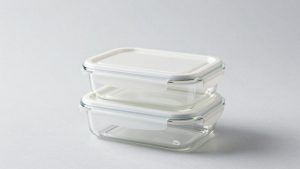
Choose a 4 cup glass container with lid for leftovers or a lunch portion that leaves room below the rim. A simple press-on lid suits upright fridge storage. For soup in a bag, check the exact model for a leakproof claim. If you regularly pack four measured cups, size up for headspace and room to stir.
What to check on a 4 cup glass container with lid
Start with the food you store most often and where the container will spend its time. A bowl that goes from the fridge to your kitchen table has different demands from a dish that rides in a crowded backpack. Use the table to identify the feature that matters most before comparing specific listings.
| Main use | What to prioritize | What to verify |
|---|---|---|
| Upright fridge leftovers | Easy-open lid and a footprint that fits | Closed height and width at the widest point |
| Salad or grain bowls | Room to toss or stir | Capacity with toppings included |
| Soup or saucy lunches on the go | Explicit leakproof claim for the exact assembly | Lid closure, carry instructions, and upright bag fit |
| Batch prep for several meals | Matching dishes and lids | Number of 4-cup bases and lids per set |
| Freezer portions | Manufacturer approval for both parts | Fill guidance and instructions for thawing or reheating |
The easiest way to narrow the choices is to decide whether the bowl stays at home, leaves the house, or goes into the freezer. Then list the two things that would make you stop using it. For fridge leftovers, that might be an awkward lid and a base that blocks the drawer. For lunch, it might be a loose seal and a bowl that takes up the entire bottom of a tote. Pick by those constraints first.
How much fits in a 4 cup glass container with lid?
Four U.S. cups equal 32 U.S. fluid ounces, or one U.S. quart. Those are volume measurements. How much you can pack comfortably depends on the shape of the dish, how far the lid projects below the rim, and how much space you need to add toppings, stir the food, or serve it without spilling over the edge.
For example, two cups of rice and a cup of vegetables may leave enough space for a topping, depending on how loosely the vegetables are packed. Four measured cups of soup can leave very little space under the lid. A salad presents a different problem. Leaves can rise above the rim even when their measured volume seems to fit, and compressing them just to close the lid can make the lunch harder to toss later.
If you own a comparable dish, set it on the counter and pour water into it from a liquid measuring cup. Stop where you would want the food surface to sit, below any part of the lid that dips inside. Record that volume as your working capacity for that particular bowl. Before buying a different model online, measure a typical serving in a bowl you already use. That gives you a target serving size even when a listing shows only nominal capacity.
Pay particular attention to listings that say “32 oz” without identifying whether the number applies to each base. A fluid-ounce capacity describes the space inside the container. The ounces in a product weight or on a package of shredded cheese describe a different quantity. Use a measuring cup for volume and a kitchen scale for weight if your portions are specified that way.
When should you size up or down?
Choose based on the biggest portion you pack routinely. A four-cup dish makes sense if smaller bowls often force you to split a serving and your usual portion still leaves clearance under the lid. When a full measured quart is your starting point, extra space can matter more than finding an exact capacity match.
A larger dish is worth considering for leftovers you intend to mix, salads with bulky toppings, or food you serve by scooping directly from the container. Compare a five- or six-cup option against the space you actually have. If the meal includes a dip, dressing, or crunchy topping, you can also keep that part in a separate small cup and add it at the table. That works particularly well when a larger base would make the lunch bag too wide to close.
Size down if you mainly save a small side, a few spoonfuls of sauce, or a single snack portion. A pair of smaller dishes can also be more practical when two foods will be eaten at different times. You can take out the one you need and leave the second sealed in the fridge. If you usually pack both together and want to carry one container, a medium dish can be the simpler purchase.
Choose the lid and shape for your routine
Lid style affects how the dish opens, how easily you can clean it, and whether you can carry liquids with confidence. Shape determines where it fits and how comfortably you can eat from it. Compare those features together, since a lid with side latches can make the closed dish wider than the base shown in a listing.
Press-on lids and seals for carrying liquids
A press-on lid can be convenient for leftovers that sit flat and get opened at home. For transport, check how the manufacturer describes the closed container. Terms such as snug fit, airtight, and spill resistant describe different features, so look for a liquid leakproof claim tied to the exact base and lid.
Check how the lid seats all the way around, including the corners on rectangular models. If the instructions allow you to remove the gasket, see how it goes back in and whether you can tell when it is fully seated. A gasket that folds or twists can be hard to spot under a lid. If you buy a container to carry liquids, use cool water over the sink to check for obvious leaks after closing it according to the instructions. Treat that as a check of your own assembly under those conditions. A short sink check cannot reproduce jostling in a bag or establish what happens with hot contents.
The Anchor Hocking TrueSeal 4-cup round dish, catalog item 13098L20, is an example of a lid designed with spill prevention in mind. The manufacturer describes the purpose of the TrueSeal line. If your lunch will spend part of the commute tilted beside books, look for more specific carry instructions for the exact item before buying it for that job. Choose a bag that keeps the base flat and leaves space around the lid so other items cannot easily press against it.
Round, square, or rectangular for your space
Round bowls work well when you stir from the edge or scoop food out with a spoon. Square and rectangular bases can make better use of a straight-sided shelf when several dishes sit side by side. The better fit comes down to the dimensions of the complete container and the space needed to take it out.
Measure the usable shelf depth with the refrigerator door closed, allowing for any bins that project inward. For a lunch bag, measure the flat floor and the narrowest point near the zipper. A 6-inch round bowl needs clearance across that full diameter. A narrower rectangular dish might slide into the same bag more easily even if its longest side is greater. Measure at the lid or latches if they extend farther than the glass.
The red-lid Pyrex Simply Store 4-cup round dish, model 1075428, is a size reference for this format. Pyrex lists approximate dimensions of 6 inches across and 2.75 inches high. If your opening is close to those numbers, allow for clearance and confirm the measurement with the lid in place before ordering. For stacks, check the height of two closed dishes and whether the top one sits steadily on the lower lid. If you need to pull out the bottom one every day, two side-by-side dishes may work better.
A wide opening or a taller profile
A wide, shallow dish gives you more surface area for spreading out a grain bowl or arranging pieces of food so they stay accessible. A taller dish can fit a narrow shelf or bag more readily if the base is smaller. Compare how each one feels when you reach in with the fork or spoon you normally use.
Think about what the meal looks like when you open the lid. A shallow bowl can make it easier to keep toppings in separate areas and see what is inside at a glance. A taller bowl can be easier to grasp around the sides when shelf width is limited, but you may have to lift ingredients out from the top to get to the bottom. If you eat directly from the dish at your desk, use your usual plate or bowl as a depth reference. If you transfer food to another plate, prioritize the shape that stores best.
Check reheating, freezing, and cleaning before buying
Read the care directions for the base and lid individually. Both parts matter when you plan to refrigerate, freeze, reheat, or machine-wash the container as part of your normal routine. The product page may summarize what the glass can handle while the lid has separate instructions for placement or removal.
Read the heating instructions for both parts
For microwave use, look for directions that tell you whether to remove the lid, loosen it, or open a vent during reheating. For oven use, check the glass base’s temperature limit and any preheating or handling instructions. Follow the exact directions for each part and for the appliance you plan to use.
Pyrex lists the glass on its red-lid 4-cup Simply Store model for microwave use. If you plan to reheat with a cover, confirm the lid instructions first. When shopping for any container advertised for oven use, check where it can go after heating and how the manufacturer says to handle changes in temperature. Freezer and heating permissions are individual conditions. Check the instructions for the sequence you intend to use, especially if your plan is to move the dish straight from frozen storage to reheating.
If your workplace has a small microwave, check the turntable and interior clearance along with the container rating. A dish that fits on a desk can still be awkward in a small shared appliance once you add a suitable cover. If your usual routine involves plating lunch before heating, you can put more weight on easy transport and less on lid venting.
Plan for freezer headspace and storage
If soup or stock is a frequent use, check the fill guidance for freezing before you choose a size. Liquids can expand as they freeze, so the amount you can portion depends on the headspace the manufacturer specifies. Choose the dish around that fill level and your planned serving, then check where it will sit.
If you want one container per recipe portion, work from the amount you actually ladle into each one. A recipe that yields eight cups of soup can call for more than two nominal four-cup dishes once you allow the specified headspace. Check whether your freezer drawer can accommodate a larger bowl upright, or whether several smaller containers would let you take out one serving at a time. If you batch-cook different dishes, check how labels attach to the lids or bases so you can identify each meal while the containers are stacked.
Look at the parts you will wash and replace
Check whether the lid has a separate gasket, whether the manufacturer allows its removal, and where the lid belongs in the dishwasher. These details matter when you use the same container several times a week. A compatible spare lid can also extend the life of a base you already own and use regularly.
Look at the underside of the lid before buying if the listing provides a clear photo. Recesses around clips and seams may take extra attention when you pack thick sauces. If the gasket is removable, follow the instructions for washing, drying, and reinstalling it. If you plan to order a replacement lid for an existing dish, find the model marking on the base and match it to the maker’s compatibility information. Pyrex offers a replacement lid identified as model 7201 for compatible 4-cup dishes. Confirm your specific base because the capacity label alone leaves the rim design and fit unresolved.
Decide what is worth paying for
Price comparisons are most useful once you know how many dishes you will use and which features solve an everyday problem. Compare the cost per usable four-cup base with its lid. Add any shipping and taxes shown at checkout, especially if the difference between buying a single dish and a set looks small.
Count complete dishes before comparing sets
Check the package contents line by line. Pyrex’s Simply Store 6-piece 4-cup round set, for example, contains three glass bases and three lids. In a mixed set, several bases may have different capacities, so count the four-cup dishes and the smaller or larger sizes you would actually use in your kitchen.
For a single purchase, a bowl that fits your shelf and takes the lid you need may be the lowest total outlay. A matching set can pay off if you prep several meals at once, leave one at work, or routinely have two dishes in the dishwasher. Compare the total to the number of complete dishes you would put in rotation. If you already own small snack containers, a mixed pack full of them adds cabinet space and little practical value. If you routinely split sauces from mains, those same sizes could make the mixed pack more useful.
Pay for features you can identify in the listing
For upright storage at home, put ease of opening, fit, and lid replacement ahead of extra hardware. For a commute with liquid meals, put a documented seal and a closure you can operate reliably higher on the list. For repeated reheating, pay attention to instructions you can follow with your actual appliances.
A lid with larger tabs may be easier for some people to grip, but operating several clips can be cumbersome when you use the container every day. If you can inspect it in person, close and reopen it while it rests on a flat surface. Notice whether you have to grip the glass with one hand while prying the lid with the other. When shopping online, use the product photos to check the opening mechanism and compare the closed weight if the manufacturer lists it. A glass dish that works beautifully at home can feel heavy once you add a drink and several other items to the same bag.
Conclusion
For upright leftovers, buy the four-cup glass dish that fits your shelf and opens easily. If it will carry liquids in a bag, check the exact lid’s leakproof claim and measure the bag floor. When your usual serving fills a quart or needs room for mixing, spend the extra shelf space on the next size up.
More from Amazon
Programs that pair well with the guide above. Offers and eligibility are set by Amazon and may change.
Set up recurring deliveries of everyday items on eligible products. Terms and savings are set by Amazon.
Explore Subscribe & SaveCollect the home and kitchen items you want in one registry that guests can shop from.
Create a wedding registryFree shipping on eligible items, Prime Video and more. Eligible new members can start with a free trial.
Start a Prime free trialAudiobooks and podcasts to listen to on the go. Eligible new members can start with a free trial.
Try Audible freeAs an Amazon Associate we earn from qualifying purchases.