Key takeaways
- Buy if you need a broad spread of sizes and are tired of reaching around loose lids.
- Skip if you mostly store the same-size lunch. Start with the Brilliance pair for plastic or the IKEA three-pack for glass.
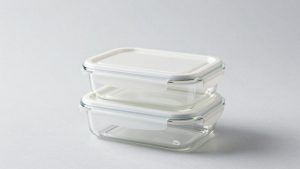
The best food storage containers for small spaces solve the problem you face most often. Choose Joseph Joseph Nest Lock if empty containers crowd your cabinet. Pick the Rubbermaid Brilliance 3.2-cup two-pack if you need two matching fridge boxes, or the OXO POP five-piece set for dry pantry staples.
Best food storage containers for small spaces at a glance
Joseph Joseph Nest Lock is the best overall choice for a small kitchen with limited cabinet room. Five containers of different sizes nest together, and their lids clip into a stack. For a fridge that fills up during meal prep, two or three matching rectangles can be easier to arrange and retrieve.
| Product | Best for | What you get | How it saves space | Main trade-off |
|---|---|---|---|---|
| Joseph Joseph Nest Lock 10-piece set, Sky | Empty containers in a crowded cupboard | Five containers and lids, about 1 to 12.7 cups | Bases nest and lids clip together | Each size appears once |
| Rubbermaid EasyFindLids 24-piece set, model 2135630 | Small leftovers and matching lids | Twelve containers and lids, 0.5 to 7 cups | Nested bases and lids that snap together | A dozen boxes may exceed a small household’s needs |
| Rubbermaid Brilliance 3.2-cup plastic two-pack | A narrow fridge shelf | Two matching 3.2-cup containers | Flat, rectangular boxes can stack when closed | One capacity across the pair |
| IKEA 365+ rectangular glass 34-oz three-pack | Three matching glass meal-prep portions | Three rectangular glass bases with lids | Same-size boxes form a stack | Glass is heavier to pull from a crowded shelf |
| Stojo 24-oz Box | A drawer or bag where empty height matters | One collapsible silicone box in the single-pack format | Folds to about 1.2 inches high | Folding saves height while the lid footprint stays the same |
| OXO Good Grips 5-Piece POP Container Set, model 11235900 | Dry staples on a pantry shelf | Five canisters, 0.4 to 2.2 quarts | Closed canisters are designed to stack | Mixed heights need measuring around fixed shelves |
How we chose the best food storage containers for small spaces
The picks reflect three ways a kitchen runs out of space: too many empty containers, too little shelf area for filled ones, and a pantry with awkward clearance. We compared manufacturer specifications and retail listings for how each design addresses one of those problems and what the buyer gives up.
Rankings consider whether lids stay organized, how many complete containers you get, and whether a product’s layout helps when the boxes are full or empty. They are editorial judgments based on published specifications and U.S. listings checked November 13, 2026. No hands-on fit, spill, or durability testing informs the ranking. Prices and temporary discounts carry no weight.
Start by identifying where the containers spend most of the week. A set that is always in the refrigerator should earn its space there. A set that comes out twice a week should be easy to put away between uses. For a busy kitchen, those two jobs may call for a small mixed set and a pair of matching lunch boxes rather than a single large bundle.
Which space-saving container should you buy?
The right design depends on when the space problem appears. A nesting set helps after the dishes are washed, matching rectangles make filled portions easier to line up, and a collapsible box gives back room after lunch. Compare the available space in the location where you want the container to fit.
Joseph Joseph Nest Lock for a crowded cupboard
The Sky 10-piece Nest Lock set includes five bases and five lids. The containers tuck inside one another when empty, and the lids clip together separately. It takes the top spot for general use because it covers everything from a small leftover portion to a larger batch without requiring five separate places to store the bases.
The smallest dish is listed at 230 mL, about 1 cup. The middle dishes hold 540 mL, 1.1 liters, and 1.85 liters. The biggest holds 3 liters, about 12.7 cups. That spread is useful for a household that saves a little dressing one day and several servings of pasta the next. It also means there is only one container in your favorite size. Five matching weekday portions call for a different bundle.
Store the snapped lid stack where you can grasp it without disturbing the nested bases. In a shallow drawer, try placing the lids flat beside the stack if there is room. In a deeper cupboard, store both groups near the front so the biggest dish can come out as a unit. Before ordering, compare the available opening with the dimensions for the exact version and allow space for your fingers and the latches.
- Buy if you need a broad spread of sizes and are tired of reaching around loose lids.
- Skip if you mostly store the same-size lunch. Start with the Brilliance pair for plastic or the IKEA three-pack for glass.
Rubbermaid EasyFindLids for small leftovers
The Rubbermaid EasyFindLids 24-piece set, model 2135630, is for households that frequently save small amounts. Three half-cup boxes, three 1.25-cup boxes, and two 2-cup boxes make up most of the set. The remaining dishes give you a few larger sizes for bigger leftovers and shared portions.
Rubbermaid says the bases nest and the lids snap to matching lids or to compatible bases. This gives you a way to keep small lids together instead of fishing under larger lids for one that fits. Keep the smallest group close to where you pack lunches. When you save sauces, chopped herbs, or a small amount of cooked vegetables, those containers earn their place by avoiding the need to pull out a larger dish.
The remaining sizes are one 3-cup, two 5-cup, and one 7-cup container. That variety makes sense if you regularly have more than one leftover size in use at the same time. For someone who cooks single servings and rarely packs lunch, twelve complete dishes may leave too many pieces waiting in the cabinet. Check the mix and model number before purchase because a familiar name and a similar piece count can describe different sets.
- Buy if you regularly reach for a half-cup, 1.25-cup, or 2-cup container and want a lid system that groups matching pieces.
- Skip if most of the twelve boxes would stay empty. The five-box Nest Lock bundle is a simpler fit for occasional leftovers.
Rubbermaid Brilliance 3.2-cup two-pack for a narrow fridge
The clear plastic Brilliance pair is the fridge pick when you want to add two matching containers without replacing everything you own. Each dish holds 3.2 cups. The rectangular shape and matching lids suit a short column of lunch portions on a narrow shelf, with both portions visible through the sides.
Choose this pair for meals such as chili and rice, pasta, or a serving of leftovers you can pack into one main compartment. If you have space beside a milk carton, put one box on top of the other there and keep tomorrow’s meal on top. On a low shelf, check the combined height before assuming a stack will fit. You may get easier access by arranging them side by side, with each lid reachable without moving other food.
The U.S. listing identifies this as the plastic version and describes the closure as airtight and leakproof. Follow the model’s microwave directions and confirm those instructions on the package if you plan to reheat lunch in it. For portions that vary from a few spoonfuls to several cups, this fixed-size pair will leave some unused volume. Use a small leftover dish when the portion barely covers the bottom.
- Buy if two matching boxes solve a real crowding problem and you want to see their contents from the front.
- Skip if the main requirement is an oven-safe glass base. Look at the IKEA three-pack.
IKEA 365+ 34-oz rectangular glass three-pack for meal prep
IKEA lists article 206.252.52 as three 34-ounce rectangular glass containers with lids. Their matching shapes give you a predictable fridge layout when you pack several meals at once. This is the glass pick for a household that wants portions it can store in matching dishes and reheat in the same base.
IKEA describes the set as stackable. Put the first meal you intend to eat at the top or keep the boxes in a single row if your shelf has little clearance. A 34-fluid-ounce container holds about 4.25 cups by volume, so check your actual portion against that size. A serving of roasted vegetables can use the space well, while half a cup of sauce takes up the same shelf footprint and leaves most of the dish empty.
The maker specifies heat-resistant glass and says the base can go in the oven with the lid removed. Check the care instructions for the exact lid and leave room to grip both sides of a filled dish. This matters if the only shelf that fits is high or recessed. Pulling a single glass dish forward is simpler than trying to remove a whole stack when you only need the bottom one.
- Buy if you prep three comparable portions and want rectangular glass bases.
- Skip if you mostly store small bites or want a lighter box to take to work. The 3.2-cup plastic Brilliance pair better suits the latter routine.
Stojo 24-oz Box for a low drawer or lunch bag
The Stojo 24-ounce Box folds down after you eat, making it the pick for a low drawer or a lunch bag you want to pack away during the day. The maker lists an expanded height of about 2.5 inches and a collapsed height of about 1.2 inches. It has a flexible silicone body and a lid with four clasps.
That height change matters if your lunch container has to share a bag with a sweater or a notebook on the way home. In a kitchen drawer, the box can lie flat while a rigid container of comparable capacity may need a taller spot. The lid remains about as wide as it was when the box was full, so measure the drawer’s clear width as well as its depth. For a cabinet problem driven by a narrow opening, folding alone may add little benefit.
The single-box size works for a sandwich or a snack-and-leftovers lunch if the food fits below the lid. Because the body is flexible, grip it from beneath when carrying it full. Wash and dry the folds before collapsing the base for storage. If you routinely stack filled containers in the refrigerator, the matching rigid Brilliance pair is a more direct fit for that job.
- Buy if reducing the height of an empty container is the main goal.
- Skip if you want a single kit for storing a range of portions at home. A nesting set makes better use of the cabinet for that purpose.
OXO Good Grips 5-Piece POP Container Set for dry pantry food
The OXO set, model 11235900, fits small pantries where opened bags are hard to line up and reach. The five canisters include two 1.1-quart sizes and one each at 0.4, 1.7, and 2.2 quarts. Their flat lids allow stacking and the push button engages the seal for storing dry ingredients.
Use the two matching sizes for dry foods you scoop often, such as oats and a grain you buy in small quantities. The 0.4-quart box can hold small amounts of nuts, seeds, or a topping. Leave clearance above the canisters for your hand, especially when you plan to place a small one on top of a larger one. On a low shelf, set frequently used foods at the front rather than building a second tier that you have to dismantle every morning.
Compare the canister’s usable volume with what is left in the package after opening. A full bag may exceed the space below the fill line. If you buy large bags, this set makes sense when you refill from backstock and can store that backstock elsewhere. Use the button to release the lid, and lift the canister by its body. Use a covered leftovers container for refrigerated meals.
- Buy if your space problem comes from several opened bags of dry food and the included capacities match what you actually store.
- Skip if you want to hold lunches, wet leftovers, or all of a large bulk purchase in one canister.
How to check the fit before buying
Measure the opening and the usable area behind it. A shelf can be wide enough for a box while its door bin, hinge, or front rail makes it awkward to slide the container into place. For each location, record the space you can reach easily with one hand after the items you already use are put back.
Measure the stack with the lids in place
For closed boxes, start with the tallest point on the lid and the widest point around the latches. A base dimension can understate the room needed to pull a box out without snagging it. If a manufacturer lists shipping dimensions, look for the individual container dimensions before using the figures to plan a shelf.
For a simple home check, cut a rectangle of paper to the product’s outside dimensions. Slide it onto the shelf beside the foods that usually stay there. Then use a small stack of books or folded towels to represent its approximate height and see how much clearance your hand has above it. If you expect to stack two or three closed boxes, leave enough room to lift the top one before pulling it forward.
A shelf deep enough for two rows can hide the rear one. Put dishes you need daily in front and reserve the back for longer-term storage. In a shared fridge, plan for the shelf space you normally get rather than the full interior width. A compact two-pack can be easier to keep in its assigned area than a mixed set with several large bases.
Choose how many containers need to be in use together
Count the containers you regularly fill before the next wash. Two for lunches and one for dinner leftovers may be enough if you cook every other day. If you divide a batch into several matching meals, repeat capacity matters more than the number of pieces printed on the front of the carton.
A ten-piece package with five bases and five lids can hold five meals. A twelve-container set may include several snack-size dishes that are too small for your standard lunch. Read the count and capacities together. Then compare that list with what you saved over the last week. Someone who routinely stores 1 cup of rice and half a cup of dressing or sauce needs a different mix from someone who packs three full meals each Sunday.
Keep a place for clean lids near the bases. Snap-together lids help if you already like sorting by size. For a rigid pair, you may prefer storing each box with its lid nearby on the same shelf. When measuring, set aside room for wet pieces to dry before they return to the drawer, especially if the lids have seals or the bases fold into themselves.
Choose nesting, stacking, or collapsing for the right job
Nesting saves cabinet space when the bases are clean and empty. Stacking helps when closed containers need to share a shelf. Collapsing cuts the height of an empty flexible container. A product may do more than one of these things, so check its design in the position you use most often.
If you pack lunch in the evening and wash the container when you get home, the location that benefits most may be your bag after lunch. If you batch-cook for several people, the filled footprint may decide whether the set fits at all. A family that saves a few spoonfuls of different dishes needs small capacities that can be arranged independently. In a low pantry, shorter canisters placed side by side may be easier to use than any vertical stack.
When deciding between two shapes, put empty boxes you already own on the intended shelf for a few days. Notice whether your hand bumps a latch, whether one box blocks another, and whether you can read what is inside. That check can help you decide if buying a new set will make the space easier to use or simply give you more containers to organize.
Conclusion
Choose Joseph Joseph Nest Lock if your cupboard fills up with empty bases and lids. Pick the matching Brilliance pair for a narrow fridge shelf, the IKEA three-pack for glass meal prep, or Stojo when an empty box needs to fold flat. For dry staples, size the OXO POP canisters to your shelf and the foods you buy.
More from Amazon
Programs that pair well with the guide above. Offers and eligibility are set by Amazon and may change.
Set up recurring deliveries of everyday items on eligible products. Terms and savings are set by Amazon.
Explore Subscribe & SaveCollect the home and kitchen items you want in one registry that guests can shop from.
Create a wedding registryFree shipping on eligible items, Prime Video and more. Eligible new members can start with a free trial.
Start a Prime free trialAudiobooks and podcasts to listen to on the go. Eligible new members can start with a free trial.
Try Audible freeAs an Amazon Associate we earn from qualifying purchases.