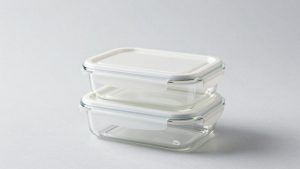
The Big Bee Little Bee SoftShell Snap-Close Silicone Food Storage Container makes the most sense for a sandwich or flat snack you want to carry in a shallow lunch bag. Choose the standard model for a low profile, look at the XL for taller portions, and use a container with a verified leakproof seal for soup.
Who should buy the Big Bee Little Bee SoftShell Snap-Close Silicone Food Storage Container?
Choose the standard SoftShell if you usually pack flat foods and want a lid that stays with the base. The attached lid opens flat, which makes it easy to set a sandwich down and eat from the container. The shallow shape is the main buying reason, so check the height of your usual lunch before ordering.
Big Bee, Little Bee lists the standard model at 7 × 7 × 1.25 inches. These are exterior dimensions. They help you judge fit in a lunch bag or cabinet, but the frame takes up some space and the measurements do not establish the usable food capacity. The manufacturer lists silicone panels and a polypropylene frame, with silicone as the intended food-contact surface. That distinction matters if your reason for buying is to avoid plastic where food rests. If you want the entire assembly made without plastic, the frame rules this model out.
The hinge is most useful when lunch happens in a small space. You can open the container on a desk, eat directly from it, and close it again without setting a separate lid on the table. At home, the same design eliminates the search for a matching lid. The trade-off appears when the open shell has to sit on a small tray or next to a keyboard. It needs room for both halves, so measure the surface where you expect to use it if that matters to you.
Will a sandwich fit the Big Bee Little Bee SoftShell Snap-Close Silicone Food Storage Container?
A sandwich made from ordinary sliced bread is a better candidate than a tall deli sandwich or a roll with thick fillings. The listed 1.25-inch height includes the shell itself, so treat that figure as an outside limit. Measure the thickest point of your assembled sandwich, including its crust or fillings.
Use the lunch you already make as your sizing template. Set the sandwich on a plate and measure where it rises highest, then check the widest part of the bread. Repeat with the bulkiest version you would carry regularly. If either measurement approaches the outside dimensions, leave a margin for the frame and look for a deeper container. Cutting a sandwich into halves can help you arrange an awkward shape, but it will do little for a tall filling unless you also change how you pack it.
Thin wraps cut into sections, crackers, and similarly flat snacks are also reasonable candidates. Keep a separate small cup for wet dip if it would soften the rest of the food. If you normally put everything into a single box, compare the SoftShell with a divided lunch tray. A divided tray offers fixed spaces for a main and sides. The SoftShell is more appealing when there is one flat item and you value the slim profile over organization within the box.
Standard SoftShell vs. SoftShell XL
The standard model and SoftShell XL share a listed 7-by-7-inch footprint. The main difference is height: the standard shell measures 1.25 inches and the XL measures 3.25 inches. Choose based on the depth your lunch needs and the space your bag can spare, especially when you pack an ice pack or a drink beside it.
| Buying consideration | Standard SoftShell | SoftShell XL |
|---|---|---|
| Listed exterior size | 7 × 7 × 1.25 inches | 7 × 7 × 3.25 inches |
| Most practical use | Flat sandwiches and snacks | Taller sandwiches, salads, and leftovers |
| Lid | Attached snap-close clamshell | Attached snap-close clamshell |
| Main trade-off | Limited space above the food | Takes up more room in a lunch bag |
The XL is the better starting point for a thick wrap or a salad with ingredients that would be compressed in the standard shell. The additional two inches of exterior height tell you which model to compare, but they do not give you an internal fill line. If you usually mix dressing into a salad at lunch, account for room to toss it as well as room for the ingredients. A bowl with a separate dressing cup may suit that routine better than either SoftShell.
Measure the narrowest point at the bag opening and the usable height inside the bag. A container can match the bag’s listed measurements and still be awkward to slide through a tapered zipper opening. Try a 7-inch-square cardboard template for the footprint. Then use a similarly thick object to see whether the bag still closes with everything else you carry. This check is especially worthwhile if the bag has an internal divider or a fixed ice-pack sleeve.
What the slide closure does for packed lunches
The slide closure adds security to the clamshell when you carry it. Judge that feature separately from a liquid-tight seal. The brand describes the closure as an added safeguard, and its product specifications give no verified leakproof rating to rely on for a bag that may spend part of the commute on its side.
For a sandwich with mustard or a spread, the shell provides a dedicated place to keep crumbs and keep the bread away from other items. For dressing, salsa, or fruit packed in juice, use a separately sealed cup. If soup or broth is the main part of lunch, pick a model with a closure expressly rated for that use. A slide that holds the two halves shut addresses accidental opening. A liquid seal has to keep fluid from finding a path around the perimeter as the container changes orientation.
The same distinction matters in the freezer. The manufacturer lists the SoftShell as freezer-safe, which makes it a candidate for flat portions. If your main goal is long-term storage with minimal air exposure, choose a container or bag that suits that purpose and whose closure instructions explain how to achieve it. Freezer compatibility describes where you can use the shell. It gives you no measurement of seal performance over time.
Cleaning and reheating in everyday use
Big Bee, Little Bee lists the SoftShell for dishwasher, microwave, and freezer use. The shell opens flat for cleaning, and the silicone panels can come out of the frame for occasional deep cleaning. Follow the care directions for the specific model, especially when removing the panels or reheating a packed portion.
For ordinary cleanup, the brand advises leaving the panels in the frame. The open shape gives you access to the food-facing surfaces, which is especially useful after a sandwich leaves crumbs or a spread along an edge. After washing, let the shell dry open. If you remove the panels for a deeper clean, reinstall them according to the manufacturer’s instructions and check that each edge is seated before packing food again.
Think about how often you will use the microwave feature. If most lunches are flat, the same shell can handle packing and serving. If you routinely reheat a substantial bowl of rice and vegetables, the shallow footprint leaves less room to stir. A deeper microwave-safe bowl is more practical for that job. Follow the manufacturer’s heating directions and handle the food with care when opening after reheating.
Conclusion
Buy the standard SoftShell if you regularly carry a flat sandwich or snack and want a slim case with an attached lid. Choose the XL when your lunch needs more height, and check the fit against the bag you already use. For broth or loose dressing, carry a separate container with a verified liquid seal.
More from Amazon
Programs that pair well with the guide above. Offers and eligibility are set by Amazon and may change.
Set up recurring deliveries of everyday items on eligible products. Terms and savings are set by Amazon.
Explore Subscribe & SaveCollect the home and kitchen items you want in one registry that guests can shop from.
Create a wedding registryFree shipping on eligible items, Prime Video and more. Eligible new members can start with a free trial.
Start a Prime free trialAudiobooks and podcasts to listen to on the go. Eligible new members can start with a free trial.
Try Audible freeAs an Amazon Associate we earn from qualifying purchases.