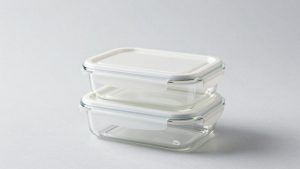
Choose BPA free airtight food storage containers by checking the manufacturer’s claim for the exact model and matching the lid to the food. A push-button canister works for dry flour, while a gasketed lid labeled leakproof is a better choice for soup on the go. Check the care directions for the base and lid separately.
What to check on BPA free airtight food storage containers
A useful product listing answers three questions. Which parts are covered by the BPA-free statement? What does the lid seal against when fully closed? How can each part be washed, chilled, or heated? Check all three on the same model before deciding whether the set suits your kitchen.
| If you store | Look for | Check before buying |
|---|---|---|
| Flour, rice, or cereal | An airtight dry-food canister with a wide opening | Fill line, shelf clearance, and whether your scoop fits |
| Lunch that travels in a bag | A lid specifically described as leakproof for liquids | Closed vents, a continuous gasket, and space to engage every latch |
| Leftovers you reheat at home | A glass base with explicit reheating instructions | Whether to remove or vent the lid and where the lid goes in the dishwasher |
| Soup you freeze in portions | A freezer-rated base and lid in a size you can use at one meal | Headspace guidance and instructions for thawing or reheating |
Verify the BPA-free claim for the exact set
BPA stands for bisphenol A, a substance used in certain food-contact materials, including some polycarbonate plastics. Start with the manufacturer’s product page or packaging. Check whether the statement applies to the complete container or specifically names the base, lid, or other components.
A listing might call out a BPA-free plastic lid on a glass dish. Another might explicitly name both the lid and base on a plastic model. Either description gives you more to work with than a generic badge placed beside pictures of several product lines. If the copy only names the base and you want confirmation about the lid or seal, check the use-and-care page or ask the manufacturer using the model number. The lid can touch food when you stack containers in a bag or tilt one to pour.
The FDA describes resin code 7 as a clue that a plastic item may contain BPA. Use it as a prompt to look up the material, since the code alone cannot confirm whether BPA is present. Transparency and stiffness also give you too little information to identify a plastic’s formulation. A brand’s statement for the exact model is the practical place to start if BPA-free construction is a purchase requirement. It describes the scope of that claim, while the care manual addresses temperatures and cleaning.
Read airtight and leakproof as separate claims
Airtight describes a closure designed to limit air exchange when properly seated. Leakproof describes a closure intended to contain liquid under its stated use conditions. A dry-food canister may advertise an airtight lid while a lunch container may explicitly advertise both features.
For flour and cereal that stay upright on a shelf, a lid that opens easily and seals consistently can matter more than clips. For a dressing that travels sideways, look for a manufacturer statement about liquid transport. Read the directions if the lid has a vent, since its storage and reheating positions can differ. Look for gaps around an integrated divider too. Even a lid that seals the outside of a box may allow dressing to move between its internal compartments.
Airtight storage also differs from vacuum storage. A latch or push button that compresses a gasket can help close the container without extracting air already inside. If you need vacuum storage, look for a stated evacuation mechanism and the matching valve or pump. For ordinary pantry or fridge use, a dependable closure you can operate with food on the counter is usually the more relevant purchase criterion.
Match the container to where you use it
Consider where the container spends most of its time. Pantry jars need to fit a shelf and open easily, a lunch box has to survive a bag ride, and a leftovers dish should work with your preferred reheating method. The features worth paying for change when you change the container’s main job.
Size pantry canisters by fill line and opening
Choose a pantry canister around the ingredient you buy, how much you use at a time, and the clearance on the shelf. Nominal capacity is a starting point. A flour canister also needs space below the lid for the fill line and enough room across the opening to level a measuring cup.
Compare the amount in your usual bag with the maker’s suggested fill. A weight in pounds on a flour bag and a volume in quarts on a canister describe different things. How densely the ingredient packs also matters. For a refill routine, allow room for the amount still in the canister when you open a fresh bag. A tall canister can look efficient on paper but become awkward if it needs to be pulled out and tilted just to reach the lid.
The OXO Good Grips 4.4-quart POP container, model 11233500, illustrates what a dry-food listing should tell you. Its product information identifies an airtight push-button closure, a BPA-free body, and a fill line. A US retailer lists a 5-pound bag of flour as an intended use. That recommendation is for a dry ingredient and should be interpreted within the lid’s fill and care directions. If you bake infrequently, compare that large footprint with the smaller pack you actually buy.
Choose a liquid-rated seal for packed lunches
For lunches, start with the wettest thing you plan to carry. A box that handles a sandwich may be a poor match for a thin vinaigrette. Look for a stated leakproof closure, then check that you can seat every latch and that the fully closed container still fits flat in the lunch bag.
A practical setup might be a medium container for rice and chicken and a much smaller one for a thin sauce. Keeping the dressing separate stops it from moving through the main dish when the bag tilts. It can also make assembly easier at lunchtime. A little empty space in the main container helps keep food away from the rim so you can close the lid without trapping grains or leaves under the seal.
Rubbermaid Brilliance 3.2-cup Plastic, model 2025333, is an example of a listing that explicitly identifies the plastic container as BPA-free and describes both an airtight seal and leakproof performance. It also has vents for reheating. Check the vent and latch positions each time you switch between carrying the container and using it in the microwave. The manufacturer’s description is a starting point for shopping. How your individual lid seats is something you can check after purchase.
Choose reheating and freezing features separately
If the same dish goes from the fridge to the microwave every day, look for separate directions for its base and lid. A freezer rating answers whether the parts are intended for cold storage. Oven and microwave directions tell you how to use each piece when you are ready to reheat the food.
A manufacturer may permit the base in the oven and specify that the lid can only be used in the microwave with the latches open. Rubbermaid Brilliance Glass 8-cup, model 2118314, illustrates the distinction. Its listing gives the base an oven limit of 450°F and specifies top-rack dishwasher placement for the lid. For microwave reheating with the lid in place, the manufacturer calls for the latches to be open. Compare the instructions on the actual set you buy, especially if you freeze the same dish before reheating it.
For soups and stews, consider freezing portions in sizes you actually finish at one meal. Follow the model’s guidance on fill levels, headspace, and temperature changes. USDA guidance also calls for dividing leftovers into shallow containers to speed cooling and generally using refrigerated leftovers within three to four days. A better seal helps contain the food, while cooling and storage time still govern how you handle leftovers.
Evaluate the lid before buying a full set
The lid is often the part that determines whether you keep using a container. Look at how the seal sits in the lid, how many moves it takes to close, and whether you can wash around the parts that touch food. When possible, buy one size first if you expect to repeat that purchase across a set.
Compare gasket access and latch pressure
A gasket has to seat evenly to seal. Check product photos for a continuous ring and read the care instructions to see whether the manufacturer allows you to remove it. A removable gasket is useful when residue collects in the channel, provided you can reinstall it easily.
A fixed gasket can simplify everyday handling because there is no loose piece to put back. A removable one gives you access to the groove after an oily spill, but it takes another step to wash and reassemble. If your household shares the task of doing dishes, make sure everyone can tell which way the gasket goes and when it has been pressed back into place. Replacement parts are more useful when the manufacturer clearly identifies the shape and version they fit.
Also consider the grip you need to open the lid. A lid with tabs at several edges gives you individual points to check, but it can take more room to operate when a box is wedged into a full bag. If you buy in a store, check the effort required to close and reopen the empty box. When ordering online, look for a clear image of the tabs and the clearance around them.
Test the fit before carrying liquids
For a model advertised for liquids, a brief water check can reveal a misaligned lid before the first commute. Start with a clean rim and seal, add a small amount of cool water, and close every latch and vent as directed. Tilt the container gently over the sink and watch the edges for drips.
If it leaks, reopen the container and check for a folded gasket, a particle on the rim, a vent left open, or a lid from a different model. Close it again and repeat the same check. This gives you information about your particular unit in that condition. It does not measure air exchange or reproduce what can happen in a bag after hours of movement. Keep the container upright during transport when practical, especially the first time you use it.
For pantry canisters, use a dry fit check. Empty the container, close it as directed, and look for a lid that sits flush and operates smoothly. Flour on the rim or an overfilled container can interfere with closure. Check that you can use the button or lift the lid at the shelf where you plan to store it. A larger canister is only convenient if you can get to the food without clearing half the cupboard.
Count usable bases and check replacement options
Piece counts often include lids, inserts, or other accessories. Before paying for a bundle, count how many bases fit the portions you store every week. Then check whether the lids match those bases and whether a spare can be ordered if a latch, gasket, or lid needs replacement.
A mixed bundle may look generous and still give you only one container big enough for lunch. If you pack three similarly sized lunches, three identical bases simplify stacking and lid matching. If you shop for multiple pantry staples, several sizes may make sense, especially when a sugar canister can be shorter than the one for flour. Decide which pattern fits first, then compare how many of the pieces in the package will actually see regular use.
Check compatibility even when two lids look the same from above. A matching capacity is useful for comparing portions, but it gives no assurance about rim shape. Use the model number and the manufacturer’s compatibility notes to verify a replacement. If exact spare lids are difficult to source, identical containers in a frequently used size can reduce the inconvenience of a single broken closure.
Questions to ask before checkout
Three details often decide between otherwise similar listings. Confirm whether a glass model still uses a plastic lid, whether the dishwasher directions apply to every piece, and whether the size you are about to order fits the food you store without interfering with the seal.
Can BPA free airtight food storage containers have plastic lids?
Yes. A glass base can come with a plastic lid that the manufacturer identifies as BPA-free. Check the material and care details for the entire assembly, including the seal when the specification matters to you. Glass, plastic, and silicone can each appear in the same container.
If your preference is to keep food away from the lid during reheating, choose a glass base with directions that allow you to heat it with the storage lid removed. That choice also makes the difference between heat-safe body and storage closure easy to manage. For something you carry upright and eat cold, the lid’s weight and ease of cleaning may matter more than its reheating features.
If two brands use similar badges, compare the wording on their own product pages. A claim that applies to the finished container is easier to interpret than a badge placed next to an isolated photograph of the glass base. If you order an assortment with more than one style of lid, check the description for each style before treating a statement about one lid as a claim about the others.
Can the lid go through the same dishwasher cycle as the base?
Check the use-and-care directions for the specific lid. A manufacturer may allow the base in the dishwasher while placing the lid on the top rack, or it may direct you to take a multi-part lid apart before washing. Make sure every part can dry before you close the container for storage.
If you wash dishes by hand, inspect the underside of the lid and the groove around its edge. A narrow channel takes more attention than a flat cover. If you run the dishwasher daily, check whether the lid fits upright on the recommended rack without blocking other dishes. Those details can make the difference between a container you reach for every day and one that accumulates in the cabinet.
Take a moment to check the care instructions before using a heated dry cycle. If the directions specify rack placement, follow that placement each time. A lid that no longer lies flat or needs unusual pressure to close deserves a closer look. Check the rim and gasket for residue or misalignment, then verify the replacement part if the lid remains distorted.
Conclusion
Check the exact model’s BPA-free statement, then buy the lid for the job. Use an airtight dry-food canister for pantry staples and a model explicitly rated leakproof for soup in a bag. For leftovers you reheat often, choose a base with clear heating directions and verify the lid’s venting and washing instructions separately.
More from Amazon
Programs that pair well with the guide above. Offers and eligibility are set by Amazon and may change.
Set up recurring deliveries of everyday items on eligible products. Terms and savings are set by Amazon.
Explore Subscribe & SaveCollect the home and kitchen items you want in one registry that guests can shop from.
Create a wedding registryFree shipping on eligible items, Prime Video and more. Eligible new members can start with a free trial.
Start a Prime free trialAudiobooks and podcasts to listen to on the go. Eligible new members can start with a free trial.
Try Audible freeAs an Amazon Associate we earn from qualifying purchases.