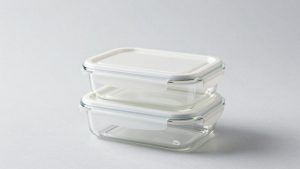
The best chemical free food storage containers for most kitchens are glass dishes with clearly identified lids. Start with Pyrex Simply Store for mixed leftovers, choose stainless steel for dry packed lunches, or use glass-lidded Weck jars when you want to avoid a plastic lid. Check the seal material before you buy.
Quick verdict on the best chemical free food storage containers
Pyrex Simply Store is the best overall choice for storing several kinds of leftovers in the same fridge. Its nine glass dishes range from 1 to 7 cups. Choose OXO Smart Seal for smaller portions with a locking closure, or Weck 742 when you specifically want glass on both sides of the container.
| Product | Best for | Food-contact surfaces | Capacity or bundle | Main trade-off |
|---|---|---|---|---|
| Pyrex Simply Store 18-piece glass set | Everyday leftovers | Tempered glass dishes, plastic lids | 9 dishes, 1–7 cups | Choose a locking set for liquids that travel |
| OXO Good Grips Smart Seal 12-piece glass set | Small portions with a locking lid | Borosilicate glass, plastic lids, removable gaskets | 6 dishes, 4 fl oz–3.5 cups | Only one dish holds more than 1.6 cups |
| Weck 742 Mold Jar six-pack | Glass lids for upright fridge storage | Glass jar and lid, rubber sealing ring | 6 matching jars | Each closure uses a ring and two clips |
| LunchBots Large Trio, plain stainless steel | Dry packed lunches | 18/8 stainless steel interior and lid | 32 fl oz across three sections | Dry foods only |
| Anchor Hocking TrueSeal 14-piece cherry-lid set | Snacks and family portions in round dishes | Glass dishes, flexible lids | 7 dishes, 1–7 cups | One 4-cup and one 7-cup dish |
| Stasher Stand-Up Mid Bag | Flexible freezer storage | Platinum silicone body and closure | 56 fl oz nominal volume | Flexible walls and a narrower opening than a bowl |
How we chose the best chemical free food storage containers
The picks prioritize a clearly described food-contact surface, a lid suited to the job, and a size mix that fits real meals. Manufacturer specifications were reviewed on November 13, 2026. Seal claims come from the brands, and the rankings reflect editorial judgment based on the documented designs.
The phrase “chemical free” is shopping shorthand. Glass, stainless steel, rubber, silicone, and plastic are all made of chemical substances. For this roundup, the practical question is which material touches your food during storage, transport, and reheating. A glass dish with a plastic lid can work well for food stored below the rim and reheated with the lid removed. For a container that gets turned sideways in a bag, the inside of the lid and the seal become much more relevant.
The selection covers six different jobs. Best overall rewards the size range and usefulness of the set for everyday home storage. The other picks fill specific gaps, such as a metal lunch box with built-in dividers or a flexible pouch for freezer drawers. The products were evaluated from published specifications without detailed research. Price and stock vary by seller and variant, so the recommendations are based on design and configuration.
The six containers and who should buy them
Start with the meal you store most often. A set dominated by small bowls makes sense if you portion dips and sides, while a single large vessel may be all you need for batch cooking. Use the picks below to decide how many dishes you will fill and how much work you want to put into cleaning the lids.
Pyrex Simply Store 18-piece glass set
Pyrex Simply Store earns best overall because its nine tempered-glass dishes cover small toppings, individual portions, and larger leftovers. The included plastic lids are handy for upright refrigerator storage. This set suits a household that regularly needs several shapes and sizes on the same day.
The two 1-cup dishes can handle small sides, and the two 2-cup dishes are useful when you want to portion leftovers into matching servings. The two shallow 3-cup dishes suit food you want to spread out, such as a piece of lasagna with vegetables beside it. The single 4-, 6-, and 7-cup dishes provide room for larger portions. That distribution matters more than the 18-piece count, which includes the lids. You get nine places to put food.
The range also helps when leftovers change across the week. One family dinner might leave a shallow piece of baked pasta and a small amount of sauce. Another might leave enough rice to fill a larger dish. Before you choose this set, compare your shelf depth with the widest dish and think about where you will put the lid assortment. Similar-looking lids can have different footprints.
Buy if you want a single set for mixed leftovers and prefer to see the contents without opening each dish. Skip if your main job is carrying soup or you specifically want the underside of the lid to be glass or metal. The OXO set offers a locking closure, while the Weck jar gives you a glass lid with a rubber ring.
OXO Good Grips Smart Seal 12-piece glass set
The OXO Smart Seal set is best for small portions that benefit from a locking lid. Each borosilicate glass dish has a four-tab plastic lid with a removable gasket. The assortment favors dressings, sides, and snacks, with a single 3.5-cup dish for a larger portion such as a packed lunch or leftovers.
The smallest two containers hold 4 fluid ounces each. The middle of the assortment consists of two 1-cup rounds and a 1.6-cup rectangle. That is useful if you separate a dressing, fruit, and a lunch entrée or if you frequently store half a lemon and a small amount of sauce. It is a poor way to buy several matching full-meal containers. If you prep the same grain bowl every weekday, count how many of those bowls the set can actually hold at once.
OXO describes the seal as leakproof. The removable gasket is useful for cleaning after a dressing or thick sauce reaches the rim. It also adds a part to track and reinstall. Inspect the gasket channel and seat the gasket fully after cleaning. Check all four tabs before packing liquid, and make sure the container sits flat inside the bag when possible. The largest glass dish is a better fit for a bag with a wide base than a narrow side pocket.
Buy if most of your portions are small and you value the tabs and removable gasket. Skip if you want multiple dishes for full entrées or prefer a lid with fewer parts to wash. The Pyrex set covers a wider range of capacities, including three dishes larger than OXO’s largest.
Weck 742 Mold Jar six-pack
Weck 742 is the best pick here for a glass lid and a repeatable jar size. The six jars come with matching glass lids, rubber rings, and metal clamps. Their wide mouths make them especially useful for spoonable foods, including overnight oats and yogurt, that you plan to store upright in the fridge.
Weck labels the model the 1/2 L Mold Jar and lists a 3⅞-inch opening. Use the model number when shopping, especially if you see a seller using a different ounce figure for the same shape. Treat the product’s stated capacity as a reference for comparison and leave space below the lid if you want to add toppings or stir. Six identical openings make it easier to grab a matching lid when preparing portions for the week.
The sealing ring sits between the lid and the rim. Two clamps secure the assembly. This arrangement is practical if the point of buying the jar is to avoid a plastic lid, but it takes more steps to open and close than a press-on or hinged lid. Think about where those loose clips go when you eat lunch away from home. The jars fit upright, repeatable jobs better than meals you want to pack in a shallow layer or slide into a thin lunch bag.
Buy if you want six matching jars with glass lids and can keep the containers upright. Skip if you regularly open a container with one hand or need a low dish for a sandwich. Choose the plain steel LunchBots for dry packed lunches or Pyrex for a shallower glass option.
LunchBots Large Trio in plain stainless steel
LunchBots Large Trio is the best fit for a dry lunch with three components. The plain version uses 18/8 stainless steel for the interior and lid. One large section accommodates the main item and two smaller sections hold sides, so a sandwich, pretzels, and sliced vegetables can share a single box.
The stated 32-fluid-ounce capacity is divided across the three sections. The box measures 8 by 6 by 1.75 inches, so check the depth if you tend to pack thick rolls or tall wraps. A generous total volume can still feel cramped when the food has to fit into a shallow rectangle. Try laying out your usual lunch on an area of the same size before ordering. If the lunch usually includes a tall yogurt cup, plan to carry that separately.
LunchBots specifies dry foods because the box lacks a leakproof seal. It works best when the sides can tolerate a little contact with the main item and there is no loose liquid. Choose the plain stainless version if you want to avoid the optional plastic exterior cover. The box itself goes in the dishwasher. Transfer food to a microwave-safe dish when reheating.
Buy if you pack sandwiches, wraps, or dry snacks and want a steel surface inside the box and lid. Skip if lunch often includes soup, runny fruit, or a dressing that needs its own seal. Use a separate lidded container for a wet side, or choose a locking glass dish for a wet entrée.
Anchor Hocking TrueSeal 14-piece cherry-lid set
The Anchor Hocking TrueSeal cherry-lid set works best for households that want several small round bowls alongside a couple of larger options. The manufacturer lists three 1-cup dishes, two 2-cup dishes, one 4-cup dish, and one 7-cup dish. Each comes with a matching lid designed to prevent spills.
This is a useful assortment if the smallest dishes are the first to disappear. For example, three 1-cup bowls can hold a garnish, salsa, and shredded cheese from the same dinner. The 2-cup rounds can cover two snack portions, while the larger bowls take bulk leftovers. If your routine starts with five equal-sized lunches, the assortment is a poor match. Look for an individually sold size and build around the portions you actually use.
Round bowls are easy to stir and scoop from, especially for thick foods such as hummus. Their footprint can leave gaps when several dishes are lined up on a narrow shelf. Measure the shelf you use for leftovers before committing to a round-only set. Match the cherry-lid 14-piece configuration in the product listing, because TrueSeal appears in other sizes and lid styles. The comparison here uses the manufacturer’s clear/cherry catalog configuration.
Buy if you need repeated 1- and 2-cup portions, prefer round bowls, and want one large dish in the bundle. Skip if you use more large dishes than small ones or want a stack of shallow rectangles. Pyrex includes two 3-cup dishes and a wider mix of shapes.
Stasher Stand-Up Mid Bag
The Stasher Stand-Up Mid Bag is the best flexible option for a crowded freezer drawer or a shelf where rigid dishes leave awkward gaps. Its platinum silicone body stands on a gusseted base, and the pinch closure is built into the pouch. The manufacturer lists a nominal capacity of 56 fluid ounces.
Think of that capacity as a size reference. How much fits comfortably depends on the shape of the food and how much room you leave to close the top. Frozen fruit pieces work well because you can pour them in and scoop out what you need. A wide baked portion or layered meal is easier to move into a rigid dish. If you plan to scoop frequently, check that your hand or preferred scoop fits comfortably through the opening.
The integral seal gives you fewer loose parts to manage. It also means replacing a damaged closure requires replacing the pouch. Keep crumbs and thick residue out of the closing channel and dry the bag with its mouth open before storing it. Stasher describes the closure as leak-free. For your first use with liquid, close a partly filled bag of cool water over the sink to confirm you have pressed the entire track together.
Buy if you want a reusable flexible container for loose freezer ingredients or snacks and are comfortable cleaning the folds. Skip if you prefer an open bowl that is easy to scoop and scrub or want a rigid container to protect a sandwich. Choose Pyrex for wide, rigid storage or LunchBots for a structured dry lunch.
How to choose by material, lid, and portion
A container works when the body, lid, and size suit the way you use it. Check which surfaces can touch food, then think through the trip from fridge to lunch bag or microwave. A material that suits one part of the routine may call for a different lid, a different container shape, or a serving dish at the next step.
Check what can touch food in actual use
Imagine the container in two positions, upright in the fridge and tilted in a bag. In the fridge, a shallow layer of food may touch only the glass base. Once the container tips, the same food can reach the underside of the lid and gasket. Buy for the position the container will actually spend time in.
If the goal is to avoid a plastic food-contact surface, start with the products that document both the body and lid. The plain LunchBots uses stainless steel on the inside and under the lid for dry foods. Weck provides a glass lid and uses a rubber ring between the lid and jar. The Stasher pouch uses silicone for both the interior and closure. Each option covers a different set of foods and conditions.
A BPA-free claim speaks to BPA. It gives you limited information about the other materials used in a lid or how the complete container should be heated. Look for information about the exact component and the conditions you care about, such as a microwave instruction for the base or a cleaning instruction for the gasket. The FDA evaluates food-contact substances in the context of intended use, including potential migration under those conditions. That is a more useful framework for shopping than treating a phrase on the front of a box as a rating for the whole product.
Count the dishes you can use for your typical meal
Count containers and lids separately, then match the usable dishes to the portions you expect to store at the same time. A bundle with one large dish and several small ones can be handy for leftovers and still leave a meal prepper short of lunch containers by Wednesday. Compare sizes before comparing piece counts.
Take one common example. You want to pack four 2-cup lunches and keep one large serving for dinner. Pyrex has two exact 2-cup dishes and two 3-cup dishes that could cover the other lunches with extra space. The Anchor Hocking set has two 2-cup dishes, but the small dishes and the two larger ones give you a different distribution. OXO has only one dish above 1.6 cups. If your cabinet only fits one footprint, buying individual matching containers may solve the problem more cleanly than any mixed bundle.
Capacity also leaves out the space you need for the lid and for stirring. A measured 2 cups of grain salad with an extra layer of toppings may need the next size up. For a flat food such as a slice of quiche, interior length and width can matter more than volume. Use your current dish as a reference. Measure the food footprint and check the widest part of the lid against your bag or refrigerator shelf.
Plan for reheating and cleaning before buying
Read the instructions for the exact base, lid, gasket, and clips. A base and its closure may have different limits even when they ship together. If you often reheat lunch away from home, decide whether you will use the storage dish itself or transfer the food to a plate before buying a full set.
For glass, follow the maker’s instructions on temperature changes, especially when moving a container between the freezer and a heat source. Check whether the lid must be removed, vented, or kept out of the oven entirely. Keep the stainless steel lunch box and Weck’s metal clamps out of the microwave. For silicone, check the brand’s instructions for the specific pouch and how the closure should be positioned when heating.
Think about where food residue goes after a week of use. A gasket can be helpful for transporting a sauce, but a removable gasket adds a washing and reassembly step. A jar’s clips can be set aside before washing, while a flexible bag needs room to dry open. If the main use is upright fridge storage, prioritize a lid you will clean consistently and replace easily when the fit wears out. For recurring liquid transport, put a documented locking or pinch closure higher on your list.
Conclusion
Choose Pyrex Simply Store for a fridge that holds everything from small toppings to family leftovers. For a different lid material, pick Weck 742 for upright glass storage or plain stainless LunchBots for dry lunches. Match the closure to how you carry food, then count the dishes that fit your usual portions.
More from Amazon
Programs that pair well with the guide above. Offers and eligibility are set by Amazon and may change.
Set up recurring deliveries of everyday items on eligible products. Terms and savings are set by Amazon.
Explore Subscribe & SaveCollect the home and kitchen items you want in one registry that guests can shop from.
Create a wedding registryFree shipping on eligible items, Prime Video and more. Eligible new members can start with a free trial.
Start a Prime free trialAudiobooks and podcasts to listen to on the go. Eligible new members can start with a free trial.
Try Audible freeAs an Amazon Associate we earn from qualifying purchases.