Key takeaways
- Handles liquids cleanly. You can seal broth, soup, curry, marinara, gravy, and marinades without relying on the messy “freeze first” workaround required by many edge sealers.
- Better for batch cooking. A chamber machine is well suited to sealing 10, 20, or more portions in one session because the vacuum is consistent and the bag opening stays clear.
- Less dependence on textured bags. External edge sealers generally need embossed or channel-pattern bags to remove air. Chamber machines can use smooth chamber bags, which are often less expensive per bag and easier to buy in bulk.
- More uniform seals. The sealing bar works after the pressure inside and outside the bag has equalized, reducing the chance that food or liquid will interfere with the seal.
- Useful beyond meal prep. It can portion bulk meat, preserve seasonal produce, package coffee or dry goods, and prepare sous vide bags.
- Flexible bag sizes. You can cut rolls or use pre-cut bags, provided the bag fits inside the chamber and its opening reaches the sealing bar.
- Potentially less freezer waste. Flat, compact portions stack efficiently and are easier to label than bulky containers.
What's inside
The Short Answer
Yes—chamber vacuum sealers are worth it for meal prep if you regularly seal liquid-heavy foods or prepare large batches several times a month. If your routine mostly involves a few dry portions of chicken, vegetables, or leftovers, a less expensive edge sealer is usually the smarter buy.
The difference is not simply stronger suction. A chamber machine removes air from the entire bag and chamber at the same time, so liquid does not get pulled into the pump. That makes it much better for soups, marinades, sauces, stews, and sous vide portions. The trade-off is a higher purchase price, more counter space, heavier equipment, and a slower setup for one or two portions.
As an Amazon Associate we earn from qualifying purchases at no extra cost to you. Product prices and availability are accurate as of the date shown and are subject to change.

What You Actually Get
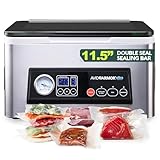
A chamber vacuum sealer has a lidded compartment, an internal vacuum pump, and a heated sealing bar. You place an open bag inside the chamber, position its mouth over the bar, close the lid, and start the cycle. The machine evacuates air from both the bag and the surrounding chamber. Once the pressure equalizes, it seals the bag without forcing liquid through the opening.
Most home models in this category have an approximately 11.5-inch sealing bar, which is wide enough for standard meal-prep bags but not large enough for very broad roasts or family-size casseroles. A typical countertop chamber machine occupies roughly 14 to 16 inches from front to back, 18 to 21 inches from side to side, and 10 to 12 inches in height when closed. Many weigh about 20 to 30 pounds, so it is best treated as an appliance that lives on a sturdy counter rather than something you casually put away after every use.
Power draw varies by model, but home units commonly use roughly 300 to 400 watts during operation. That is modest compared with an oven, though a full sealing cycle can take longer than a quick edge-sealer cycle. Look for adjustable vacuum time, adjustable seal time, a pulse or manual mode, and a double-seal option. These controls make it easier to protect delicate foods and create more reliable seals on wet or greasy items.
For a sense of the market, the Avid Armor USV20 is listed at $319 and uses an 11.5-inch sealing area. The Gasbye model with a 5.3-quart chamber and replaceable 11.5-inch sealing bar is listed at $369.99 and includes 30 pre-cut bags. Those prices are typical of the home chamber-sealer tier: expect roughly $300 to $450 before buying extra bags, depending on construction, controls, and included accessories.
Pros
- Handles liquids cleanly. You can seal broth, soup, curry, marinara, gravy, and marinades without relying on the messy “freeze first” workaround required by many edge sealers.
- Better for batch cooking. A chamber machine is well suited to sealing 10, 20, or more portions in one session because the vacuum is consistent and the bag opening stays clear.
- Less dependence on textured bags. External edge sealers generally need embossed or channel-pattern bags to remove air. Chamber machines can use smooth chamber bags, which are often less expensive per bag and easier to buy in bulk.
- More uniform seals. The sealing bar works after the pressure inside and outside the bag has equalized, reducing the chance that food or liquid will interfere with the seal.
- Useful beyond meal prep. It can portion bulk meat, preserve seasonal produce, package coffee or dry goods, and prepare sous vide bags.
- Flexible bag sizes. You can cut rolls or use pre-cut bags, provided the bag fits inside the chamber and its opening reaches the sealing bar.
- Potentially less freezer waste. Flat, compact portions stack efficiently and are easier to label than bulky containers.
Cons
- High upfront cost. At about $300 to $450, a chamber machine can cost several times more than a basic external vacuum sealer.
- It takes up real space. A 20-pound appliance with a footprint near 2 square feet is not ideal for a small kitchen or a crowded apartment counter.
- Small portions can feel inefficient. For one chicken breast or a handful of berries, the time spent positioning the bag and closing the lid may not feel worthwhile.
- It is not automatically faster. A chamber cycle may take around 30 to 60 seconds, depending on the vacuum and seal settings. Multiple portions still require loading and unloading one bag at a time.
- Bag waste is still possible. You need enough extra material above the food for the bag to sit correctly across the seal bar. Overfilling or leaving wet food near the opening can ruin a bag.
- Frozen food can still cause problems. Ice crystals, sharp bones, and rough edges may puncture bags, even when the vacuum process itself is gentle.
- Maintenance matters. Wipe the chamber after wet foods, keep the sealing area clean, and follow the manufacturer’s guidance for oiling or servicing the pump if applicable.
Who Should Buy It
Buy a chamber sealer if you meal-prep in batches, freeze food regularly, or cook recipes that are difficult to seal with an external machine. It makes the most sense for people who prepare soups, sauces, braises, marinated meats, or sous vide portions at least a few times each month. It is also a strong choice for households that buy meat in bulk and want neatly portioned freezer packages.
The value improves when you use the machine consistently. If it replaces disposable containers, reduces freezer burn, and prevents spills from liquid foods, the higher price becomes easier to justify. It is particularly useful for a serious home cook, a large household, or anyone who freezes 10 or more meal portions at a time.
Who Should Skip It
Skip a chamber model if you prepare only a few meals per week, rarely freeze food, or mostly seal dry ingredients. An edge sealer will handle chicken breasts, vegetables, cheese, and leftovers for much less money and usually takes less storage space.
You should also skip it if you have no convenient place to leave the appliance. Moving a 20-to-30-pound machine between a cabinet and counter can make an otherwise useful tool annoying enough that you stop using it. A chamber sealer is a productivity appliance, not a space-saving appliance.
Cheaper Alternatives
| Option | Cost | Trade-off |
|---|---|---|
| Basic external vacuum sealer | $50–$120 | Much cheaper and smaller, but liquids can enter the pump; wet foods may need to be frozen first. |
| Midrange external sealer with wet mode | $120–$220 | Better controls and stronger seals, but it still uses textured bags and is less reliable with free-flowing liquids. |
| Reusable silicone or glass containers | $20–$80 for a starter set | Good for refrigerated meal prep and reheating, but bulkier in the freezer and not airtight in the same way as a sealed bag. |
| Freezer bags with air pressed out by hand | $5–$15 per box | The lowest-cost option, but it offers less air removal, less protection from freezer burn, and more risk of leaks. |
| Water-displacement method for sous vide | $5–$20 for suitable bags | Works for some foods without a machine, but it is less convenient and not appropriate for every liquid or long-term storage task. |
FAQ
Are chamber vacuum sealers better than regular vacuum sealers?
They are better for liquids, large batches, and smooth bags. They are not automatically better for every household. A regular external sealer is cheaper, lighter, and perfectly adequate for many dry foods and occasional freezer storage.
Can I seal soup directly in a chamber vacuum sealer?
Usually, yes, as long as you leave adequate headspace, keep the bag within the chamber’s size limits, and use the manufacturer’s recommended settings. Do not fill the bag to the top. Liquid expands when frozen, so leave additional room if the portion will go into the freezer.
Are chamber vacuum bags cheaper?
Often, yes. Smooth chamber bags can cost less than embossed bags used by external sealers, especially when purchased in bulk. Your real savings depend on bag size, thickness, and how much material you leave above each portion. The machine’s higher purchase price still needs to be justified by frequent use.
Is a chamber vacuum sealer worth it in 2026?
For a serious meal-prep routine, it can be. The best case is a household that seals wet foods and multiple portions every week. For occasional dry-food storage, spend less on an external sealer or containers and put the savings toward better ingredients, freezer organization, or cookware.