Key takeaways
- Table of Contents 7 sections 9 min read 1 Quick Verdict 2 Side by Side 3 Where Chamber Vacuum Sealer Wins 4 Where Suction Vacuum Sealer for Meal Prep Wins 5 Cost Over 5 Years 6 Which One for Your…
What's inside
Choosing between a chamber vacuum sealer and a suction vacuum sealer for meal prep is less about which machine creates the strongest vacuum and more about how you actually cook, store, and clean up. The real decision is whether you want a compact, inexpensive appliance for occasional portions or a larger machine that can handle liquids, repeated batches, and heavier use with less fuss.
Both types can extend refrigerator and freezer storage, reduce freezer burn, and organize make-ahead meals. However, their sealing systems are fundamentally different. A suction sealer removes air from a bag through an external port. A chamber sealer places the entire bag inside a chamber and removes air from the chamber and bag at the same time. That distinction affects bag cost, liquid handling, counter space, noise, and long-term value.
As an Amazon Associate we earn from qualifying purchases at no extra cost to you. Product prices and availability are accurate as of the date shown and are subject to change.


Quick Verdict
For most occasional meal preppers, a suction vacuum sealer is the practical choice. It costs less, takes up less room, and is easy to store in a cabinet. It works especially well for solid foods such as chicken breasts, burgers, vegetables, shredded cheese, and individually portioned freezer meals.
A chamber vacuum sealer is the better choice for frequent meal prep, sous vide cooking, bulk buying, and sealing marinades, soups, sauces, and other wet foods. It is typically quieter and more consistent during long sealing sessions, but the machine is heavier, more expensive, and permanently consumes meaningful counter or storage space.
In 2026, the price gap remains substantial: basic suction models can cost about $20 to $80, while home-sized chamber models commonly cost $250 to $700 or more. The right choice depends on whether convenience means portability and low cost or capacity and versatility.
Side by Side
| Factor | Chamber Vacuum Sealer | Suction Vacuum Sealer |
|---|---|---|
| Comfort | Low-effort, repeatable operation; often less bag adjustment | Simple for occasional use, but bags may need careful positioning |
| Durability | Usually sturdier, with metal-heavy construction on many models | Ranges from lightweight plastic to fairly robust countertop designs |
| Price range | About $250-$700 for home models | About $20-$150, with specialty models costing more |
| Maintenance | Wipe the chamber and gasket; clean liquid collection areas | Clean the drip tray and vacuum channel; replace worn gaskets |
| Space needed | Often about 14-18 inches wide and 16-22 inches deep | Often about 12-16 inches wide and 5-9 inches deep |
| Look | More like a compact commercial appliance | Usually slimmer and easier to blend into a kitchen |
| Resale | Potentially stronger if clean, working, and from a known brand | Lower resale value, especially for low-cost models |
| Best for | High-volume prep, wet foods, sous vide, and bulk storage | Everyday portions, occasional prep, and small kitchens |
Where Chamber Vacuum Sealer Wins
The biggest advantage is liquid handling. With a suction sealer, liquid can travel toward the pump as air is removed. Chilled marinades and sauces may work if you leave enough room and use a gentle setting, but thin liquids are risky. A chamber sealer keeps the bag inside a controlled space, so soup, stock, curry, stew, and wet marinades can usually be sealed without liquid being pulled directly through the pump path. You still need to follow the machine’s fill line and keep the sealing area clean.
Chamber sealers also use smooth vacuum pouches. These bags are often less expensive per use than the textured bags required by many suction machines, particularly when purchased in bulk. That savings matters if you package dozens of portions every month. Smooth pouches can also be cut to size, which reduces waste when sealing irregular portions.
Consistency is another strength. Because the entire bag is inside the chamber, the machine does not depend on a textured channel staying perfectly aligned with the vacuum port. This can produce more repeatable seals across a large batch. Many chamber machines also offer adjustable vacuum and sealing times, allowing you to protect delicate foods such as berries, bread, pastries, and soft vegetables.
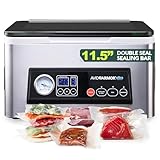
For a household that buys meat in bulk or prepares freezer meals every weekend, the larger work surface and repeatable cycle can justify the investment. A VEVOR Chamber Vacuum Sealer with 320 watts of sealing power and a 12.6-inch sealing length is listed at $309.90, while the Avid Armor USV20 high-volume chamber model with an 11.5-inch sealing area is listed at $319. These prices illustrate that an entry-level chamber machine can cost several times more than a basic suction unit, but they also show that home-sized chamber models do not always require commercial-level spending.
The tradeoff is physical. Many chamber sealers weigh roughly 15 to 30 pounds, and their hinged lids need vertical clearance. They are best treated as dedicated countertop appliances rather than items you pull out for one small bag.
Where Suction Vacuum Sealer for Meal Prep Wins
Portability and price are the suction sealer’s strongest arguments. A small unit can fit in a drawer or pantry, and many weigh only a few pounds. If you seal four or five portions on Sunday and then store the machine, the compact design is more valuable than commercial-style capacity.
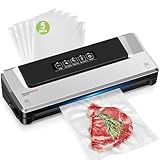
Suction sealers are also easier to understand for first-time users. Insert the textured edge of the bag, select vacuum and seal, and trim the roll when necessary. Many models provide pulse, gentle, dry, or moist settings. These controls can help with fragile foods and moderately damp ingredients, although they do not make a suction machine ideal for free-flowing liquids.
Low-cost options are widely available. The compact cordless handheld model listed with 30 reusable bags costs $20.98, and the Bonsenkitchen Vacuum Sealer Machine with multiple meal-prep modes is listed at $29.99. At this price level, expectations should be realistic: seals, pumps, batteries, and included bags may not match the longevity of a heavier countertop appliance. Still, an inexpensive model can be entirely adequate for portioning dry or solid foods.
Reusable bags can lower ongoing costs, but they require more cleaning and drying than disposable pouches. They are best for foods that are not greasy and can be washed thoroughly. For raw meat, oily sauces, or foods with strong odors, many households prefer single-use bags or rolls.
A suction sealer also works with specially designed containers, jar attachments, and bottle stoppers on compatible systems. These accessories can be useful for short-term refrigerator storage, though they do not replace the flexibility of sealing a flat freezer pouch.
Cost Over 5 Years
Purchase price alone does not tell the whole story. Consider a moderate user who seals 150 portions per year, or 750 portions over five years.
A $30 suction sealer might require about $0.25 to $0.60 in textured bag material per portion, depending on whether you use rolls, pre-cut bags, or reusable bags. At an average of $0.40, five-year bag costs would be about $300, bringing the estimated total to $330 before electricity and occasional replacement parts.
A $320 chamber sealer can use smooth pouches costing approximately $0.15 to $0.35 per portion. At an average of $0.22, five-year bag costs would be about $165. The estimated total would be approximately $485. That is more expensive overall for this moderate-use scenario, even though the chamber machine has lower bag costs.
At higher volume, the calculation changes. If you seal 500 portions per year, saving $0.18 per bag with smooth chamber pouches could save about $450 over five years. That can offset much of the initial price difference. These are planning estimates, not guaranteed operating costs; bag size, brand, food shape, failed seals, and replacement gaskets all affect the result.
Which One for Your Home
Small apartment
Choose a suction sealer unless you regularly cook wet foods in large batches. Cabinet storage, a smaller counter footprint, and a price near $20 to $80 make it easier to live with. A handheld model is especially suitable if you only need to seal a few portions at a time, though cordless battery charging adds one more task.
Family with kids or pets
A suction sealer usually handles the broadest mix of everyday jobs at the lowest entry cost: lunch portions, cooked meat, frozen snacks, and bulk-bought ingredients. Choose a model with a removable drip tray and a gentle setting. If you make large freezer-meal batches or seal homemade pet food and broths, a chamber model may be worth the added space.
Rental kitchen
Prioritize portability and easy storage. A chamber unit may be awkward if you have limited cabinets, shallow counters, or no permanent workspace. A suction sealer can be stored between uses and moved without much effort. Check the available outlet and countertop depth before buying; even a compact appliance needs room for the bag and a clear path for the lid.
Long-term home
If you own your home and have a dedicated prep area, consider a chamber sealer when you buy meat in bulk, cook sous vide weekly, or freeze liquid-based meals. Its higher upfront cost makes more sense when you expect frequent use over several years. Otherwise, spend less on a good suction model and put the difference toward quality bags and freezer organization.
FAQ
Can a chamber vacuum sealer replace a suction vacuum sealer?
For most food-storage tasks, yes. A chamber machine can seal solid foods as well as liquids, although its larger size makes it less convenient for a single small portion. It may also require chamber-compatible pouches rather than the textured bags used by many suction machines.
Is a chamber sealer better for sous vide?
It is usually better for sous vide when you prepare marinated foods or use liquid-heavy recipes. The more controlled vacuum reduces the risk of liquid reaching the pump. A suction sealer remains suitable for dry ingredients and carefully prepared bags with enough headspace.
Does vacuum sealing make food last indefinitely?
No. Vacuum sealing slows oxidation and helps prevent freezer burn, but it does not eliminate bacteria or make perishable food safe at room temperature. Refrigerate or freeze food promptly, follow safe handling practices, and label each package with its contents and date.
What should a first-time buyer prioritize?
Look for a removable drip tray, replaceable sealing gaskets, a reliable manual seal option, and bag availability in your preferred size. For a chamber machine, also check chamber dimensions and lid clearance. For a suction machine, confirm that replacement rolls and textured bags are easy to find.