Our Top Picks
 Best OverallInstant Pot Duo 6 Qt 7-in-1 Electric Pressure6 Quarts13 x 12.6 x 12.2 inches14.6 poundsCheck on Amazon
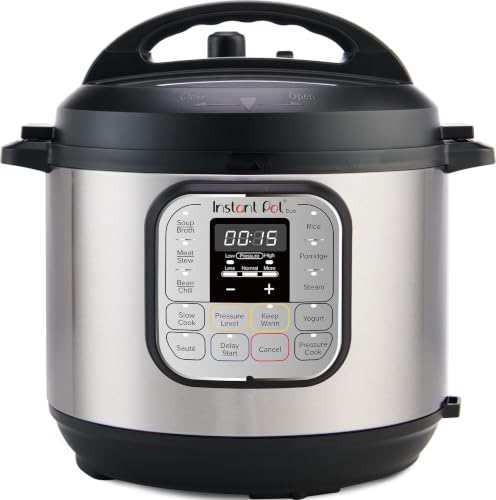 Instant Pot Duo 7-in-1 Mini Electric Pressure Cooker3 Quarts11.4 x 11.2 x 10 inches8.22 poundsCheck on Amazon
For weekly meal prep, a pressure cooker wins when you cook after work and need a batch done in about an hour, and a slow cooker wins when you can load the pot in the morning and want zero attention. If you prep on a Sunday afternoon, the Instant Pot Duo 6 Qt is our pick because it handles beans, shredded chicken, soups and rice in one pot, while the Crock-Pot 7-Quart Manual Slow Cooker is the runner-up for big, cheap, low-effort batches of pulled meats and chili.
This guide compares pressure cooker versus slow cooker from a meal prep point of view: how many portions each size yields, how the food holds up in the fridge, how much cleanup comes with it and what fits in a small prep kitchen. It is research-based. We did not personally use these products. We read maker specification sheets and manuals, compared listing details and mark unconfirmed items as “not listed”. Prices appear as tiers because they change.
Instant Pot Duo 6 Qt 7-in-1 Electric Pressure Cooker, Stainless Steel | Slow cooks, makes rice and yogurt, steams, sautés, warms and sterilizes, with an app featuring 800+ recipes.
Chosen because it specifies Stainless Steel and Slow cooks.
View on Amazon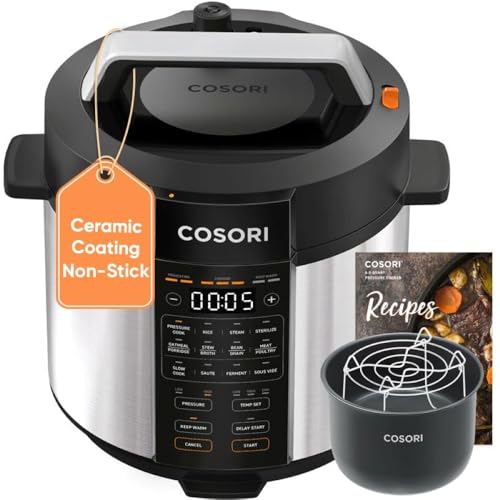
Cosori Pressure Cooker 6QT, 9-in-1, Ceramic Coating Pot, 12 Safety Features | Rice Cooker, Slow Cook, Sous Vide, Saute, Stainless Steel, 1100W, Silver
Chosen because it specifies 9-in-1 and Ceramic Coating Pot.
View on Amazon
Sweetcrispy 16-in-1 Electric Pressure Cooker 8QT, 12-Preset Multi Cookers with Ceramic Pot, Slow Cook Rice Steamer Sauté Soup Yogurt Maker and More, Recipe Book
Chosen because it specifies 12-Preset Multi Cookers with Ceramic Pot and Slow Cook Rice Steamer Sauté Soup Yogurt Maker and More.
View on AmazonInstant Pot Duo 7-in-1 Mini Electric Pressure Cooker, Slow Rice Cooker, Steamer, Sauté, Yogurt Maker, Warmer & Sterilizer, Includes Free App with over 1900 Recipes, Stainless Steel, 3 Quart
Chosen because it specifies Slow Rice Cooker and Steamer.
View on AmazonTop Picks at a Glance
- Best Overall: Instant Pot Duo 6 Qt 7-in-1, for pressure, slow cook, rice and sauté in one pot.
- Best Value: Crock-Pot 7-Quart Manual Slow Cooker, for large batches at the lowest tier.
- Best Nonstick Pot: Cosori 6 Qt 9-in-1 with ceramic-coated pot, for easy release of sticky sauces.
- Best Premium Pressure Control: Breville Fast Slow Pro 6 Qt, for adjustable pressure and automatic release modes.
- Best for Large Families: Ninja HyperHeat 6.5 Qt 9-in-1, for a bigger bowl with fast heat-up.
- Best Set-and-Forget Slow Cooker: Hamilton Beach Set and Forget 6 Qt Programmable, for a temperature probe and lid lock.
Comparison Table
| Product | Best for | Key specs | Watch for | Price tier |
|---|---|---|---|---|
| Instant Pot Duo 6 Qt | All-round prep | 6 qt; 1000 W; 7 functions | Loud standard steam release | Mid-range |
| Crock-Pot 7-Qt Manual | Big slow-cooked batches | 7 qt; Low/High/Warm; stoneware | No timer | Budget |
| Cosori 6 Qt 9-in-1 | Sticky sauces, easy cleanup | 1100 W; ceramic-coated pot; 13 presets | Coated pots need non-metal utensils | Mid-range |
| Breville Fast Slow Pro | Cooks who tweak pressure | 1100 W; 8 pressure levels, 1.5-12 psi; 4.5 qt max fill | Smaller max fill than the nominal 6 qt | Premium |
| Ninja HyperHeat 6.5 Qt | Bigger batches | 1200 W; 9 functions; fits a 5 lb roast | Pressure psi not listed | Mid-range |
| Hamilton Beach Set and Forget 6 Qt | Hands-off slow cooking | Programmable; probe; lid lock | Other specs not listed | Budget to mid |
How Each Method Behaves for Meal Prep
Pressure cooking traps steam so the liquid reaches temperatures above boiling, which is how a pot of dry beans or a tough cut finishes in a fraction of the usual time. The Instant Pot Duo manual lists high pressure at 10.2 to 11.6 psi and about 239 to 244 degrees Fahrenheit. The time saved matters on a prep day, because you can run two or three pots back to back rather than babysit one.
Slow cooking holds food near 209 degrees Fahrenheit, according to Crock-Pot’s description of its manual 7-quart model. The long, gentle heat gives soft pulled meats and thick stews, and the cook can leave the house. For meal prep the difference shows up in texture. Pressure-cooked chicken breast can shred cleanly in 10 to 12 minutes of pressure time, while slow-cooked chicken can turn stringy if left on too long. On the other hand, a forgiving slow cooker rarely overcooks a chuck roast by an hour.
The right choice also depends on what you prep. Grains, beans, steel-cut oats, soups and stock are pressure-cooker friendly. Pulled pork, chili and braised short ribs suit either. Delicate dishes such as fish, tender vegetables and many egg dishes are better done in a pan, oven or steamer, so do not expect either machine to handle every item on your menu.
Worked Example: How Many Portions Per Batch?
Capacity labels overstate what fits. Pressure cookers should not be filled beyond about two-thirds of their volume, or one-half for foods that foam such as beans, grains or pasta, per most manufacturers’ guidance. Slow cookers should be filled between half and three-quarters, according to Crock-Pot’s manual guidance of no more than three-quarters. A rough calculation helps.
| Pot | Nominal volume | Usable fill | Usable cups | Portions at 1.5 cups |
|---|---|---|---|---|
| 6 qt pressure cooker, normal foods (two-thirds) | 24 cups | 16 cups | 16 | about 10 |
| 6 qt pressure cooker, beans or grains (one-half) | 24 cups | 12 cups | 12 | about 8 |
| Breville Fast Slow Pro (4.5 qt max fill) | 18 cups | 18 cups | 18 | about 12 |
| 7 qt slow cooker (three-quarters) | 28 cups | 21 cups | 21 | about 14 |
The numbers explain why a 7-quart slow cooker is a favorite for batch cooking, while a 6-quart pressure cooker produces roughly ten portions of a thick stew. Note that cooked food shrinks as water cooks out or expands as grains absorb liquid, so treat the table as a planning tool. For meal prep, ten portions is still a full workweek lunch for two people.
A cost-per-portion calculation also changes the picture. If a pot yields ten portions per batch and you run it once a week for 40 weeks, that is 400 portions per year. A mid-range appliance spread across 400 portions costs only a small fraction of a restaurant lunch per portion, so the real decision is about how well the pot fits your routine, not about price.
1. Instant Pot Duo 6 Qt 7-in-1: Best Overall for Prep Days
- Capacity and power: 6 quarts, 1000 W, 120 V.
- Functions: pressure cook, slow cook, sauté, steam, rice, yogurt, keep warm.
- Timers: delay start up to 24 hours; slow cook up to 20 hours; manual pressure cooking up to 120 minutes.
- Safety: 10 safety mechanisms per the manual.
Best for: people who want one pot that can shred chicken, cook beans, make stock and produce rice. Skip if: you need a bigger crock than 6 quarts.
The Duo is the default for meal prep because its sauté function lets you brown onions and meat in the same pot you cook in, so you wash one vessel. The stainless inner pot goes into the dishwasher, and the sealing ring can be swapped for a spare if it holds onto the smell of a curry. A 6-quart bowl produces about ten portions of thick stew, enough for a week of lunches for one or two people.
The delay start is useful for oats and legumes soaked overnight, though food safety guidance says not to leave perishable food at room temperature for long, so use delay start with caution and follow the manual. The slow cook mode works for chili and pulled pork but is not a true crock replacement.
Pros: versatile; stainless pot; common parts; sauté in the same pot. Cons: loud release; ring absorbs odors; 6 quarts limits large batches.
2. Crock-Pot 7-Quart Manual Slow Cooker: Best Value for Big Batches
- Capacity: 7 quarts; about 8 or more servings per the maker.
- Controls: Low, High and Warm.
- Crock: removable stoneware, dishwasher safe, oven safe to 400 degrees Fahrenheit per the chart, not for stovetop.
- Fill: no more than three-quarters full.
Best for: batch cooking pulled pork, chili and soup on a budget. Skip if: you need a timer.
The manual Crock-Pot is a prep-day workhorse. A 7-quart crock holds about 21 cups at the three-quarters fill, which is about 14 portions at 1.5 cups each. That makes it the best batch-per-cost choice in this guide. The lack of a timer is its main drawback, because dinner can overcook if you are away longer than planned. A cheap outlet timer solves it, though Crock-Pot recommends following its manual for unattended use.
The stoneware can go in the oven, which is handy for finishing a dish, but it cannot go on the stovetop, so browning has to happen in a separate pan. That adds a dish to wash, a small cost that pressure cookers with sauté avoid.
Pros: large; lowest tier; simple; dishwasher-safe crock. Cons: no timer; separate pan for browning; heavy stoneware.
3. Cosori 6 Qt 9-in-1 Pressure Cooker: Best Nonstick Pot
- Capacity and power: 6 quarts (5.7 L), 1100 W.
- Pot: aluminum with nonstick ceramic coating; stainless exterior.
- Presets and functions: 13 presets, 9 functions, 12 safety features.
- Pressure: six adjustable levels from 5.8 to 10 psi per one review.
Best for: sticky sauces, risotto-style dishes and easy scraping. Skip if: you use metal spoons.
Ceramic coatings release sticky sauces more easily, which helps on the dishes meal preppers love: teriyaki chicken, glazed meatballs and tomato-based stews. The trade-off is that coatings wear faster than stainless steel, so use silicone or wood utensils and avoid abrasive pads. Aluminum under the coating heats quickly, which can scorch sugary sauces if you skip stirring before sealing the lid.
The presets cover common meal prep tasks such as rice, beans and soup, while manual mode gives control for custom recipes. The review-sourced pressure range is not confirmed by the maker in our sources, so treat it as indicative.
Pros: easy cleaning; multiple pressure levels; light and compact. Cons: coating wear; metal utensils not suitable; some specs come from reviews.
4. Breville Fast Slow Pro 6 Qt: Best Premium Pressure Control
- Capacity: 6 quarts, with 4.5 quarts max fill and 1 quart minimum.
- Power: 1100 W per most listings.
- Pressure: 8 levels from 1.5 to 12 psi.
- Release: automatic Quick, Pulse and Natural modes.
- Slow cook: high or low from 2 to 12 hours.
Best for: cooks who want to dial pressure down for delicate foods. Skip if: you need the largest possible batch.
The Breville is the nerd’s choice. Eight pressure levels let you cook fish, eggs or tender vegetables at 1.5 to 3 psi where a standard cooker offers only high and low. The automatic release modes also take away the risk of touching a hot valve. For meal prep this is handy for proteins that overcook easily, for example salmon, which most cooks would not trust to a standard cooker.
The catch is capacity. The 4.5-quart maximum fill gives about 12 portions at 1.5 cups, but the pot is nominally six quarts, so do not compare it directly with a Duo. It is also a premium tier purchase, and the manual is more involved than that of a basic cooker.
Pros: fine pressure control; automatic release; solid slow-cook range. Cons: premium tier; smaller max fill than label; learning curve.
5. Ninja HyperHeat 6.5 Qt 9-in-1: Best for Bigger Households
- Capacity and power: 6.5 quarts, 1200 W.
- Functions: pressure, slow cook, rice, pasta, sear/sauté, yogurt, steam, sous vide and keep warm.
- Pot: aluminum with nonstick ceramic coating; SimpliServe pot goes from base to table.
- Fit: 4-lb chicken or 5-lb roast; about 17.6 lb.
Best for: families who want a slightly larger bowl and fast heat-up. Skip if: storage space is tight, since it is heavier than rivals.
Ninja claims HyperHeat cooks up to twice as fast as traditional slow cooking, which is a statement about slow cooking rather than other pressure cookers. A 1200 W base heats quickly, and a 6.5-quart bowl handles a whole chicken for shredding. The operating pressure is not listed in our sources, so we cannot compare it with the psi figures from other brands.
The coated aluminum pot has the same care rules as the Cosori: avoid metal tools. The SimpliServe feature is mostly about presentation, but it helps if you serve straight from the pot at the table.
Pros: larger bowl; quick heating; wide function list. Cons: heavy; pressure level not listed; coated pot care.
6. Hamilton Beach Set and Forget 6 Qt Programmable: Best Hands-Off Slow Cooker
- Capacity: 6 quarts.
- Features: temperature probe and lid lock per the listing.
- Controls: programmable.
Best for: people who want the cooker to switch to warm when food reaches a set temperature. Skip if: you want pressure cooking.
The probe changes meal prep. Instead of guessing a time, you set a target temperature and the cooker holds the food on warm once it arrives. That makes roasts less likely to dry out, and the lid lock makes the pot easier to transport. Other specs, such as wattage and weight, are not listed in our sources.
Pros: probe; lid lock; programmable. Cons: no pressure; specifics limited; occupies counter space.
Also Consider
Crock-Pot 6 Qt Cook and Carry Programmable
A 6-quart programmable slow cooker with a digital timer. Details beyond the listing are not listed here.
Instant Pot Rio Mini 4 Qt
An 800 W, 4-quart pressure cooker for singles or couples who want smaller batches of about six portions.
Ninja PossibleCooker PRO 8.5 Qt
A large slow-cook-focused multi-cooker for big batches without pressure cooking. Specific temperature ranges are not listed in our sources.
How We Chose
We chose models available in common sizes and from brands that publish manuals and parts. We compared official specs, manuals and reputable independent coverage, then ranked them on batch capacity, cleanup, controls and fit for a prep kitchen. This guide is research-based. We did not personally use these products. Where listings differed we noted it, and we show price tiers rather than exact amounts.
A Sunday Prep Workflow With Each Method
Pressure Cooker Session
Start with the longest-cooking item. Sauté diced onion and garlic in the pot, add dried beans with liquid at no more than the half-full line, seal and cook. While the beans come up to pressure, which takes roughly 10 to 15 minutes, season and cube chicken thighs. When the beans finish and you release pressure according to the manual, move them to shallow containers, rinse the pot and cook the chicken with a splash of stock and spices. Finish with rice or a grain on the steam rack or in a second pot. The whole sequence can produce a protein, a legume and a grain in roughly two and a half hours, and only one pot gets dirty.
Slow Cooker Session
Brown the meat in a pan if you want deeper flavor, then transfer to the crock with onions, stock and seasonings. Set Low for the time in your recipe and leave the house. When you return, shred the meat in the crock, ladle portions into containers and let steam escape before sealing. The effort is concentrated at the start and the end, which suits people who dislike standing in the kitchen on prep day. The weakness is that everything finishes at once, so you need a second appliance if you want a grain or a vegetable side.
Using Both
A hybrid session works well for larger households: start a slow cooker with pulled pork in the morning, then run the pressure cooker in the afternoon for beans and rice. Two pots can yield four to five different components for the week, which prevents the boredom that makes people abandon meal prep.
Texture, Flavor and Reheating Notes
Meal prep food has to survive a trip through the fridge and the microwave. Pressure-cooked beans keep their shape well but can burst if overcooked, and pressure-cooked rice can turn gummy after refrigeration, so rinse it first and use the ratio in your manual. Slow-cooked meats shred easily and reheat well in sauce, though slow-cooked vegetables often turn soft and are better added late or cooked separately. If you want crisp texture, finish a dish in a skillet or oven for the last few minutes rather than relying on either appliance.
Flavor also differs. Pressure cooking locks in aroma but gives less evaporation, so sauces can taste thin and benefit from a sauté-and-reduce finish after the pressure phase. Slow cooking allows flavors to mellow over many hours, but it can dull fresh herbs, so add them at the end. These small adjustments make a bigger difference to the final result than the choice of machine.
Food Safety Reminders for Prepped Meals
Cool cooked food promptly and refrigerate it in shallow containers rather than leaving a deep pot on the counter. Reheat leftovers to a steaming-hot temperature before eating, and follow current USDA guidance on how long prepared food keeps in the fridge. Do not use a slow cooker to reheat cold leftovers, because it may take too long to reach a safe temperature. If a power cut interrupts a cook cycle, check the manual and when in doubt throw the food out. These are general habits, not a guarantee of any product outcome.
Buying Guide
Decide How You Prep
If you prep for the week in one session, choose the pot that finishes quickest, which is a pressure cooker. If you prefer to prep a little every day, a slow cooker that runs while you work may fit better. Households that do both should consider one pressure cooker plus a low-cost slow cooker.
Capacity Thresholds
For one person, 3 to 4 quarts is enough. For two people prepping five lunches each, aim for 6 quarts. For a family or a weekly cook-up of 14 meals, look at 7 to 8 quarts. Use the fill-line math above rather than the label.
Inner Pot Material
Stainless steel is durable and takes metal utensils but can stick if you do not deglaze. Ceramic coatings release food easily but wear faster. Stoneware holds heat well and is dishwasher safe but is heavy and fragile.
Cleanup and Storage
Count the parts you will wash: pot, lid, ring, valve, condensation cup. Check that the inner pot fits your dishwasher. Choose a model with a spare ring if you cook strong flavors. Measure the shelf where it will live, remembering that lids stand taller than the pot.
Cooling and Storage of Prepped Food
Move cooked food into shallow containers soon after cooking and refrigerate promptly, following USDA guidance on cooling. Avoid leaving food on the Warm setting for long periods, because Warm is meant for holding cooked food briefly, and Crock-Pot says not to cook on it.
Mistakes to Avoid
- Filling a pressure cooker past the max line, which can block the vent.
- Putting frozen meat in a slow cooker and leaving it on Low for the whole day without checking the manual.
- Using delay start for perishable ingredients for many hours.
- Overcooking delicate proteins on high pressure.
- Skipping the spare sealing ring.
Frequently Asked Questions
Is a pressure cooker or slow cooker better for meal prep?
A pressure cooker is better when time is short, and a slow cooker is better when you can start early and walk away. Many cooks end up using both.
Can a pressure cooker do everything a slow cooker can?
Most models include a slow cook mode, but it is not identical to a ceramic crock. For frequent slow cooking, a dedicated cooker is simpler.
Which is cheaper to run?
A slow cooker draws a few hundred watts for many hours, and a pressure cooker draws more for a shorter time. Costs are small in either case.
Which is safer to leave unattended?
Follow the manual. Makers design slow cookers for long unattended cooking, while pressure cookers are usually run while you are home.
How many portions will a 6 quart cooker make?
About ten portions of 1.5 cups for thick stews at a two-thirds fill, fewer for beans and grains.
Do I need a sauté function?
It is helpful because browning in the same pot adds flavor and saves a dish. Without it, you need a separate pan.
Can I cook frozen meat?
Pressure cookers can handle it with longer times per the maker, while slow cooker guidance is more cautious, so check the manual.
Which One Should You Buy?
Buy the Instant Pot Duo 6 Qt if you want one flexible pot for a small prep kitchen. Buy the Crock-Pot 7-Quart Manual if you want large batches at the lowest cost. Choose the Cosori for sticky sauces, the Breville for fine pressure control, the Ninja HyperHeat for a larger bowl and the Hamilton Beach for probe-driven slow cooking. Match the pot to your routine and your dishwasher, not to feature counts.
Sources
- Instant Pot IP-DUO manual and product pages
- Crock-Pot manual 7-quart slow cooker product page and user guide
- Breville Fast Slow Pro instruction book (BPR700)
- Cosori and SharkNinja product pages and manuals
- USDA food safety guidance on leftovers and slow cookers
Last updated: October 2026