
Key takeaways
- Top rack only: the top shelf sits farthest from the heating element.
- No heated dry: turn it off or open the door to air-dry instead.
Warped lids are the number-one reason perfectly good meal prep containers end up in the trash. The body still holds food fine, but the lid no longer snaps down, so meals leak and go stale. The frustrating part is that warping is almost always preventable, caused by heat and handling habits rather than a defect in the container.
This guide explains exactly why lids warp, how to wash and store them so they keep their shape, when material choice makes a difference, and how to revive a lid that’s already starting to deform. Get these habits down and a good set will keep sealing tightly for years instead of failing after a few months.
Our top picks


 Snuvid 4 Pack 8 Cups/ 63oz Large
- Product Group: Kitchen
- Binding: Tools & Home Improvement


As an Amazon Associate we earn from qualifying purchases at no extra cost to you. Ratings are shown as listed on Amazon.
⚡ Save on Your Next PC — Amazon Prime
Prime members get fast free shipping on the systems above, plus early access to Prime Day & Black Friday PC deals. New members get a 30-day free trial.
Watch: How to Prevent Meal Prep Container Lids from Warping — Video Review
Why Lids Warp in the First Place
Lids are thinner than container bodies, so they heat and cool faster and deform more easily. The two biggest culprits are dishwasher heat and microwave heat. In the dishwasher, the heating element on the bottom radiates intense heat upward, and any lid sitting low in the machine takes the brunt of it. In the microwave, sealing a lid tight traps steam that softens and bulges the plastic.
The Right Way to Wash Lids
Keep lids as far from heat as possible during cleaning. Whenever you can, hand-wash lids in warm, soapy water, which puts zero thermal stress on them. If you use the dishwasher, always place lids on the top rack, never the bottom, and skip the high-heat “sanitize” or heated-dry cycle. Air-drying preserves shape far better than a heated dry.
- Top rack only: the top shelf sits farthest from the heating element.
- No heated dry: turn it off or open the door to air-dry instead.
Microwave Habits That Protect Lids
Never microwave with the lid fully sealed. Vent it, crack one corner, or set it loosely on top so steam escapes instead of building pressure against the plastic. Better still, remove the lid entirely and cover food with a microwave-safe plate. Heating at 60-70% power also reduces the intense heat that softens lids over repeated use.
Storage and Material Choices
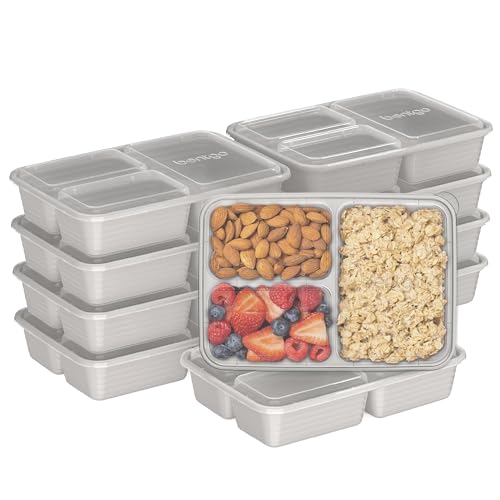
Store lids flat or standing on edge, not snapped tightly onto bodies, which keeps constant tension off the latches. For anyone who reheats hot, oily food constantly, glass sets like the M MCIRCO or Snuvid containers sidestep plastic warping altogether, since their glass bodies and sturdier lids tolerate heat far better. For plastic, a thicker, quality set such as the Bentgo Prep trays resists deforming better than ultra-thin budget lids.
Tips
- Let hot food cool a few minutes before sealing so residual steam doesn’t stress the lid.
- Reshape a lightly warped lid by soaking it in hot water, then pressing it flat under a heavy book as it cools.
- Rotate your set so the same few lids aren’t taking every heat cycle.
- Replace lids that no longer seal; a warped lid defeats the purpose of the whole container.
Frequently Asked Questions
Can I fix a lid that’s already warped?
Sometimes. Soak it in very hot water to soften the plastic, then press it flat between two hard surfaces or under a heavy book while it cools. Severely deformed lids usually can’t be fully restored.
Is it the dishwasher or the microwave that warps lids more?
Both contribute, but bottom-rack dishwasher heat is the most common cause. The heating element radiates directly at anything placed low in the machine.
Do glass containers avoid the warping problem?
Largely, yes. Glass bodies don’t warp, and their lids tend to be sturdier. Glass is the best choice if you frequently reheat hot, oily foods that stress plastic.
Does heating at lower power really help?
Yes. Reheating at 60-70% power lowers the peak temperature the lid endures, which meaningfully slows warping over months of daily use.
Conclusion
Warped lids come down to heat management: hand-wash or top-rack only, never microwave sealed, and store lids without constant tension. If you reheat hot foods often, glass sets like the M MCIRCO trays remove the problem entirely, while a thicker plastic set like the Bentgo Prep containers holds up well with good habits. Protect your lids and the whole set keeps sealing like new for years.



Write Your Review
No reviews yet. Be the first to share your experience!