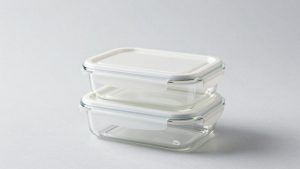
The best space saving food storage containers for a cramped cupboard are Joseph Joseph Nest Lock, which groups five bases and their matching lids. Choose uniform rectangular boxes if your fridge is the problem, a flexible pouch for irregular freezer space, or slim canisters to organize dry pantry staples.
Quick verdict on the best space saving food storage containers
Joseph Joseph Nest Lock is the best overall choice for households that store leftovers in different quantities and have limited cupboard space. The bases nest when empty, and the lids clip into a group. Choose Snapware instead if your biggest problem is lining up several packed weekday lunches in the fridge.
The quickest way to narrow the list is to ask where you run out of room first. A drawer full of loose lids calls for a different purchase than a refrigerator shelf crowded with prepped lunches. If both areas are tight, start with the place that slows you down most often. A single format usually does one job particularly well, and a second format only earns its space if you can name the job it will do.
Quick comparison of the best space saving food storage containers
These six picks cover distinct storage jobs. Compare the space-saving feature with the last column before choosing a set. A tall canister can free up shelf width, for example, but you still need room above it to remove the lid or enough space in front to pull it forward.
| Model | Best for | Size or bundle | How it saves space | Main trade-off |
|---|---|---|---|---|
| Joseph Joseph Nest Lock | Mixed leftovers and crowded cupboards | Five bases with matching lids | Bases nest and lids clip together | Five different sizes give you few repeat portions |
| Snapware Total Solution rectangular plastic | A full week of repeat lunches | Five rectangular containers with lids | Empty pieces nest and packed containers stack | Four tabs per lid take time to open and close |
| Rubbermaid Brilliance 3.2-cup two-pack | A small fridge and two repeat portions | Two 3.2-cup containers with lids | Matching rectangular containers form a short stack | One capacity for both containers |
| IKEA 365+ rectangular glass | Meal prep you plan to reheat in the oven | Three 34-fl-oz containers with lids | Identical rectangular glass bases stack with lids on | Glass adds weight |
| OXO Good Grips POP five-piece set | Dry pantry staples on a narrow shelf | 0.4, 1.1, 1.1, 1.7, and 2.3 qt | Modular canisters make use of shelf height | A mixed bundle can leave you short of large bins |
| Stasher Stand-Up Mid Bag | Flexible freezer storage | One 56-fl-oz silicone bag | Flexible body and a gusseted base | Filled shape varies with the contents |
How the products were selected
The ranking uses product specifications and US listings checked November 13, 2026. It weighs whether each design solves a specific space problem and what the owner gives up to get that benefit. The recommendations are editorial judgments based on documented designs, without hands-on measurements.
For cupboard storage, the two factors that matter most are where the lids go and how much room the empty bases occupy together. For refrigerator use, the emphasis shifts to repeatable shapes, useful portion sizes, and the ability to retrieve one meal without dismantling the rest of the shelf. Pantry storage favors capacity that fits the foods you actually buy. In the freezer, the shape and flexibility of the filled container can matter more than the size of the empty package.
The labels in the table describe the conditions under which each pick makes sense. They don’t represent measured differences in stacked height, seal strength, or durability. The number of pieces on a box also deserves attention: some retailers count lids as separate pieces, so a 10-piece set can mean five usable containers. Compare the number of complete containers you will fill rather than the headline number on the package.
Container picks for small kitchens
Start with the type of food you store most often. Changing quantities favor a set with several capacities, and repeated meals are easier to plan around matching containers. The picks below also account for the extra movements a design can add, from matching lids to retrieving a dish at the bottom of a stack.
Joseph Joseph Nest Lock for the smallest cupboards
Joseph Joseph Nest Lock earns the overall pick because both halves of the set have a place when empty. The five bases nest, and the color-coded locking lids clip together. That’s particularly helpful if the cupboard currently has one pile of bowls and a separate bin of lids that rarely stay matched.
The US 10-piece set contains five polypropylene containers and five lids. The smallest size is about a cup, and the largest holds about 12.5 cups. That spread works for cooking households that need to put away a little dressing after lunch, a few servings of roasted vegetables after dinner, and a larger batch of food on the weekend. The color coding helps when grabbing a lid from the group because you can identify the matching pair before fitting it.
The compromise appears when several people need the same portion. One large container and one small container might both fit a shelf, but a mixed set gives you fewer ways to divide a recipe evenly across several days. Retrieving the smallest base is easiest if the entire nested group can come out of the cupboard. A shelf blocked by a front row of mugs makes that movement less convenient.
Buy if you use a range of leftover sizes and want one tidy place for the lids. Skip if you pack five equal lunches on Sundays. The matching Snapware set suits that routine better.
Snapware Total Solution for five weekday lunches
The Snapware Total Solution 10-piece rectangular plastic set provides five containers and five lids. Its rectangular design makes the most sense when you portion out several similar lunches at once. The pieces nest or stack, and the lids include an area for writing and erasing labels.
Choose this set when your goal is to make weekday meals easy to count and retrieve. Imagine one stack of meals on the left of a fridge shelf and ingredients for dinner on the right. The containers give each lunch a predictable footprint, and the erasable lid labels let you distinguish a vegetarian portion or mark a particular day without adding loose tags. If you put lunches away in the order you plan to eat them, there’s less reason to lift the full stack to find a specific one.
Kohl’s lists a four-tab closure and says Total Solution lids can fit matching glass and plastic containers of the same shape and size. That can simplify future purchases if you verify the exact match. The lid design also means opening and closing four tabs each time. In a narrow space, remove the whole container before opening it instead of trying to reach the tabs between neighboring items.
Buy if five ready-to-go portions are normal for your household. Skip if most days produce an unpredictable mixture of tiny scraps and family-size leftovers. Nest Lock makes better use of that variety.
Rubbermaid Brilliance for a short refrigerator stack
The Rubbermaid Brilliance 3.2-cup two-pack is the pick for buyers who want to organize just one part of the refrigerator. Two matching rectangular containers are enough to create a designated place for tomorrow’s lunch and the next day’s leftovers without committing to a larger set.
Target lists the two-pack in clear plastic with 3.2 cups per container. The clear sides help when boxes sit at eye level, while the matching footprint makes it easy to give both portions one spot beside other groceries. The small bundle is useful when you already own one or two larger dishes and need to solve a specific gap in your storage. It also lets you see whether your household naturally uses that capacity before you buy several more.
The main limitation is the fixed capacity. A large leafy salad can take up more room than a serving of rice and vegetables, and a small portion of salsa will leave much of the box empty. Also look at where the latches sit relative to a shelf rail or door bin. Even if the lid can clear the opening, you need enough space around the box to grip it and pull it forward.
Buy if you regularly store one or two meals at a time. Skip if you’re planning five portions or want one purchase to cover everything from snacks to batch cooking.
IKEA 365+ glass for stackable meals you reheat
IKEA’s 365+ rectangular glass three-pack pairs three matching 34-fl-oz containers with locking lids. It’s the glass pick for a kitchen where leftovers move from a crowded fridge to the oven. The shared footprint keeps the stack tidy, and the same glass dish can serve as the reheating vessel.
IKEA identifies the set as item 206.252.52 and rates the glass dish for oven use. Remove the lid for the oven and follow the maker’s heating instructions. The payoff is clearest when you keep reheatable meals at home. For instance, storing baked pasta in individual dishes lets you take out the portion you plan to serve and reheat it in the same vessel. You avoid using a second dish for each portion and can see what’s left through the glass.
Weight matters more in a stack than it does when you’re choosing a single dish. Store the set where you can remove one container with a comfortable grip, especially if the shelf is high or crowded. Count the lidded height of the full stack before buying, and check that the shelf above it leaves room for your fingers. Also confirm the listing shows the three-pack with locking lids, since the same IKEA line includes other lid configurations.
Buy if you want three same-size dishes that can go in the oven after lid removal. Skip if the boxes mostly travel in a backpack or you frequently carry several at once. Plastic keeps the load lighter.
OXO Good Grips POP for a narrow dry pantry
The OXO Good Grips POP five-piece set is the dry-food pick for shelves where bags and boxes spread out or fall over. The modular design and mixed heights let you assign different containers to foods such as baking ingredients, snacks, and pasta while keeping a fairly regular shelf layout.
The US commissary listing specifies one 0.4-qt, two 1.1-qt, one 1.7-qt, and one 2.3-qt canister. This range makes sense if the contents of your shelf vary in size. The two matching 1.1-qt containers can sit alongside each other for foods you replenish regularly. A taller container can make better use of a shelf with space above it, particularly if the original food package is wide and collapses once opened.
Check whether your most-used staples will fit in this exact assortment. A household that buys several large bags of flour, rice, and oats may use the largest canister right away and have no similarly sized container for the other staples. If you shop in smaller quantities, that same assortment can give you a place for several different ingredients without assigning a large bin to each one. Keep any original cooking instructions or dates you need on a label.
Buy if small and medium dry staples dominate the pantry. Skip if the shelf is too low to remove the taller lid comfortably or if most items come in bulk bags and need several large matching bins.
Stasher Stand-Up Mid Bag for irregular freezer space
The Stasher Stand-Up Mid Bag is a flexible alternative when rigid boxes leave narrow gaps in a freezer drawer. Its gusset opens into a base for upright filling, and the sides can follow the shape of the contents. It works especially well for foods you can portion without a rigid dish.
Stasher lists a 56-fl-oz capacity and exterior dimensions of 8.5 by 7 by 3.5 inches. Treat those dimensions as a reference for shopping, then think about the thickness of the food. A bag holding an even layer of sliced fruit behaves differently from one holding a stack of bulky rolls. If your freezer has a narrow slot beside a drawer divider, use the width and shape of the food you intend to store to judge whether the bag can actually occupy it.
The pouch has no separate lid to lose, which helps when empty containers compete for drawer space. It also needs a different handling routine from a rigid box. The opening can be less convenient for scooping large spoonfuls, and the filled pouch cannot provide a predictable platform for other containers. A dedicated row or divider is usually easier to manage than a pile of bags with uneven contents.
Buy if you freeze small batches of ingredients and want flexibility between rigid boxes. Skip if you need to stack finished meals in level layers or want to reheat and serve from a dish. Choose the IKEA set for that workflow.
How to choose containers that fit your kitchen
Measure the place the container will live before choosing a material or piece count. Shelf clearance, drawer depth, and how far the lid sticks out affect whether you can store and retrieve a container easily. A set that fits on paper can still be awkward if you have to move groceries to reach it.
Measure the usable opening
Measure width, depth, and height inside the storage area, then repeat at the opening. A fridge drawer can be wider inside than it is at the handle or narrower at the back. Account for shelf lips, hinge intrusion, and any bins that need room to slide past the containers.
Use an existing lidded container or a cardboard mockup to check the layout before ordering. Place it on the shelf, put a few items around it, and try to slide it out with one hand. If it catches on the shelf above, you need a shorter container or a lower stack. If the lid scrapes a neighboring carton, reserve more width than the dimensions of the base alone suggest. For a freezer drawer, close it gently with the mockup in place to see whether the top catches the frame.
Plan your capacity around a week of real meals
The size you reach for repeatedly matters more than the total capacity printed on a bundle. Think through the last week and count how many nights left you with one lunch portion, multiple lunches, or a small amount of sauce. That tells you how many matching boxes and specialty sizes you will use.
If lunches are the main job, start by portioning one typical meal into a container you already own. Consider taller foods such as a sandwich or loosely packed greens as well as dense foods such as rice. Measure the capacity of the container if the size isn’t marked and use it as a reference. A slightly larger box makes sense if you routinely need extra headroom. If the current box is only half full on most days, a smaller format can free shelf room without changing what you eat.
Reserve space for frequently used lids
Lids have their own storage needs, especially when clips or handles prevent them from lying flat. A lid that stores with its matching base can be a convenience for two or three pieces, while a nesting system that keeps lids together is more practical for a full cupboard of assorted sizes.
If you already have a set of matching boxes, see whether you can keep all the lids upright in one reachable row. The arrangement works best when the lids are easy to put away after washing and you can remove any one without disturbing the rest. For a mixed-size set, group lids by shape first and then size. If you have to sort through several visually similar pieces each time, a color-coded system or a single repeated lid size can make the kitchen easier to use.
Frequently asked questions
The most common buying mistakes come from assuming that a stackable set also nests well or that every container in a product line uses the same lid. Check the exact package and look at how the pieces behave in both states, since a set can spend half the week packed and the other half empty.
Do nesting containers save space when filled?
Nesting mainly saves space when the containers are empty because their bases fit inside one another. Filled containers use shelf space according to their exterior dimensions and how the lids support stacking. If your fridge is crowded, look at the assembled shapes and how many of them can sit in one column.
A set with mixed sizes may still stack well when filled, but a large base and a small upper box don’t necessarily make a layout you can repeat across the whole shelf. If you like to retrieve meals in order from a single column, identical rectangles are easier to plan around. For a cupboard where the containers spend most of the week empty, give nesting and lid storage more weight in your choice.
Are rectangular containers always the best fit?
Rectangular boxes make sense on many flat shelves because their straight sides can sit alongside cartons and other boxes. Still, the lid determines the usable width, and a deep container can block access to the back of a shallow shelf. Check the widest and deepest points of the assembled container.
Round containers can be convenient for stirring, and a few small round cups can make use of a loose space between other items. If you intend to replace an entire shelf of mismatched boxes, start by deciding how many containers you want to arrange across the shelf. Divide the usable width by that number to get a rough maximum footprint, then allow space to lift each container out. Use the same approach for depth if you plan to store two rows.
Conclusion
Choose Joseph Joseph Nest Lock if empty containers and mismatched lids crowd the cupboard. For repeated lunches, use a matching Snapware or Rubbermaid stack, or choose IKEA glass for oven reheating. OXO suits dry staples, and Stasher fits irregular freezer space where rigid boxes leave gaps.
More from Amazon
Programs that pair well with the guide above. Offers and eligibility are set by Amazon and may change.
Set up recurring deliveries of everyday items on eligible products. Terms and savings are set by Amazon.
Explore Subscribe & SaveCollect the home and kitchen items you want in one registry that guests can shop from.
Create a wedding registryFree shipping on eligible items, Prime Video and more. Eligible new members can start with a free trial.
Start a Prime free trialAudiobooks and podcasts to listen to on the go. Eligible new members can start with a free trial.
Try Audible freeAs an Amazon Associate we earn from qualifying purchases.