
Best wood material for cutting board selection often confuses home cooks facing dull knives, warping, or unsafe bacteria growth. Choosing the wrong timber leads to quick damage and frustration in the kitchen. This comprehensive guide helps you evaluate grain structure, hardness, and maintenance so you can buy the ideal board effortlessly.
How to Choose a Suitable Timber
Selecting the right lumber for kitchen preparation requires evaluating several critical physical properties before making a purchase. Finding the best wood material for cutting board options depends on how well a species handles moisture, daily knife impacts, and regular sanitation without splitting or harboring harmful microscopic food particles.
Janka Hardness Rating
The Janka hardness scale measures how well timber withstands denting and wear from heavy daily knife strikes in busy kitchens. Wood that is excessively hard will quickly dull sharp knife edges, while overly soft lumber score too easily, creating deep grooves where bacteria flourish. Aiming for a balanced rating ensures long product durability.
Ideal hardwood species typically rank between nine hundred and fifteen hundred on the official Janka hardness rating scale. Timber within this specific range offers sufficient resistance against deep knife cuts while remaining soft enough to preserve precious knife edges over extended culinary prep sessions and heavy routine cutting tasks.
Grain Structure and Porosity
Closed-grain hardwoods feature tight cellular structures that naturally prevent liquid absorption and bacterial growth. When determining the best wood material for cutting board projects, closed-grain choices outperform open-grained woods like oak, which feature large visible pores that easily trap moisture and stubborn organic debris.
Porosity directly impacts sanitation and structural stability over years of repeated washing and drying cycles. Low-porosity woods resist warping, cracking, and foul odor retention, making them significantly cleaner for handling raw meats and fresh produce. Selecting tight structures guarantees a safer food preparation surface for families.
Toxicity and Food Safety
Food safety remains paramount when choosing raw materials that regularly come into direct contact with edible ingredients. Certain exotic lumber species contain natural toxins, irritating resins, or heavy oils that can leach into food during chopping. Stick to non-toxic domestic or well-documented hardwoods for culinary peace of mind.
Always verify that the lumber source is certified food-safe and free from harmful chemical treatments or industrial stains. Unfinished natural hardwoods coated only with food-grade mineral oil or beeswax provide the safest foundation for daily meal preparation without introducing hazardous chemicals into fresh fruits and vegetables.
Top Wood Choices for Kitchen Prep Surfaces
Exploring top-performing hardwoods helps home chefs select durable surfaces tailored to their specific cooking habits. Identifying the best wood material for cutting board construction involves comparing natural resilience, aesthetic appeal, and ongoing maintenance demands across popular commercial timber species available today.
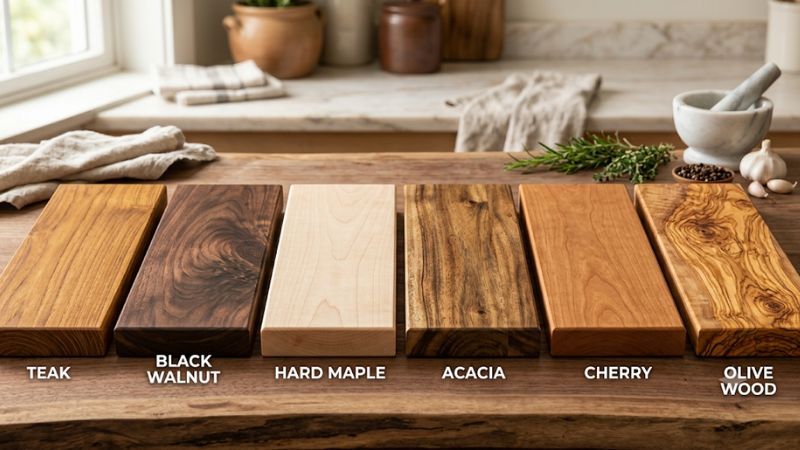
| Wood Material | Janka Rating | Grain Type | Key Advantage | | Sugar Maple | 1450 lbf | Closed | Outstanding durability | | Black Walnut | 1010 lbf | Closed | Knife-friendly surface | | Teak Wood | 1070 lbf | Closed | High water resistance | | Acacia Wood | 1750 lbf | Closed | Budget-friendly option |
Sugar Maple
Hard maple stands as the traditional industry standard for commercial butchering blocks and residential chopping surfaces. Its extremely dense closed-grain structure offers incredible resistance against heavy chopping impacts while remaining remarkably gentle on fine Japanese and European chef knives during intensive daily meal preparation.
This light-colored timber exhibits high density and small natural pores, making liquid penetration extremely difficult. Regular application of food-grade mineral oil maintains its smooth surface finish and neutral appearance, fitting seamlessly into contemporary kitchen decor while providing decades of reliable daily cutting performance.
Black Walnut
Black walnut offers a luxurious dark brown aesthetic combined with excellent knife-friendly surface resilience for culinary enthusiasts. While seeking the best wood material for cutting board crafting, walnut presents a slightly softer surface than maple, meaning it cushions knife blades exceptionally well while hiding cut marks easily.
The rich natural color tones of black walnut disguise light scratches, preserving an elegant presentation look for serving charcuterie. Although it requires periodic conditioning to prevent drying out, walnut resists shrinking and warping exceptionally well when kept away from prolonged soaking and harsh dishwasher heating cycles.
Teak Wood
Teak has gained immense popularity due to its high natural oil content, which provides extraordinary natural moisture resistance. This tropical hardwood repels water, juices, and stains far better than most domestic woods, making maintenance relatively easy for busy home cooks who want a resilient and beautiful chopping board.
However, teak contains high levels of silica, a natural mineral that can dull sharp knife edges faster than maple or walnut. Despite this minor trade-off, its exceptional dimensional stability and striking golden-brown color make it a highly desirable option for cooks seeking minimal upkeep and maximum resistance to moisture.
Acacia Wood
Acacia represents an affordable yet durable hardwood option featuring distinct contrasting grain patterns and rich warm tones. As a fast-growing species, acacia offers an eco-friendly alternative that provides strong resistance to scratching and heavy wear without requiring a significant financial investment from home kitchen owners.
Because acacia includes multiple subspecies with varying density, board quality depends on careful manufacturing and proper seasoning. Conditioning acacia regularly with board cream prevents cracking along contrasting grain lines, ensuring a visually stunning surface that remains functional through years of routine slicing.
Frequently Asked Questions
Understanding proper care, sanitary practices, and material characteristics resolves common consumer doubts regarding wooden prep surfaces. Evaluating the best wood material for cutting board longevity requires knowing how different timber types respond to daily moisture exposure, knife contact, and standard kitchen cleaning routines.
How Do You Clean Wooden Boards Safely?
Cleaning wooden boards requires gentle hand washing immediately after use using warm water and mild dish soap. Never submerge wooden boards in water or place them in dishwashers, as extreme heat and excess moisture cause severe warping, internal glue joint failure, and deep wood splitting that ruins the structural integrity.
After thorough drying, apply food-grade mineral oil or specialized beeswax conditioner once a month to hydrate wood fibers. When choosing the best wood material for cutting board care, regular oiling creates a protective hydrophobic barrier that repels liquid stains, prevents drying cracks, and keeps natural timber colors looking vibrant.
Is End Grain Better Than Edge Grain Construction?
End-grain construction arranges wood fibers vertically, allowing knife blades to slide between fibers rather than severing them directly. This self-healing structure preserves knife sharpness significantly longer and minimizes visible surface scratches, making end-grain blocks the preferred choice for serious professional chefs.
Edge-grain boards feature continuous parallel wood strips glued horizontally, offering a highly durable and more affordable alternative. While edge-grain boards show knife marks earlier than end-grain options, they require less frequent oiling and remain far less prone to warping when exposed to ambient kitchen humidity changes.
Why Avoid Open-Grained Woods Like Oak?
Open-grained woods feature large vascular pores that remain exposed across the cut prep surface after manufacturing. These microscopic openings readily absorb meat juices, food dyes, and moisture, creating an ideal breeding environment for harmful bacteria like E. coli and Salmonella that cannot be easily sanitized away during washing.
Additionally, open-pore timber expands and contracts dramatically during seasonal humidity shifts, leading to premature cracking and splitting. Selecting tight closed-grain hardwoods ensures a smooth, non-porous surface that cleans effortlessly and maintains strict food hygiene standards throughout years of continuous home kitchen use.
Final Thoughts
Selecting the best wood material for cutting board prep depends on your kitchen budget, aesthetic tastes, and maintenance willingness. Hard maple and black walnut offer outstanding durability and knife protection, while teak provides superior moisture resistance. Invest in a closed-grain hardwood board to enjoy safe, long-lasting prep.
Write Your Review
No reviews yet. Be the first to share your experience!