Key takeaways
- Filling to the zipper: Frozen broth expands and can push liquid through the seal or split the bag. Leave headspace every time.
- Confusing bag size with usable capacity: A quart bag does not always hold a comfortable 4 cups of liquid. Plan on about 3 to 3 1/2 cups.
- Using storage bags instead of freezer bags: Freezer bags are thicker and better suited to long-term storage. Ordinary sandwich bags may become brittle or develop leaks.
- Freezing hot broth immediately: Cool broth promptly in shallow containers or an ice bath, then refrigerate it before transferring it to bags. Do not pour boiling liquid into plastic.
- Ignoring the shape of the freezer: A gallon bag may hold more, but it can be difficult to fit flat in an upright freezer. Portion size should match shelf dimensions.
- Failing to support liquid bags: Use a bag holder, pitcher, or bowl while filling. This keeps the zipper clean and reduces the chance of a leak.
- Leaving labels off: Broth can look similar after freezing. Mark the variety, volume, and date before the bag goes into the freezer.
What's inside
Batch-cooking broth saves time, but the wrong freezer bag can turn an organized freezer into a stack of leaks and awkward lumps. The best bag size depends on how much broth you use at once, the shape of your freezer shelves, and whether you want flat, stackable portions or larger containers for recipes.
The Short Answer
For most home cooks, a 1-quart freezer bag is the best all-purpose choice for batch cooking broth. It typically holds about 4 cups, or 32 fluid ounces, which is enough for a soup, sauce, braise, or several meals without becoming too heavy to handle.
As an Amazon Associate we earn from qualifying purchases at no extra cost to you. Product prices and availability are accurate as of the date shown and are subject to change.


Use 1-pint bags for small portions of 1 to 2 cups, especially when cooking for one or two people. Choose 2-gallon bags or rigid freezer containers for 8 to 12 cups of broth, but avoid filling large bags completely because liquid expands as it freezes.
For the most efficient storage, freeze broth in a flat layer. A filled 1-quart bag can usually be frozen into a slab roughly 9 inches wide by 7 inches tall, depending on the bag brand and how much air is removed. Flat portions stack more neatly than upright bags and thaw faster.
Standard Sizes
Freezer bags vary by manufacturer, so the measurements below are useful buying guides rather than guarantees. The capacity refers to the bag’s labeled size, not the amount of broth you should pour into it. Leave at least 1 inch of headspace for expansion; leave closer to 2 inches in a narrow or tightly sealed bag.
| Bag size | Approximate capacity | Typical bag dimensions | Best broth use |
|---|---|---|---|
| Snack | 1 cup or less | 6.5 x 3.5 in (16.5 x 8.9 cm) | Small recipe additions, gravy, or baby-food portions |
| Pint | 2 cups | 8.5 x 5.5 in (21.6 x 14 cm) | Single servings and small households |
| Quart | 4 cups | 11 x 7 in (27.9 x 17.8 cm) | Most everyday soup, sauce, and broth portions |
| Half-gallon | 8 cups | 13 x 9 in (33 x 22.9 cm) | Family meals and large recipes |
| Gallon | 16 cups | 15.5 x 11 in (39.4 x 27.9 cm) | Large batches, provided the freezer has enough shelf depth |
In practice, a quart bag is best filled with about 3 to 3 1/2 cups of broth rather than the full 4 cups. That amount gives the liquid room to expand and leaves enough space to seal the top without broth reaching the zipper. A pint bag is usually comfortable with 1 1/2 cups, while a gallon bag is easier to manage with 10 to 12 cups than with its full labeled capacity.
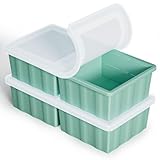
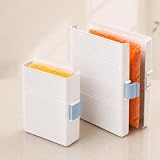
If you prefer measured blocks, freezer food block makers are another option. A 2-cup mold suits smaller portions, while a 6-cup mold creates a larger block for family meals. Sets combining 2-cup and 6-cup holders commonly cost about $20 to $35. A 6-cup holder may be sold alone for approximately $13 to $25, sometimes with compatible vacuum bags.
Reusable 500-milliliter soup bags hold about 2.1 cups and generally cost around $9 to $20 for a multipack. They can be convenient for individual servings, but check that the closure is designed for liquids and that the bag can stand upright while filling.
How to Measure Your Space
- Measure the usable shelf width. Open the freezer and measure from the back wall to the door or drawer edge. Subtract at least 1 inch so bags do not press against the seal or prevent the door from closing.
- Measure shelf height. Flat frozen bags need less vertical space than containers, but a 6-cup block may be 2 to 3 inches thick. Record the shortest clearance between shelves.
- Measure shelf depth. A standard quart bag laid flat may occupy about 9 inches of depth after filling. If your shelf is shallow, freeze smaller bags or stand them vertically inside a bin.
- Choose a target portion. Count how much broth a typical recipe uses. If you frequently add 2 cups to rice or soup, use pint-size portions. If recipes call for 4 cups, choose quart bags.
- Test one filled bag. Pour cold water into a spare bag to your intended level, seal it, and lay it in the freezer. This confirms the final footprint before you prepare an entire batch.
- Account for expansion. Never fill a broth bag to the zipper. Leave 1 to 2 inches at the top, squeeze out excess air without forcing liquid into the seal, and double-check the closure.
A tray or flat freezer organizer makes this process easier. Place the filled bags on a rimmed baking sheet until solid, then transfer them to a labeled stack. The tray catches spills and prevents a soft bag from freezing around a wire shelf.
By Room or Use Case
Small Freezer or Apartment Kitchen
Choose pint and quart bags rather than oversized gallon bags. A 1 1/2-cup or 2-cup portion freezes into a slim package that fits narrow shelves and minimizes waste. If the freezer is a top compartment with limited height, lay bags flat and stack no more than four or five at a time until they are fully frozen.
Cooking for One or Two
Use pint bags filled with 1 to 1 1/2 cups of broth. This is enough for a serving of soup, a pan sauce, or a small pot of grains. For occasional recipe additions, 1-cup portions are even more practical. Smaller packages also thaw more quickly in the refrigerator.
Family Meals and Weekly Meal Prep
Quart bags filled with 3 to 3 1/2 cups are the most versatile choice. They work for soup bases, chicken and beef broth, risotto, stuffing, and braising liquid. Label each bag with the type of broth, quantity, and date frozen. For weekly meal prep, keep portions uniform so you can grab the right amount without opening multiple bags.
Large Stockpot Batches
If you routinely make 8 to 12 cups of broth, divide it into two or three quart bags instead of one large bag. Smaller bags freeze faster, are easier to lift, and let you thaw only what you need. A half-gallon bag can work for a family meal, but it is heavier when wet and more difficult to seal without spills.
Chest Freezer or Deep Freezer
Large bags and 6-cup freezer blocks are more practical when you have a deep, flat shelf. Freeze bags horizontally, then store them upright like files once solid. A rigid holder can create uniform blocks that stack neatly, but measure the holder’s outside dimensions rather than relying only on its stated cup capacity.
Common Sizing Mistakes
- Filling to the zipper: Frozen broth expands and can push liquid through the seal or split the bag. Leave headspace every time.
- Confusing bag size with usable capacity: A quart bag does not always hold a comfortable 4 cups of liquid. Plan on about 3 to 3 1/2 cups.
- Using storage bags instead of freezer bags: Freezer bags are thicker and better suited to long-term storage. Ordinary sandwich bags may become brittle or develop leaks.
- Freezing hot broth immediately: Cool broth promptly in shallow containers or an ice bath, then refrigerate it before transferring it to bags. Do not pour boiling liquid into plastic.
- Ignoring the shape of the freezer: A gallon bag may hold more, but it can be difficult to fit flat in an upright freezer. Portion size should match shelf dimensions.
- Failing to support liquid bags: Use a bag holder, pitcher, or bowl while filling. This keeps the zipper clean and reduces the chance of a leak.
- Leaving labels off: Broth can look similar after freezing. Mark the variety, volume, and date before the bag goes into the freezer.
FAQ
What size freezer bags are best for 4 cups of broth?
Use one quart bag filled with about 3 to 3 1/2 cups, or divide the broth between two pint bags. If you need the full 4 cups for one recipe, two pint bags provide safer expansion room and are easier to thaw separately.
Can I freeze broth in gallon bags?
Yes, but do not fill a gallon bag to its maximum capacity. Use about 10 to 12 cups, leave 1 to 2 inches of headspace, and freeze it flat on a tray. For most kitchens, multiple quart bags are easier to handle.
How much broth fits in a 500-milliliter freezer bag?
A 500-milliliter bag holds approximately 2.1 cups by volume. For expansion and easier sealing, fill it with about 1 1/2 to 1 3/4 cups of cooled broth.
Is it better to freeze broth flat or upright?
Freeze broth flat whenever possible. A flat bag usually takes less space, stacks efficiently, and thaws faster. Once solid, you can store the packages upright in a bin. For a more uniform shape, a 2-cup or 6-cup freezer block holder can provide consistent portions through 2026.