Key takeaways
- Extra-small: 4 to 8 fluid ounces for sauces, herbs, baby snacks, or small portions.
- Small: 8 to 16 fluid ounces for nuts, berries, and individual servings.
- Medium: 20 to 32 fluid ounces for leftovers, chopped vegetables, or sandwiches.
- Large: 64 to 128 fluid ounces for meal prep, bread, and family-size portions.
What's inside
Reusable silicone freezer bags look simple, but the wrong set can become frustrating quickly. Common mistakes include buying by gallon count alone, overlooking the opening width, assuming every “silicone” bag is made from the same material, and choosing a low price without checking how the bags stand, seal, or dry. A bag that holds 1 gallon on paper may be awkward for a wide cut of meat, while a narrow opening can make filling and cleaning harder than using a disposable plastic bag.
The best choice depends on what you freeze, how often you wash the bags, and whether you need compact snack bags or sturdy containers for soups and family-size portions. This guide explains what to look for in reusable silicone freezer bags in 2026, including the specifications that matter more than marketing language.
As an Amazon Associate we earn from qualifying purchases at no extra cost to you. Product prices and availability are accurate as of the date shown and are subject to change.


Decide These 3 Things First
- What will you freeze? Choose small bags for snacks, chopped ingredients, and individual portions; medium bags for leftovers; and gallon-size bags for bread, meat, batch cooking, or bulky produce.
- How will you clean them? If the bags will go into a dishwasher, prioritize a wide opening, a stable base, and a design that can be turned fully open for drying.
- How many bags do you actually need? A 6-pack may be adequate for occasional use, while a mixed 12-pack can be more useful for households freezing several portions each week. Count usable sizes, not just the total number of pieces.
Size and Capacity
Capacity is the first specification to check, but listed capacity does not tell the whole story. A gallon bag typically holds about 128 fluid ounces, or 3.8 liters, although usable space may be lower once the closure and rounded corners are considered. A practical gallon-size bag should have roughly 10 to 12 inches of interior height and at least 7 to 9 inches of usable width for large portions.
For smaller jobs, look for bags in these approximate ranges:
- Extra-small: 4 to 8 fluid ounces for sauces, herbs, baby snacks, or small portions.
- Small: 8 to 16 fluid ounces for nuts, berries, and individual servings.
- Medium: 20 to 32 fluid ounces for leftovers, chopped vegetables, or sandwiches.
- Large: 64 to 128 fluid ounces for meal prep, bread, and family-size portions.
Pay attention to thickness around the base and corners. A bag that is 1 inch wider may be easier to fill than one with a slightly higher stated capacity. For freezer organization, also check whether the bags can lie flat. Flat-freezing bags generally save more shelf space than tall stand-up designs, but stand-up bags are easier to fill with liquids.
Material and Temperature Ratings
Look for food-contact silicone, preferably described as 100% silicone or platinum-cured silicone, rather than vague wording such as “silicone-coated” or “silicone material.” A silicone exterior with a different plastic interior can perform differently and may not have the same flexibility or heat resistance.
Check the manufacturer’s stated temperature range. Many reusable silicone bags are rated for freezer use around -40 degrees Fahrenheit and for heat somewhere between 400 and 425 degrees Fahrenheit, but ratings vary. Do not assume that freezer-safe automatically means oven-safe, microwave-safe, or safe for boiling. If you use a bag in the microwave, the closure usually needs to be opened or removed according to the instructions.
BPA-free labeling is useful, but it is not a complete quality assessment. Also check whether the product is described as free from PVC, lead, and phthalates. Avoid heating food in a bag unless the listing specifically gives a temperature limit and usage instructions. Silicone can tolerate heat, while trapped steam and hot liquids can still create burn and pressure hazards.
Construction and Closure Design
The closure is often the difference between a genuinely reusable bag and an annoying one. A slider-style seal can be easier to operate with wet or greasy hands, while a press-to-seal rim may create a broader opening and fewer loose parts. Either design can work if the seal is easy to close consistently across the full width.
Inspect product photos for these construction details:
- Reinforced top edge: A thicker rim is easier to grip and less likely to fold inward during filling.
- Rounded corners: These reduce food traps and make wiping easier.
- Leak-resistant base: Seams should appear even, without thin spots, gaps, or sharp transitions.
- Wide opening: An opening of about 6 to 8 inches is more practical for gallon-size food than a narrow neck.
- Stable bottom: Stand-up bags should remain upright when holding roughly 16 to 32 ounces of liquid.
“Leakproof” should be treated as a design claim, not a guarantee under every condition. Leave headspace when freezing liquids—about 10% to 20% of the bag’s volume—to allow expansion. Seal the bag on a flat, clean surface and store it upright until the contents are frozen if spills would be costly.
Comfort, Handling, and Everyday Performance
Thick silicone is usually more durable and stable, but it can also be heavier and harder to fold. A useful target for a gallon-size bag is approximately 5 to 10 ounces, depending on the wall thickness and closure. A very lightweight bag may be convenient for travel, but check whether the manufacturer provides a thickness measurement; many listings do not.
Consider how the bag feels when filled. A stand-up design with a firm base can make pouring soup or marinating food easier. A flexible, flat bag is better for stacking in a freezer drawer. Some bags include tabs, clips, or rigid sealing bars. These can improve handling, but they also add parts that may need separate cleaning and storage.
Cleaning is a major part of the ownership experience. The best dishwasher-safe bags have openings wide enough for water and air to circulate. A removable closure bar can help, but only if it is clearly labeled dishwasher-safe. Expect silicone bags to need several hours of air-drying; a rack that keeps the opening fully spread can prevent trapped moisture and odors.
Price Tiers and What You Get
Prices vary widely by size mix, thickness, closure style, and packaging. As a general guide, expect the following ranges:
- Budget: $0.65 to $2.50 per bag. Sets may include six to 12 bags, often in one or two sizes. Inspect material descriptions and dimensions carefully. A low price can be worthwhile for snacks and dry foods, but the bags may have simpler closures or thinner walls.
- Midrange: $2.50 to $6 per bag. These sets typically offer better size variety, sturdier bases, clearer temperature guidance, or more substantial sealing rims. They are a sensible starting point for regular meal prep.
- Premium: $6 to $15 or more per bag. Premium sets may include thicker silicone, rigid closure systems, extra-wide openings, or specialized shapes. The price is easier to justify if you use the bags several times per week and need reliable freezer organization.
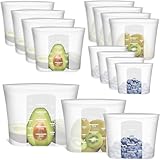
For context, example listings range from about $7.99 for a 12-pack to $39.99 for a 12-pack, but those totals are not directly comparable. One set may contain gallon, sandwich, and snack sizes, while another may include four medium, four small, and four extra-small bags. Compare the price per usable bag and the replacement cost of individual pieces.
Warranty and Replacement Support
A warranty is less important than a good seal and clear care instructions, but it can protect a larger purchase. Look for coverage of at least 30 to 90 days, with some established brands offering one year or longer. Confirm whether the warranty covers leaks, cracked seams, defective closures, or only unopened products.
Replacement availability is especially valuable when buying a mixed set. Ask whether individual bags or closure bars can be purchased separately. Keep the product packaging or order information until you have checked every bag. A set with a five-year marketing promise is less useful if customer service is difficult to reach or the warranty excludes normal wear without explaining what that means.
Delivery, Packaging, and Assembly
Reusable freezer bags require little assembly, but some include rigid sealing bars, stands, clips, or drying racks. Check the number of separate components before ordering. A 12-bag set with 12 removable bars may take longer to wash and reassemble than a simple press-seal design.
For online orders, verify the package dimensions, bag count, and size breakdown. “12 pack” may mean four bags in each of three sizes, not 12 gallon bags. Also check whether the bags arrive compressed or folded. A temporary crease is usually harmless, but a closure bar that arrives bent or a seam that is already stressed is a reason to request a replacement.
Delivery timing matters if you are preparing for a move, camping trip, or bulk cooking session. Before checkout, confirm the estimated arrival date, return window, and whether the product can be returned after opening. Wash and inspect the bags promptly rather than storing them unopened for weeks.
Spec Checklist
| Spec | Budget | Mid | Premium |
|---|---|---|---|
| Typical price | $8–$18 per set | $18–$40 per set | $40–$90+ per set |
| Useful set size | 6–12 bags | 8–15 bags | 6–12 specialized bags |
| Size range | 8–128 fl oz | 4–128 fl oz | 4–160 fl oz |
| Gallon bag dimensions | About 9 × 11 in. | About 10 × 12 in. | About 10 × 13 in. or larger |
| Temperature guidance | Freezer; other uses vary | Freezer, microwave, and dishwasher ratings stated | Detailed temperature range and care instructions |
| Closure | Basic press seal | Reinforced seal or slider | Heavy-duty seal with removable or rigid support |
| Warranty target | 30 days | 90 days to 1 year | 1 year or longer |
Red Flags
- The listing says “silicone” but does not identify whether the bag is 100% silicone or coated.
- No dimensions, capacity, wall thickness, or temperature range are provided.
- “Leakproof” appears without care instructions, closure details, or photos of the seal.
- The bag count is clear, but the size breakdown is hidden or confusing.
- Reviews repeatedly mention damp interiors, broken sliders, strong odors, or split seams.
- The product claims oven or boiling use but gives no maximum temperature.
- A gallon bag has a narrow opening or cannot stand upright when filled.
- The warranty excludes leaks or defects without explaining what is covered.
FAQ
Are reusable silicone freezer bags worth it?
They can be worthwhile if you freeze food regularly and will wash and reuse them many times. The value is strongest for meal prep, bread, produce, and leftovers. If you rarely freeze food or dislike hand-drying flexible containers, a smaller set may be more practical than buying a large multipack.
Can silicone freezer bags go in the dishwasher?
Many can, but check the product instructions for both the bag and its closure. Place the bag fully open, keep removable parts secure, and allow the interior to dry completely. A dishwasher may clean the bag without removing all moisture from the corners.
How much space should I leave when freezing liquids?
Leave about 10% to 20% empty space, depending on the liquid and the bag shape. Expansion can push against the seal and cause leaks. Seal the bag securely, freeze it upright when possible, and lay it flat after the contents have hardened.
What is the best size for most households?
A mixed set is usually more useful than a set of identical gallon bags. Start with two or three gallon-size bags, several medium bags around 20 to 32 fluid ounces, and a few small bags for snacks or ingredients. Add specialized sizes only after you know what you freeze most often.