Key takeaways
- No clear statement about microwave, freezer, dishwasher, or oven use.
- A lid described as “leakproof” without instructions for venting during microwave heating.
- Vague capacity claims that omit exterior dimensions or the number of glass bases.
- Sharp corners, rough rims, visible bubbles, chips, cracks, or uneven bases.
- Plastic lids that are advertised for oven use without a stated temperature limit.
- A set priced far below comparable products with no warranty or replacement-lid support.
- Containers that are too tall for your microwave or too large for your refrigerator shelves.
What's inside
Buying glass food containers looks straightforward until a lid leaks, a dish cracks after one heating cycle, or a “microwave-safe” base leaves you with cold food in the middle and an overheated rim. The biggest mistake is treating every glass container as interchangeable. Container volume, lid design, glass type, thermal-shock guidance, and the space inside your microwave all affect whether a set works well day after day.
This guide explains what to look for in microwave safe glass containers in 2026, with practical measurements and price benchmarks. The goal is not to find the largest set or the cheapest piece count. It is to find containers that fit your portions, refrigerator, dishwasher, microwave, and storage habits without creating unnecessary breakage or clutter.
As an Amazon Associate we earn from qualifying purchases at no extra cost to you. Product prices and availability are accurate as of the date shown and are subject to change.


Decide These 3 Things First
- Your usual portions: Choose containers around the food you actually store. A 20- to 24-ounce container suits one lunch or dinner, while 28- to 34-ounce containers are better for leftovers, pasta, or meal prep.
- Your heating routine: Decide whether you will microwave food directly from the refrigerator or freezer. Frequent reheating makes thermal-shock instructions and lid ventilation especially important.
- Your storage limits: Measure the microwave turntable, refrigerator shelves, and cabinet or drawer. A container that is technically microwave-safe is not useful if its lid or tall walls do not fit your setup.
Size and Shape
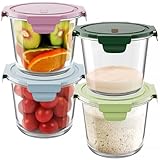
Capacity is the first decisive factor because it affects portions, stacking, and heating speed. For most households, 20 to 24 ounces is the most versatile range: large enough for a standard lunch but not so large that food spreads into a thin, uneven layer. A 28- to 34-ounce container is more useful for family leftovers and larger servings. Small 8- to 12-ounce pieces work for sauces, fruit, toppings, and snacks.
Look for a rectangular footprint of roughly 7 to 8 inches long and 5 to 6 inches wide for everyday meal containers. Height commonly falls between 2 and 3 inches. Low, broad dishes tend to heat more evenly than narrow, deep vessels because food is distributed in a shallower layer. Round containers are easy to stir and have fewer corners to clean, but rectangular containers usually use refrigerator and lunch-bag space more efficiently.
Check the actual exterior dimensions, not just the stated capacity. Leave at least 1 inch of clearance around the container on a rotating microwave turntable when possible. For freezer storage, allow headspace: liquids can expand as they freeze, so do not fill a container to the rim.
Glass Material and Temperature Guidance
“Glass” is not a complete materials specification. Most reputable food containers use heat-resistant soda-lime glass or borosilicate glass. Borosilicate glass generally handles temperature changes better, while heat-resistant soda-lime glass can still perform well when the manufacturer’s instructions are followed. The important buying signal is clear guidance for microwave, freezer, oven, and dishwasher use—not an assumption based on appearance.
Use glass containers for reheating with the lid removed or vented according to the instructions. Most plastic lids are not intended for oven use and may have lower microwave limits than the glass base. Never put a container into a hot oven directly from the freezer unless the manufacturer specifically permits that transition.
For microwave use, avoid sudden temperature changes. Do not move a very cold container straight into high heat, place a hot container on a wet or cold surface, or pour boiling liquid into chilled glass. These habits create thermal shock, which can cause cracking even when the product is labeled microwave-safe.
Construction and Lid Design
Inspect the rim, corners, base, and lid seal. Thick, smoothly finished rims are more comfortable to handle and less likely to chip during ordinary use. Rounded interior corners make scraping and washing easier. A stable, flat base matters when moving a full container from the refrigerator to the microwave.
Lids usually fall into two categories: snap-on plastic lids with a flexible seal, and lids with locking tabs or clips. A good seal should close evenly around the entire rim without requiring excessive force. Locking tabs can provide stronger leak resistance, but they add moving parts that may wear or become difficult to clean.
For microwave reheating, a steam vent is useful, but it is not a substitute for following the instructions. Pressure can build under a fully sealed lid. If a lid has no vent, it should generally be loosened or removed before heating. Check whether the gasket is removable; removable seals are easier to clean thoroughly, while fixed seals are less likely to be misplaced.
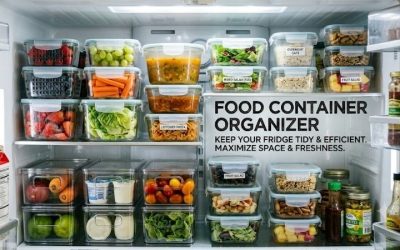
Also check whether lids stack securely and whether the glass bases nest when empty. A 10-piece set can consume substantial cabinet space if each container has a unique footprint.
Comfort and Everyday Performance
Glass is heavier than plastic, so weight deserves attention. An empty 22-ounce glass container may weigh approximately 1.2 to 1.8 pounds, depending on its wall thickness and design. Once filled, it can weigh more than 2 pounds. That is manageable for a desk lunch but less convenient for children, commuters, or anyone carrying several meals.
Look for broad sidewalls or a defined rim that gives you a secure grip. Very smooth, straight-sided containers can be slippery when wet. A lid that can be opened without bending or prying is another small feature that matters every day.
Dishwasher compatibility is convenient, but place glass pieces where they will not knock against heavy cookware. Lids should be placed according to the manufacturer’s instructions, since high heat can shorten the life of seals or warp some plastics. Do not use scratched or visibly chipped glass; damage can make a container more vulnerable to breakage.
Price Tiers and Set Value
For current shopping benchmarks, budget glass-container sets commonly cost about $15 to $30 for five to eight pieces, or roughly $3 to $6 per container. Midrange sets generally cost $30 to $50 for eight to 12 pieces, or about $4 to $8 each. Premium sets can exceed $50 and may charge more for borosilicate glass, stronger seals, specialized shapes, or longer coverage.
Compare the number of glass bases rather than the total piece count. A “10-piece” set may contain five containers and five lids. That is normal, but it should be compared with another five-container set—not a set with 10 glass bases.
For context, a five-container, 22-ounce Vtopmart set is listed around $24.99, while a 10-piece M MCIRCO set with 22-ounce containers is listed around $35.99. An eight-container Vtopmart set is listed around $21.99, and an eight-container M MCIRCO set with 30-ounce containers is around $39.99. Prices vary by retailer, color, promotions, and availability, so judge value by usable capacity, lid quality, and replacement options rather than the advertised discount alone.
Warranty and Replacement Support
Glass can break through misuse, shipping damage, or accidental impact, so a clear replacement policy is valuable. Look for a stated warranty period, instructions for reporting damage, and support contact information. A one-year limited warranty is a useful baseline, although warranty coverage often excludes chips, misuse, oven damage, and ordinary wear.
Ask whether individual lids, seals, or containers can be purchased separately. Replacement lids are especially important because plastic components may wear sooner than glass. Keep your order confirmation and photograph shipping damage promptly. A large set is less valuable if one lost lid makes an entire container unusable.
Delivery, Packaging, and Assembly
Glass containers do not require assembly, but they do require careful delivery. Before ordering, check the estimated delivery window and return terms. A set that arrives cracked, chipped, or missing lids should not be used. Photograph the box and the damaged item before disposing of packaging if a claim may be necessary.
Inspect each base and lid when the order arrives. Run a finger around the glass rim only after visually checking for chips, and do not use any piece with a hairline crack. Wash containers before first use. If the set includes removable silicone or rubber seals, remove and clean them separately to check for trapped packaging residue.
Spec Checklist
| Spec | Budget | Mid | Premium |
|---|---|---|---|
| Typical set price | $15–$30 | $30–$50 | $50–$90+ |
| Useful everyday capacity | 20–24 oz | 20–34 oz mix | 8–40 oz mix |
| Glass bases | 4–6 | 5–8 | 6–10+ |
| Approximate empty weight per 22-ounce base | 1.2–1.8 lb | 1.2–1.8 lb | Varies; verify specifications |
| Lid features | Snap-on seal | Seal plus vent or locking tabs | Replaceable seal, vent, or reinforced clips |
| Expected warranty baseline | Limited or unclear | Often one year | One year or longer; verify exclusions |
Red Flags
- No clear statement about microwave, freezer, dishwasher, or oven use.
- A lid described as “leakproof” without instructions for venting during microwave heating.
- Vague capacity claims that omit exterior dimensions or the number of glass bases.
- Sharp corners, rough rims, visible bubbles, chips, cracks, or uneven bases.
- Plastic lids that are advertised for oven use without a stated temperature limit.
- A set priced far below comparable products with no warranty or replacement-lid support.
- Containers that are too tall for your microwave or too large for your refrigerator shelves.
FAQ
Can any glass container labeled microwave-safe go from the freezer to the microwave?
No. Microwave-safe labeling does not automatically mean the container can tolerate every temperature transition. Follow the manufacturer’s freezer-to-microwave instructions, allow frozen food to thaw when required, and avoid sudden temperature changes.
Should I microwave food with the lid on?
Usually, the lid should be removed, loosened, or vented as directed. A sealed lid can trap steam and pressure. Check both the glass and lid instructions because their heat limits may differ.
Is borosilicate glass always the better choice?
Not necessarily. Borosilicate glass can offer strong resistance to thermal shock, but a well-made heat-resistant glass container can also be practical and durable. Clear temperature guidance, careful handling, and a sound lid often matter more than the material name alone.
What size glass container is best for meal prep?
A 20- to 24-ounce container is the best starting point for most single-serving meals. Add 28- to 34-ounce containers for larger portions and 8- to 12-ounce containers for snacks or sauces. A mixed-size set is usually more useful than a set containing only one capacity.