Key takeaways
- Buying an 8-ounce container for an 8-ounce serving. The soup reaches the rim, leaving no room for stirring or safe transport. Choose 12 to 16 ounces of capacity instead.
- Ignoring chunky ingredients. Beans, noodles, meat, and vegetables require more space than smooth broth. A 3-cup container is often more comfortable than a tightly filled 2-cup container.
- Measuring the glass but not the lid. Clips, vents, and raised centers can make the complete container too tall for a shelf or lunch bag.
- Choosing by cup count alone. Two containers with the same capacity may have different footprints. Compare length, width, and height before buying a multi-pack.
- Freezing to the rim. Soup expands when frozen. Headspace is essential, especially in rigid glass.
- Forgetting total weight. Glass is durable and reusable, but it is heavier than plastic. A six-pack of large containers may need more storage space and produce a heavier daily carry.
What's inside
The Short Answer
For one cup of soup, choose a glass container that holds at least 12 ounces, or about 1.5 cups. A 2-cup container is usually the best everyday choice because it leaves room for the lid, stirring, and minor expansion when the soup is reheated. Look for a container measuring approximately 6.5 to 7 inches long, 4.5 to 5 inches wide, and 2 to 2.5 inches tall.
If your “cup” of soup is a generous serving, contains chunky ingredients, or needs to travel in a lunch bag, move up to a 3-cup, 23-ounce container. For two servings, meal prep, or soup with a large amount of pasta, rice, or vegetables, a 4-cup, 32-ounce container provides more practical capacity.
As an Amazon Associate we earn from qualifying purchases at no extra cost to you. Product prices and availability are accurate as of the date shown and are subject to change.
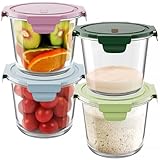


As a buying rule for 2026, do not match the container exactly to the volume of soup. A container filled completely to the rim is more likely to spill, leak around the lid, or overflow in the microwave.
Standard Sizes
Glass food containers are commonly labeled by cups or fluid ounces, but the usable space is slightly less than the advertised capacity. The dimensions below are typical exterior measurements for lidded borosilicate or tempered-glass containers. Individual brands may vary by roughly half an inch because of wall thickness, lid design, and shape.
| Container size | Approximate capacity | Typical exterior dimensions | Best use |
|---|---|---|---|
| 1 cup | 8 oz / 237 mL | 5.5 × 4 × 2 in 14 × 10.2 × 5.1 cm |
Small portions, sauces, toppings |
| 2 cups | 16 oz / 473 mL | 6.5 × 4.75 × 2.25 in 16.5 × 12.1 × 5.7 cm |
One standard soup serving |
| 3 cups | 23–24 oz / 680–710 mL | 7.25 × 5.25 × 2.5 in 18.4 × 13.3 × 6.4 cm |
Large serving, lunch, leftovers |
| 4 cups | 32 oz / 946 mL | 8 × 6 × 2.75 in 20.3 × 15.2 × 7 cm |
Two servings or hearty soup |
For a normal cup of broth, tomato soup, or blended soup, a 2-cup container is the most space-efficient option. It gives an 8-ounce serving plenty of headspace without taking up unnecessary room in a refrigerator or lunch tote. For thicker soups, a 3-cup container is easier to use because a spoon can move through the food without scraping the lid.
A 3-cup or 23-ounce glass meal-prep container is also a useful middle size. Four-packs in this category commonly sell for approximately $20 to $22, depending on the lid style and brand. Four-cup, 32-ounce borosilicate containers are often sold in four- or six-packs. Typical pack prices for the examples in this size range run about $24 to $33. The six-pack generally offers a lower cost per container, but it requires more cabinet and refrigerator storage.
Remember that ounces on the package usually refer to volume, not weight. Eight fluid ounces of broth does not necessarily weigh eight ounces if the soup contains cream, beans, meat, or vegetables.
How to Measure Your Space
- Measure the shelf opening. Use a tape measure to record the clear width, depth, and height inside the refrigerator shelf or cabinet. Measure from the usable surfaces, not from the outside edges of the appliance.
- Check the refrigerator door. If the container will ride in a door bin, measure the narrowest point between the bin walls. A 3-cup rectangular container may fit on a shelf but be too wide for a door compartment.
- Account for the lid. Measure with the lid attached if the container will be stored that way. Raised vent tabs and locking clips can add about 0.25 to 0.75 inch to the height or width.
- Leave clearance around the glass. Allow at least 0.5 inch of side clearance so you can remove the container without bumping it against the shelf or another dish. For a tall refrigerator drawer, leave about 1 inch above the lid.
- Measure the lunch bag separately. Record the bag’s interior length, width, and height. Subtract about 0.5 inch from each measurement to allow for insulation, a cold pack, and easy insertion.
- Test the microwave turntable. A wide 4-cup container may fit inside the microwave but fail to rotate. Measure the turntable diameter and keep the container’s longest diagonal comfortably below that measurement.
- Check stacking height. If you plan to stack containers, multiply the container height by the number of pieces and add space for the lid shape. Two 2.5-inch-tall containers may need more than 5 inches because locking lids and rounded corners do not always nest fully.
By Room or Use Case
Kitchen and Refrigerator Storage
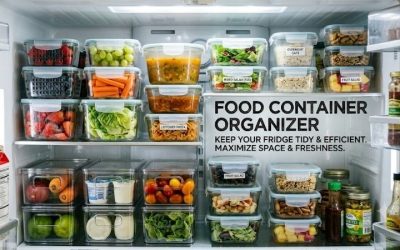
Choose a 2-cup container for individual portions and a 3-cup container for leftovers. Rectangular shapes use refrigerator shelves efficiently, while round containers are easier to stir and clean. A low, wide container cools and reheats more evenly than a narrow, deep jar, particularly for thick soup.
For a family pot of soup, 4-cup containers are convenient for dividing leftovers into two-serving portions. Do not fill a glass container while the soup is boiling hot. Leave approximately 0.75 to 1 inch of headspace, allow the food to cool as directed by your food-safety routine, and then refrigerate it promptly.
Lunch Bag or Work Lunch
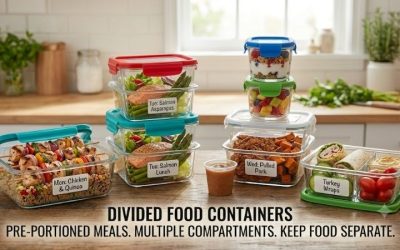
A 2-cup container is the safest starting point for one cup of soup. Its approximate 6.5-inch length usually fits an insulated lunch bag with a cold pack. Select a container with a secure, gasketed lid and locking clips if it will be transported horizontally.
Use a 3-cup container when the meal includes bread, crackers, fruit, or a larger serving in the same container. Check the combined weight: glass containers often weigh roughly 1 to 2.5 pounds when empty, depending on size and construction, so a full 32-ounce container can make a lunch bag noticeably heavier.
Freezer
For freezing soup, a 3-cup or 4-cup container offers enough space for expansion and a level surface for stacking. Confirm that the manufacturer specifically lists the glass as freezer-safe. Leave at least 1 inch of empty space for liquid soup, and avoid placing hot glass directly on a cold freezer shelf.
Wide containers are easier to defrost than tall containers. If freezing a single serving, a 2-cup container can work, but leave extra headspace because broth-based soup expands as it freezes.
Microwave and Reheating
Use only a container and lid labeled microwave-safe. Many lids must be vented or left slightly ajar; a sealed lid can trap steam and create pressure. Remove any lid with metal, metallic trim, or non-microwave-safe components before heating.
For a typical 1-cup serving, begin with short heating intervals, such as 60 to 90 seconds, stir, and continue until hot. Actual heating time depends on the soup, starting temperature, and microwave power, commonly ranging from 700 to 1,200 watts. Never move very cold glass directly into intense heat unless the manufacturer permits that use.
Common Sizing Mistakes
- Buying an 8-ounce container for an 8-ounce serving. The soup reaches the rim, leaving no room for stirring or safe transport. Choose 12 to 16 ounces of capacity instead.
- Ignoring chunky ingredients. Beans, noodles, meat, and vegetables require more space than smooth broth. A 3-cup container is often more comfortable than a tightly filled 2-cup container.
- Measuring the glass but not the lid. Clips, vents, and raised centers can make the complete container too tall for a shelf or lunch bag.
- Choosing by cup count alone. Two containers with the same capacity may have different footprints. Compare length, width, and height before buying a multi-pack.
- Freezing to the rim. Soup expands when frozen. Headspace is essential, especially in rigid glass.
- Forgetting total weight. Glass is durable and reusable, but it is heavier than plastic. A six-pack of large containers may need more storage space and produce a heavier daily carry.
FAQ
Is a 1-cup glass container big enough for soup?
It holds an exact 8-fluid-ounce serving, but it is usually too small for practical soup storage. Choose a 2-cup container so the soup sits below the rim and can be stirred without spilling.
Is a 3-cup container too large for one cup of soup?
Not necessarily. A 3-cup container is useful when the soup is chunky, the serving is larger than 8 ounces, or you need space for safe transport. It is less compact than a 2-cup container but more versatile for leftovers.
What size container holds two cups of soup?
Use a 3-cup container for two cups of smooth soup if you need modest headspace. A 4-cup, 32-ounce container is better for chunky soup, freezer storage, or two generous servings.
Can glass soup containers go from the refrigerator to the microwave?
Only when the manufacturer identifies the glass as microwave-safe and provides instructions for that use. Remove or vent the lid, avoid sudden temperature changes, and heat in short intervals while stirring between cycles.