Key takeaways
- 680 g boneless, skinless chicken thighs or breasts
- 1 cup uncooked brown rice, about 185 g
- 600 g broccoli florets
- 400 g peeled, cubed sweet potato
- 2 tablespoons olive oil, divided
- 1 teaspoon smoked paprika
- 1 teaspoon garlic powder
- 1/2 teaspoon salt, plus more for the rice
- 1/4 teaspoon black pepper
- 120 g plain Greek yogurt
- 2 tablespoons lemon juice
- 1 tablespoon water
The best lunch meal prep recipes for weekday work lunches combine a measured main, a dependable vegetable, and a storage container that can be refrigerated, transported, and reheated without leaking or drying out.
Quick picks by workday situation
| Situation | Best lunch style | Container specification | Why it works |
|---|---|---|---|
| Lowest cost and minimal cooking | Chickpea quinoa bowls | 3-cup glass or BPA-free plastic container | Uses inexpensive pantry ingredients and stays satisfying cold or warm |
| Microwave available at work | Chicken, rice, and roasted vegetables | 3- to 4-cup microwave-safe container with vented lid | Reheats evenly and provides a substantial portion |
| No refrigerator at work | Tuna-white bean salad | Insulated lunch bag with at least two ice packs | Can be eaten cold, but needs temperature control during transport |
| Small refrigerator or crowded office kitchen | Turkey hummus wrap | 1.5- to 2-cup rectangular container | Compact, portable, and does not require reheating |
| Cooking only once weekly | Turkey chili | 4-cup leak-resistant container or freezer-safe tub | Freezes well, allowing later-week portions to be stored safely |
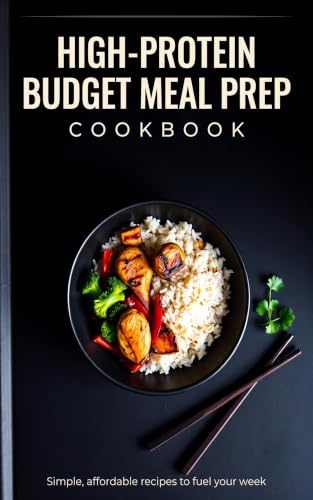
1. Chicken, brown rice, and roasted vegetable bowls
This is the most dependable all-purpose lunch in the group: a balanced portion with lean protein, a filling grain, and vegetables that retain their texture after reheating.
Ingredients for 4 lunches
- 680 g boneless, skinless chicken thighs or breasts
- 1 cup uncooked brown rice, about 185 g
- 600 g broccoli florets
- 400 g peeled, cubed sweet potato
- 2 tablespoons olive oil, divided
- 1 teaspoon smoked paprika
- 1 teaspoon garlic powder
- 1/2 teaspoon salt, plus more for the rice
- 1/4 teaspoon black pepper
- 120 g plain Greek yogurt
- 2 tablespoons lemon juice
- 1 tablespoon water
Method and portioning
Cook the brown rice according to the package directions. Toss the broccoli and sweet potato with 1 tablespoon of oil, paprika, garlic powder, salt, and pepper. Roast at 220°C for approximately 25 minutes, adding the broccoli during the final 15 minutes so it does not become soft. Season the chicken, coat it with the remaining oil, and cook until the thickest part reaches 74°C. Rest for 5 minutes, then slice.
Divide each lunch into 170 g cooked chicken, approximately 3/4 cup cooked rice, and 250 g roasted vegetables. Stir the yogurt, lemon juice, and water together and pack 2 tablespoons of sauce separately. Each serving fits comfortably in a 3- to 4-cup container.
Refrigerate for up to 4 days. Reheat the rice, chicken, and vegetables covered but with the vent open for 90 seconds, stir or rearrange, and continue in 30-second intervals until hot. Add the sauce after reheating. The sauce should remain separate because yogurt-based dressings can split when heated.
2. Chickpea quinoa and cucumber bowls
Choose this recipe when you want an inexpensive lunch that works cold and requires no office microwave. It is also a practical option for a compact container because the ingredients do not need to be separated into multiple compartments.
Ingredients for 4 lunches
- 1 cup uncooked quinoa, about 170 g
- 2 cans chickpeas, drained and rinsed, about 480 g total
- 2 medium cucumbers, diced
- 250 g cherry tomatoes, halved
- 100 g feta cheese, crumbled
- 60 g chopped parsley
- 3 tablespoons olive oil
- 3 tablespoons lemon juice
- 1 teaspoon dried oregano
- 1/2 teaspoon salt
Rinse and cook the quinoa, then cool it quickly in a shallow dish. Combine it with the chickpeas, cucumber, tomatoes, feta, and parsley. Whisk the oil, lemon juice, oregano, and salt together. Divide approximately 300 g of the quinoa mixture into each container and add 1 1/2 tablespoons dressing in a separate 60 ml pot.
Store for up to 4 days. Keep the dressing separate to preserve the cucumber’s texture. Eat cold, or microwave the quinoa and chickpeas for 60 to 90 seconds while leaving the cucumber and feta aside. Do not freeze this recipe: cucumber becomes watery after thawing.
3. Turkey and bean chili
Chili is the strongest choice for batch cooking because it improves after a day in the refrigerator and freezes with little loss of quality.
Ingredients for 5 lunches
- 700 g lean ground turkey
- 1 tablespoon olive oil
- 1 large onion, diced
- 2 bell peppers, diced
- 3 garlic cloves, minced
- 2 cans kidney beans, drained and rinsed, about 480 g total
- 2 cans chopped tomatoes, about 800 g total
- 500 ml low-sodium chicken or vegetable stock
- 2 tablespoons chili powder
- 2 teaspoons ground cumin
- 1 teaspoon smoked paprika
- 1/2 teaspoon salt
Brown the turkey in the oil, then add the onion, peppers, and garlic. Cook for 5 minutes. Add the beans, tomatoes, stock, and spices. Simmer uncovered for 25 to 35 minutes, until thick. Divide 450 to 500 g into each 4-cup container. Leave at least 2.5 cm of space if freezing, since the chili expands.
Refrigerate for up to 4 days. Freeze portions intended for later in the week for up to 2 to 3 months for best quality. Thaw overnight in the refrigerator, then microwave with the lid loosely placed or vent open for 2 minutes. Stir and continue in 30-second intervals until steaming hot throughout. Add toppings such as grated cheese or sliced avocado only after reheating.
4. Turkey hummus wraps
Wraps are useful when the office microwave is unreliable, but moisture control determines whether they remain pleasant. Keep wet ingredients away from the tortilla and use sturdy greens as a barrier.
Ingredients for 4 wraps
- 4 large whole-wheat tortillas, approximately 25 cm each
- 240 g hummus
- 320 g sliced turkey
- 120 g shredded carrot
- 120 g baby spinach
- 1 red bell pepper, cut into thin strips
- 80 g crumbled feta
- 1 tablespoon lemon juice
Spread 60 g hummus over each tortilla, leaving a 3 cm border. Layer spinach over the hummus, followed by turkey, carrot, pepper, and feta. Sprinkle with lemon juice, fold in the sides, and roll tightly. Wrap each portion in reusable beeswax wrap, parchment, or a reusable silicone food bag.
For the best texture, assemble up to 2 days ahead. If preparing all four on Sunday, store the filling separately and assemble the final two wraps on Tuesday. Keep refrigerated for no more than 3 days once assembled. This recipe is not suitable for microwave reheating.
Container comparison for meal prep lunches
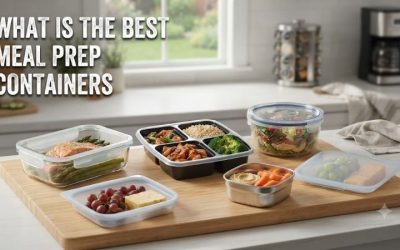
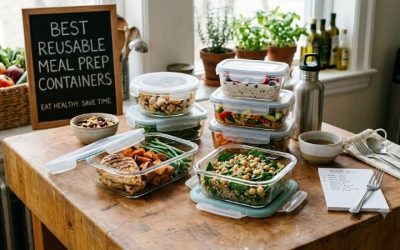
| Container type | Useful capacity | Typical material | Best use | Ownership considerations |
|---|---|---|---|---|
| Single-compartment rectangular box | 3 to 4 cups | Borosilicate or tempered glass; polypropylene lid | Rice bowls, chili, pasta | Durable and odor-resistant, but heavier; check that the lid is not placed in the oven |
| Two-compartment lunch box | 2.5 to 3 cups total | BPA-free polypropylene | Cold salads, wraps, grain bowls | Lightweight, but fixed dividers can make thorough cleaning harder |
| Leak-resistant soup container | 16 to 24 oz | Stainless steel or plastic | Chili, soup, curry | Useful for liquids; inspect the silicone gasket regularly |
| Small sauce pot | 2 to 4 oz | Polypropylene or silicone | Dressing, yogurt sauce, salsa | Prevents soggy food; small lids and seals are easy to misplace |
Brands with established container ranges include Pyrex, OXO, Rubbermaid, Bentgo, and Sistema. Compare the actual capacity and lid instructions rather than choosing by brand alone. A 3-cup container is generally sufficient for a lighter lunch, while a 4-cup container gives bulky vegetables and a sauce more room.
Storage, cleaning, and cost decisions
Cool cooked food in shallow containers before sealing tightly and refrigerating. Do not leave perishable food at room temperature for extended periods. Use the oldest portion first, and discard food if the container has a swollen lid, unusual odor, mold, or a change in texture that suggests spoilage.
Glass usually tolerates repeated washing and resists staining, but its weight makes it less convenient for public transit. Plastic is lighter and less likely to break, though tomato sauces can stain and sharp utensils can scratch the surface. Replace containers when lids no longer seal, gaskets stay dirty after washing, or cracks appear. The gasket and lid hinge commonly wear out before the container base.
A worked cost example illustrates why batch cooking can be economical. If four chicken bowls use $12 of chicken, $3 of rice, $6 of vegetables, $2 of sauce ingredients, and $1 of seasonings, the batch costs $24, or $6 per lunch before labor and equipment. Using the same container four times gives a reusable-container cost of $0.25 per use if a $10 container lasts 40 uses. The most useful savings come from cooking four portions at once and preventing unused ingredients from spoiling.
Common meal prep mistakes
- Sealing food while it is very hot, which can create condensation and soften vegetables.
- Adding dressing to salads several days before eating.
- Overfilling containers, leaving no room to stir or vent safely.
- Microwaving sealed lids or containers that are not labeled microwave-safe.
- Freezing fresh cucumber, lettuce, or fully assembled wraps.
- Using one container size for every recipe instead of matching capacity to portion volume.
For most workweeks, prepare two refrigerator-stable recipes for the first four days and freeze one or two chili portions for later. That combination provides variety while keeping food quality, storage space, and reheating effort manageable.