Key takeaways
- Table of Contents 4 sections 9 min read 1 How to Choose the Right Food Scale 1.1 Accuracy and Sensor Sensitivity 1.2 Maximum Weight Capacity and Tare Function 1.3 Display Visibility and Unit Conversions 1.4 Build Material and Power Source…
What's inside
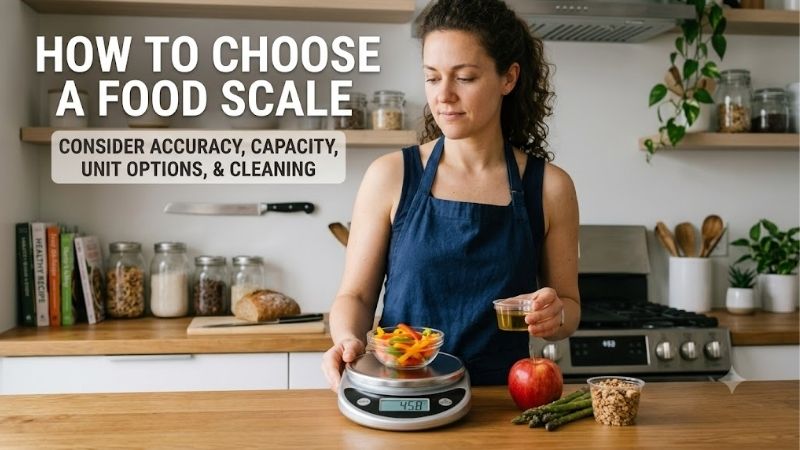
How to choose a food scale requires evaluating sensor accuracy, max weight capacity, and display visibility for your daily culinary tasks. Whether you need precise gram measurements for delicate pastries or rapid portioning for macro tracking, selecting the right device streamlines meal prep and guarantees consistent results every time.
How to Choose the Right Food Scale
Understanding key specs simplifies finding the best unit. Learning how to choose a food scale means balancing precision with build quality so your purchase lasts. Takes your cooking precision further, while focusing on core features ensures total reliability.
Accuracy and Sensor Sensitivity
Precision remains the most critical feature when measuring small ingredients like yeast, salt, or specialty espresso beans. A high-quality digital kitchen scale utilizes sensitive load sensors that detect single-gram increments accurately. Premium baker models even offer sub-gram sensitivity to deliver foolproof baking outcome.
Inconsistent readings waste expensive ingredients and ruin balanced dough ratios during high-stakes baking sessions. Checking sensor stability helps when learning how to choose a food scale that guarantees exact recipe success. Look for devices that stabilize rapidly so you never have to wait long between additions.
Maximum Weight Capacity and Tare Function
Weight capacity limits dictate whether a device can handle heavy Dutch ovens or large mixing bowls filled with dough. Standard home models offer a max weight capacity ranging from 11 pounds up to 22 pounds for larger meal preps. Ensure the platform size accommodates your everyday cookware without blocking the screen.
A fast, responsive tare function lets you zero out container weights instantly before adding next ingredients. This essential feature eliminates dirtying multiple measuring cups, letting you build complete recipes directly in one bowl. Touch buttons with tactile feedback prevent accidental zeroing while working fast.
Display Visibility and Unit Conversions
Reading measurements easily under bright overhead lights or with oversized plates on top makes cooking seamless. Models equipped with a backlit display ensure clear visibility regardless of lighting conditions or bowl placement. High-contrast digital numbers allow quick verification without straining your eyes while prepping.
Effortless weight units conversion enables seamless switching between grams, ounces, pounds, and fluid milliliters instantly. A single dedicated button simplifies international recipe follower needs without requiring manual math conversions. Reliable software ensures accurate fluid measurement modes for water and milk.
Build Material and Power Source
Durable construction protects delicate internal components from accidental liquid spills and heavy kitchen usage. Selecting a stainless steel platform provides a hygienic, stain-resistant surface that wipes clean with minimal effort. Removable platforms simplify washing away sticky flour residue or raw meat liquids.
Power options determine ongoing maintenance convenience across busy meal preparation schedules. Choosing a rechargeable kitchen scale eliminates constant battery purchases, using standard USB cords for quick power ups. Models with long battery life and automatic shutoff features protect power during quiet kitchen hours.
| Model Name | Max Capacity | Increment | Key Feature | Best Suited For |
|---|---|---|---|---|
| Greater Goods Digital Scale | 11 lb (5 kg) | 1 g / 0.1 oz | Ultra-Slim Profile | Daily Home Cooking |
| Escali Primo P115 | 11 lb (5 kg) | 1 g / 0.05 oz | Two-Button Control | Professional Bakers |
| Ozeri Pronto Scale | 11.24 lb (5.1 kg) | 1 g / 0.05 oz | Unit Conversion Button | Macro & Meal Prep |
| OXO Good Grips Scale | 11 lb (5 kg) | 1 g / 0.1 oz | Pull-Out Digital Display | Large Mixing Bowls |
| Etekcity 22lb Scale | 22 lb (10 kg) | 1 g / 0.1 oz | High Weight Limit | Bulk Portioning |
Top Picks for Food Scales
Selecting top appliances comes down to matching your budget with daily cooking and baking requirements. Evaluating how to choose a food scale based on real kitchen testing ensures lasting satisfaction and accurate performance. Here are the top verified options currently available to elevate your meal prep routine.
Greater Goods Digital Kitchen Scale
Ideal for everyday home cooks and minimalist kitchens seeking sleek aesthetics and dependable basic measuring capability. This precision food scale features four high-accuracy sensors, a glass top platform, and simple touch buttons. Its ultra-slim body slides easily into tight utensil drawers when kitchen space is limited.
However, the glossy glass surface shows fingerprints quickly and requires frequent wiping during active messy baking. The capacitive touch buttons can also be overly sensitive if spilled liquids touch the control panel. Still, making it clear how to choose a food scale for daily meal prep, it offers superb overall value.
Escali Primo P115 Precision Scale
Tailored for enthusiastic home bakers and culinary students who demand simple controls and durable reliability. Known as a legendary baker scale, it features a raised weighing platform, tactile rubberized buttons, and instant response times. Sealed button covers guard internal circuits against flour dust and accidental liquid spills.
On the downside, the display lacks a backlight feature, making readings tricky in dim kitchen lighting environments. The plastic body feels less premium compared to modern brushed metal alternatives on the market. Nevertheless, its legendary accuracy and rapid tare stabilization make it an essential tool for bakers.
Ozeri Pronto Digital Kitchen Scale
Designed for fitness enthusiasts and dieters needing a compact macro tracking scale for portion management. This versatile counter appliance boasts a generous weighing platform, rapid unit switching, and lightweight portability. Its crisp screen presents instant measurements without delay, aiding exact caloric calculation.
Despite great performance, the short auto-shutoff timer can turn the device off mid-recipe if you pause long. The plastic platform standard surface is also slightly harder to deep clean around small edge crevices. Even so, its budget price and consistent sensor accuracy earn it high marks for daily macro weighing.
OXO Good Grips Food Scale with Pull-Out Display
Perfect for heavy-duty cooks who frequently use broad mixing bowls, baking sheets, or large cutting boards. The standout innovation is a pull-out digital display that detaches forward, preventing shadow blockages from large cookware. Its removable stainless steel platform allows effortless hand-washing after raw food contact.
Conversely, this unit carries a higher price point than basic compact scales and uses four AAA batteries. The overall footprint takes up more counter area, which might frustrate minimalist apartment dwellers. Yet for solving screen obstruction forever, its design remains unbeatable for ambitious home chefs.
Etekcity 22lb Digital Kitchen Scale
Targeted at meal prep batch cooks and home butchers requiring high capacity for bulk ingredient weighing. Capable of supporting up to 22 pounds, this unit handles heavy cast iron pots and family-sized meat packs with ease. Its brushed stainless steel top resists smudges and cleans up quickly with a damp cloth.
The primary drawback is that ultra-light items under two grams may not trigger initial sensor detection quickly. It also requires smooth, level placement to guarantee peak precision across maximum weight limits. Regardless, for bulk batch cooking and meat portioning, it stands out as a powerful household workhorse.
Frequently Asked Questions
Addressing common user questions helps buyer selection while preventing common measuring mistakes in the kitchen. In every thorough equipment analysis, buyers question calibration, maintenance, and battery life. Below are straightforward answers to frequent inquiries regarding these essential culinary tools.
Why Is a Food Scale More Accurate Than Measuring Cups?
Measuring cups rely on volume, which varies dramatically based on how tightly dry ingredients like flour are packed. A single cup of floured flour can weigh significantly different amounts depending on scoop technique. Using a digital device measures true mass, ensuring complete consistency across every recipe.
This accuracy answers a common question on how to choose a food scale for home baking and delicate pastry work. By measuring ingredients by weight instead of volume, your bread doughs rise properly and cookies maintain uniform texture every single batch. It eliminates guessing games and improves baking success.
How Do You Calibrate a Digital Food Scale at Home?
Most modern digital scales come factory calibrated, but regular checkups ensure ongoing precision over years of heavy use. You can test accuracy by placing standard coins like nickels, which weigh exactly 5 grams each, on the platform. If readings match total coin weight, your internal sensors remain perfectly tuned.
If readings drift, consult manufacturer manuals to enter calibration mode using a specific weight load. Placing the scale on a flat, solid surface away from electrical interference prevents temporary zero fluctuations. Consistent recalibration protects your culinary investments and guarantees accurate recipe execution.
Can You Weigh Liquids on a Food Scale?
Yes, most electronic models feature dedicated fluid measurement modes calibrated for water and milk density. By selecting liquid volume units like milliliters or fluid ounces, the scale automatically converts mass to volume. This convenient feature allows pouring milk or oils directly into mixing bowls mess-free.
Keep in mind that liquids denser than water, such as heavy syrups or honey, may require manual calculations. However, for standard broth, water, and milk additions, automatic settings save time and cut dishwashing loads. It turns your scale into a complete all-in-one preparation workstation for any kitchen task.
How Long Do Batteries Last in a Kitchen Scale?
Standard AAA or coin cell batteries generally last six months to a year under standard daily household usage. Models with automatic shutoff timers help conserve power by turning off displays after two minutes of inactivity. High-brightness backlit displays consume slightly more energy during extended baking sessions.
If you cook daily, considering a USB rechargeable model eliminates buying disposable batteries altogether over time. Low battery indicators warn users before power fades, preventing unexpected shutdowns during critical recipe steps. Keeping spare batteries on hand guarantees your scale remains operational whenever needed.
Final Thoughts
Selecting the right kitchen scale transforms meal prep into an effortless, highly accurate cooking experience. As our guide on understanding how to choose a food scale demonstrates, finding the perfect balance of capacity, screen visibility, and sensor speed ensures long-term success. Invest in a reliable scale today.