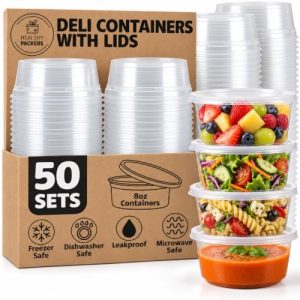
Choose food storage containers with screw on lids by matching the seal to the food and the body to your routine. A 2-cup twist-top tub suits smaller portions, while a 4-cup tub gives a full lunch more room. For liquids that may tip in a bag, check the exact lid’s leak claim before buying a set for the week.
Which food storage containers with screw on lids fit your routine?
Start with the food you pack most often and decide whether it stays upright, travels in a bag, or goes into the microwave. A threaded lid feels convenient when you can grip it easily, but the threads alone tell you little about leakage, appliance use, or whether a spare lid will fit.
| Your main use | What to look for | What to check before ordering |
|---|---|---|
| Yogurt, berries, or a small serving of leftovers | A reusable 2-cup plastic twist-top tub | Usable space under the lid and the manufacturer’s instructions for reheating |
| A lunch-size portion of chili or stew | A 4-cup tub with enough room for a spoon | Closure claim, bag fit, and whether the container can ride upright |
| Dressing or another small amount of liquid | A small threaded food container with an explicit leakproof claim | Seal design and the intended type of contents |
| Pantry items or refrigerated ingredients already stored in Mason jars | A compatible screw-on storage lid | Regular Mouth or Wide Mouth, plus the maker’s usage limits |
| An entrée that needs to stay warm away from home | An insulated food jar with a threaded stopper | Capacity, opening width, current model, and instructions for hot contents |
A screw lid is most useful when the motion of closing one cover is easier for you than pressing several latches. A shallow container with a twist lid can also give you a direct route to the food when you open it at your desk. The shape commonly puts most of the usable volume in a round footprint. If you carry long sandwich halves or want to keep several foods separated, measure what you will pack before buying around the closure alone.
Decide where you will open the container. At home, you have a stable counter, a place to set the lid down, and room to use both hands. In a car or at a job site, you may have less space to position your grip. A lid that feels comfortable when empty can be harder to handle with wet hands or a filled vessel. If ease of use matters, try one unit with the portion you expect to carry before buying an entire set.
How to tell what a screw lid will seal
Read the claim for the exact container and separate spill resistance from a claim that the closed container is leakproof. The threads secure the lid, and the contact between the lid and rim forms the seal. A lid can feel tight even when it is sitting crooked or has food residue across the sealing surface.
What leak resistance means for commuting
Buy for the way the container will travel. For a cup of soup riding upright in a lunch tote, basic spill resistance may be enough. For thin liquid in a backpack that routinely tips, look for an explicit leakproof claim for the selected body and lid and follow the maker’s closure directions.
Ziploc describes its Twist ’n Loc line as leak-resistant. That wording gives you a reason to consider the tubs for everyday transport and refrigerator storage, while a bottle of thin salad dressing bouncing alongside electronics calls for a more specific closure claim and its own space in the bag. Even with a product sold as leakproof, keep the lid correctly seated, observe any limits on contents, and replace damaged parts as directed. Avoid using the closure claim as a substitute for checking the container after it has been dropped.
Once you have a new container, examine the junction between the lid and body under good light. Start with a clean rim and make sure the lid begins squarely. The bottom edge of the lid should look even around the body when closed as directed. If it catches at an angle, back it off and start again. A repeatable closing motion is worth more for weekday use than a lid you can get to seat only after several attempts.
If you want a simple fit check at home, close the container with cool tap water inside and hold it over the sink in the position it would occupy in your bag. Look for a dribble around the rim and dry the threads before repeating. A brief household check tells you whether you seated the lid on that occasion. Carrying it through a whole commute adds movement and changes in orientation, so follow the manufacturer’s limits and avoid placing sensitive items beneath the container.
Choose a lid you can clean and replace
Look at where sauce can collect and how easily you can reach that area after washing. Some models have a separate gasket, while others use the fit of the lid and rim. Follow the maker’s instructions for any removable seal and check whether you can buy a compatible lid before ordering several bodies.
A removable gasket can be useful if the manufacturer provides instructions for taking it out and reinstalling it. It adds a step if you frequently pack foods that leave an oily film in the channel. A simple lid with visible threads can make it easier to see where a grain of rice or a bit of sauce is trapped. Compare both parts when choosing for soup or curry, where the inside of the cover sees more food contact than it would with a dry snack.
Replacement availability matters most when the containers share a daily job. If you carry the same breakfast five days a week, a missing lid can strand a useful container. Check for an exact part number or documented compatibility. A seller photo that shows similar diameter and color gives you a starting point, but the thread pattern and contact surface must match. Store matching lids together and keep the package information for the first purchase.
Pick a size and opening that suit your food
Compare capacity, mouth width, and covered height together. A 2-cup tub can carry an individual snack or smaller meal, while a 4-cup tub offers more room for a main dish. If you serve straight from the container, make sure the spoon you use can reach the bottom and clear the rim.
Compare 2-cup and 4-cup food storage containers with screw on lids
Ziploc lists the Small Twist ’n Loc at 2 cups or 16 fluid ounces and the Medium at 4 cups or 32 fluid ounces. Pick the Small for a portion you can comfortably eat from a compact tub. Move up when a full meal needs room to stir, add toppings, or close the lid without fouling the threads.
Try measuring the food you actually pack for a few days. A cup of yogurt and half a cup of berries total about 1½ measured cups and give you a practical starting point for the 2-cup size. A portion of stew that already measures close to 2 cups would leave little room for stirring or for the container to move without wetting the underside of the cover. A 4-cup tub or a smaller portion can solve that problem. Measure loose ingredients after you put them together if their shape or bulk changes how they sit.
Think about what will occupy the rest of the bag. A 4-cup tub that fits on its own may crowd an ice pack, fruit, and utensils once all of them are inside. Take the dimensions of the space you can dedicate to an upright container and check the opening of the bag as well as its interior. If the listing lacks a reliable exterior measurement with the lid attached, buy a single unit where you can confirm the size before standardizing on it.
Match the opening to the way you fill it
Check the diameter you can actually use through the opening, especially on jars with shoulders. A wider mouth can make it easier to add larger pieces, scoop oats, or wash the inside by hand. A narrower opening may suit a snack you pour out or a liquid you portion with a funnel.
For a weekday breakfast, try the spoon you already own. A long spoon might reach into a tall jar easily, while a wider bowl lets you scoop yogurt and toppings together. For pantry use, check whether the scoop can rotate inside the mouth. A jar that holds the whole ingredient bag can still be inconvenient if you have to pour the contents into another bowl every time you need a measured portion.
Look at the shelf height above the jar with the lid off. On a low pantry shelf, you may need enough clearance to turn your hand, lift the lid, and dip a scoop. A shorter tub could be easier to work with when a tall jar needs to be pulled forward each time. Similarly, round containers might fit nicely in the door or on a deep shelf, while a stack of wide round tubs can leave unusable space between adjacent containers in a shallow drawer. Measure the space where the set will live.
Check microwave, freezer, and cleaning instructions
Read the care rules for the exact body and cover before deciding where to use them. For microwave reheating, a threaded lid may need to be loosened or removed. If you plan to freeze food, confirm that the body and closure are approved for that use and follow the maker’s filling instructions.
Ziploc directs users of the 2-cup Twist ’n Loc tub to unscrew or remove the lid before microwaving, wait for the contents to cool before tightening the lid, and use the top rack if washing it in a dishwasher. It excludes conventional oven and stovetop use. Those details make sense for a buyer who stores lunch in a plastic tub and reheats in a microwave. If your normal routine uses a toaster oven, choose an oven-approved dish and follow the instructions for its separate cover.
Plan what happens when reheating ends. If your desk is a long walk from the microwave, identify a way to carry the hot container according to the directions without turning the threaded lid into a temporary handle. If you will need to add toppings or stir, leave space at the top and budget for a place to set the lid. A container that works well cold may need a change in routine when it becomes your everyday lunch bowl.
Check your cleaning setup before buying several. Place a similarly sized cup in the dishwasher’s upper rack and see whether the rack closes comfortably. With glass jars, look at whether you can reach the bottom and the shoulder using your usual dish brush. Keep clean lids where they will dry with the underside exposed. If a seal has to be removed for cleaning, store the pieces together so you can reinstall them correctly.
When a Mason jar and a separate lid make sense
Consider a separate lid when you already own jars that fit your kitchen and need an easier cover for ordinary storage. Ball sells leakproof storage lids in Regular Mouth and Wide Mouth versions. Match the jar opening before you shop and check the use instructions for the jar and lid separately.
Ball identifies its Leakproof Storage Lids as airtight and leakproof and excludes them from canning. That makes the distinction relevant for someone replacing the two-piece cover on a jar used for oats in the pantry or a refrigerated ingredient. For home preserving, use the canning equipment and closure specified for the process. If you are considering a jar for freezing or reheating, verify those uses on the glass and consult the lid directions. The mouth standard tells you what fits the opening.
Shop for the cap that matches most of the jars you reach for. If you own both mouth sizes, sort the jars you want to use before ordering a multipack of lids. Verify the name on the jar or its original packaging where possible. Try the new lid on a clean, empty jar first and inspect the rim for damage. If the threads bind, recheck the fit before using that combination for storage.
Glass jars can be practical when they stay at home and visibility between uses is important. For lunch on a long walk, compare the filled weight and how firmly the jar sits in the tote. If you already own suitable jars, buying a lid can reduce the number of new containers you need. A new jar and lid still need to fit your portion, shelf, and cleaning routine to make the purchase worthwhile.
What is worth paying for at checkout
Spend on the feature that solves a problem you encounter regularly. For weekday lunches that might be a compact tub with a closure you can use reliably. For a pantry full of jars it might be a set of matching lids. Compare the total price of useful, complete containers and look up compatible parts before buying in bulk.
Count bodies and lids separately when reading a pack description. An eight-piece package can consist of four bodies with four lids. Decide how many matching portions you actually need. For example, a hypothetical $15 set with five useful tubs costs $3 per covered tub before delivery. If two capacities are too small for your meal and you are buying solely for lunch, the effective cost for the three useful tubs is $5 each. Use the same approach when comparing a single size with a varied pack.
Pay attention to the weekly rhythm of washing and packing. If you prepare three meals together and wash the containers as you use them, three matching units might be enough. If you prep for multiple people who bring the dishes home on different days, count how many are likely to be clean on the next prep day. Buying spares of a proven size may solve that bottleneck more directly than a large assortment. Check how the clean lids stack in the cupboard too.
If your main use is carrying hot soup where there is no microwave, choose a purpose-built insulated food jar and read the instructions that come with the specific current model. Compare mouth size, filled weight, and how the stopper opens. If you mainly take refrigerated leftovers to a workplace with a microwave, put the budget into a container that fits the microwave and supports your normal reheating method. Then confirm the model, quantity, seller, and total delivered price before ordering.
Conclusion
Buy a screw-top tub for the portion you carry most, and check the closure claim if thin liquid can reach the lid during travel. Verify which parts can go in the microwave or dishwasher before buying multiples. If a jar you own already fits the job, compare the cost of a compatible storage lid first.
More from Amazon
Programs that pair well with the guide above. Offers and eligibility are set by Amazon and may change.
Set up recurring deliveries of everyday items on eligible products. Terms and savings are set by Amazon.
Explore Subscribe & SaveCollect the home and kitchen items you want in one registry that guests can shop from.
Create a wedding registryFree shipping on eligible items, Prime Video and more. Eligible new members can start with a free trial.
Start a Prime free trialAudiobooks and podcasts to listen to on the go. Eligible new members can start with a free trial.
Try Audible freeAs an Amazon Associate we earn from qualifying purchases.