
Key takeaways
- Table of Contents 4 sections 9 min read 1 How to Choose the Right chamber vs external vacuum sealer 1.1 Liquid Handling and Moisture Capability 1.2 Bag Compatibility and Long-Term Supply Costs 1.3 Physical Size and Countertop Footprint 1.4 Processing…
What's inside
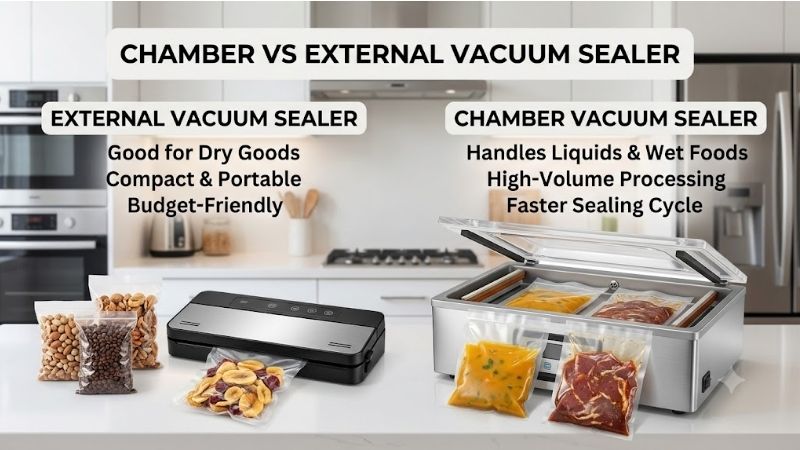
Chamber vs external vacuum sealer comparisons highlight essential differences in air evacuation, convenience, and daily storage capability. External clamp models draw air straight from textured pouches, proving affordable for routine grocery prep. Chamber appliances equalize cabinet pressure to package marinades without messy spills.
How to Choose the Right chamber vs external vacuum sealer
Understanding how to choose between a chamber vs external vacuum sealer requires evaluating your primary ingredients and kitchen space. A specialized suction mechanism dictates how effectively each machine handles delicate proteins or wet stews. Evaluating structural differences ensures your investment suits daily cooking demands.
Liquid Handling and Moisture Capability
Evaluating a chamber vs external vacuum sealer for wet ingredients requires looking closely at how each machine handles internal pressure during evacuation. External sealers often pull raw juices toward the heat bar, causing weak seals. Dedicated chamber designs prevent liquid packaging spills by keeping pressure equalized.
If your weekly meal prep involves raw soups, marinades, or juicy meats, chamber units offer unmatched reliability. However, external sealers can manage mildly moist items if you freeze liquids solid prior to sealing. Choosing the proper machine style eliminates ruined bag seals and reduces frustrating cleanups after kitchen prep.
Bag Compatibility and Long-Term Supply Costs
Long-term operational costs depend heavily on the specific pouch materials required by your chosen sealing appliance. External edge sealers require embossed, micro-channeled bags to allow proper air extraction across the clamp bar. These specialized bags carry higher price tags that increase overall budget demands over extended use.
Conversely, chamber machines operate using smooth, untextured pouch bags that cost significantly less per unit. High-volume home cooks and hunters recover higher initial machine costs through substantial long-term savings on pouch cost. Factoring pouch expenses into your budget ensures economical meal storage for years to come.
Physical Size and Countertop Footprint
Kitchen layout and available storage space heavily influence which machine design fits your daily cooking routine. External sealers feature slim, lightweight frames that store easily inside standard pantry drawers or cabinets. Their minimal countertop footprint makes them ideal for smaller kitchens or casual meal preppers.
In contrast, chamber units feature heavy stainless steel chassis weighing thirty to eighty pounds. These bulky appliances require dedicated counter space or heavy-duty utility carts to remain accessible for daily packaging tasks. Measuring your available kitchen space prevents buying a unit that feels overly cumbersome.
Processing Speed and Duty Cycle
Batch processing efficiency depends on motor cooling systems and maximum allowable continuous operation cycles. External sealers often require brief cool-down intervals between cycles to prevent thermal bar damage or overheating. These rest delays slow down workflow when packaging bulk meat purchases or seasonal harvests.
Commercial-grade chamber sealers utilize robust pumps designed for rapid, continuous sealing without overheating breaks. Heavy-duty construction allows users to seal dozens of consecutive bags during intensive harvest processing sessions. Selecting higher duty cycles saves valuable time when managing large volumes of frozen food.
Top Picks
Selecting top appliances across a chamber vs external vacuum sealer comparison requires analyzing real-world performance and durability. We evaluated leading appliances on Amazon for pump strength, construction, and value. The options below represent reliable models suited for diverse cooking habits and household budgets.
Avid Armor USV20 Chamber Vacuum Sealer
Tailored for home chefs and sous vide preparation fans, this compact chamber unit handles liquid marinades effortlessly. Its stainless steel body features adjustable vacuum timing to secure delicate fish without crushing texture. Smooth pouch compatibility lowers per-bag expenses significantly during weekly meal prep routines.
However, its seventeen-pound frame takes up noticeable counter real estate compared to basic clamp models. The internal chamber dimensions limit bag sizes to eleven inches wide, restricting massive cuts of meat. Still, its superior liquid sealing performance makes it an outstanding entry point into chamber preservation.
$$Image ALT: Avid Armor USV20 Chamber Vacuum Sealer for liquid packaging$$
VacMaster VP215 Commercial Chamber Vacuum Sealer
Built for hunters, anglers, and small food businesses, this heavy-duty unit delivers commercial durability and power. Equipped with a quiet oil-cooled rotary pump, it runs continuously without overheating during bulk packaging sessions. Double seal bars offer leak-proof security for heavy liquid soups, stocks, and sauces.
On the downside, its eighty-four-pound weight makes portability nearly impossible without a dedicated utility cart. The premium price tag represents a significant upfront investment that casual home cooks might find unnecessary. Overall, its unmatched industrial reliability makes it the ultimate workhorse for heavy food storage.
$$Image ALT: VacMaster VP215 Commercial Chamber Vacuum Sealer for heavy duty storage$$
NESCO Deluxe VS-12 Vacuum Sealer
Ideal for budget-conscious families and dry food storage routines, this external sealer offers dual vacuum pumps. It features customizable moist and dry modes along with a double heat seal strip for added package security. Built-in roll storage and a sliding cutter make custom bag creation fast and straightforward on any counter.
However, processing raw liquids requires pre-freezing items solid to prevent moisture from reaching the seal bar. The plastic housing feels less rugged than commercial metal alternatives over long-term heavy use. Nevertheless, its impressive suction power and double seal bar make it the best overall external value pick.
$$Image ALT: NESCO Deluxe VS-12 Vacuum Sealer for dry food storage$$
Anova Precision Vacuum Sealer Pro
Designed for frequent home cooks and sous vide enthusiasts, this heavy-duty external unit provides strong vacuum pressure. Dedicated wet food modes and low-pressure pulse settings allow precise handling of delicate items. An integrated accessory port lets you draw air from canisters, jars, and specialized wine stoppers.
Conversely, the unit requires proprietary or embossed external bags, raising long-term supply expenses over time. The latch mechanism requires firm downward force to lock securely before starting an extraction cycle. Despite these minor drawbacks, its reliable performance and sleek profile suit modern home kitchens.
$$Image ALT: Anova Precision Vacuum Sealer Pro for sous vide cooking$$
FoodSaver FM2100 Vacuum Sealer Machine
Tailored for casual cooks seeking reliable daily storage, this simple external machine offers effortless bag compatibility. An easy-locking latch handle simplifies operation, while wide sealing strips deliver consistent airtight closures. Compact dimensions allow easy cabinet storage when packaging standard grocery leftovers.
On the downside, it lacks an automatic bag sensor, requiring precise manual bag positioning inside the vacuum channel. The motor produces a relatively loud hum that might prove distracting during long sealing sessions. Still, its user-friendly layout and five-year warranty provide excellent peace of mind.
$$Image ALT: FoodSaver FM2100 Vacuum Sealer Machine for freezer storage$$
| Feature / Model | Avid Armor USV20 | VacMaster VP215 | NESCO Deluxe VS-12 | Anova Precision Pro | FoodSaver FM2100 |
|---|---|---|---|---|---|
| Sealer Type | Compact Chamber | Commercial Chamber | External Clamp | External Clamp | External Clamp |
| Best For | Liquid Prep / Home | Heavy Duty / Hunters | Overall External Value | Sous Vide / Frequent | Casual / Beginners |
| Compatible Bags | Smooth Chamber Pouches | Smooth Chamber Pouches | Textured Clamp Bags | Textured Clamp Bags | Textured Clamp Bags |
| Pump Mechanism | Dry Piston Pump | Oil-Cooled Rotary | Dual Vacuum Pump | High Flow Pump | Standard Single Pump |
| Weight | 17.5 lbs | 84.0 lbs | 6.0 lbs | 5.0 lbs | 6.6 lbs |
Frequently Asked Questions
Addressing common questions about a chamber vs external vacuum sealer setup clarifies routine maintenance, bag costs, and liquid rules. Understanding operational differences prevents common packaging errors while extending appliance lifespan. Below are detailed answers to key queries buyers ask before purchasing.
Why Are Chamber Vacuum Sealers Better for Liquids?
Chamber sealers evacuate air from the entire interior cabinet, creating equal pressure inside and outside the pouch bag. Because air pressure drops uniformly, liquids remain resting at the bottom of the bag without boiling or drawing upward. This unique pressure dynamic makes liquid packaging effortless and completely mess-free.
In contrast, external clamp models pull air directly out of the open bag opening using suction force. Negative pressure draws free-flowing liquids straight toward the heat bar, contaminating the seal line and causing leaks. Chamber technology solves liquid storage issues permanently for home chefs and meal preppers.
Do Chamber Sealers Really Save Money on Bags?
Yes, chamber machines utilize smooth pouch bags that cost significantly less than textured external bags. Textured clamp bags feature specialized interior channels that increase manufacturing expenses for suppliers. Over thousands of packaged meals, switching to smooth pouches yields substantial long-term financial savings.
While chamber sealers carry higher initial equipment prices, high-volume users recoup that investment through lower pouch cost. Hunters, homesteaders, and bulk preppers benefit most from reduced long-term packaging expenses. For light casual use, however, inexpensive external sealers remain more economical upfront.
Can You Use Smooth Bags in External Vacuum Sealers?
No, standard external clamp sealers cannot evacuate air from smooth pouches because the bag walls collapse instantly together. When clamp bars press shut, smooth plastic seals off internal air channels, trapping oxygen inside the bag. Using smooth pouches in external machines results in incomplete extraction and spoiled food.
External units rely specifically on textured or mesh-lined bags to maintain open air passages during vacuuming. Chamber units do not require textured channels because ambient pressure evacuates the whole chamber evenly. Matching bag style to your specific machine type ensures proper airtight protection every time.
Which Sealer Type Is Best for Sous Vide Cooking?
Chamber sealers represent the gold standard for sous vide cooking because they package marinated proteins and liquids effortlessly. Equal chamber pressure lets you infuse oils, wines, and seasonings directly into food tissues before water bath cooking. Strong airtight seals prevent pouch floating and ensure even heat transfer.
However, external sealers equipped with pulse control or pulse options work well for dry sous vide items like steaks. Pre-freezing marinades allows external sealers to lock in flavors without pulling liquid into internal motor valves. Both options suit sous vide, but chamber models offer far greater culinary versatility.
Final Thoughts
Evaluating a chamber vs external vacuum sealer ultimately comes down to your cooking style, storage space, and liquid prep needs. Compact external models offer affordable daily storage for dry foods, while chamber units excel at liquid marinades and high-volume batch sealing. Choose the ideal machine to transform your kitchen.


