Key takeaways
-
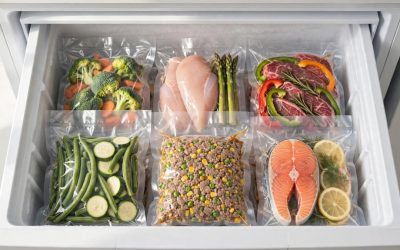
Freezing raw meat and poultry.
-
Organizing individual meal portions.
-
Packaging bulk grocery purchases.
-
Storing suitable dry pantry ingredients.
-
Protecting frozen vegetables and fruits.
-
Preparing compatible packages for sous vide cooking.
-
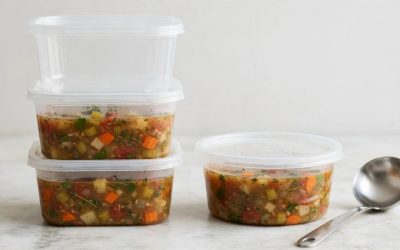
Organizing cooked leftovers.
Choosing Seal a Meal vacuum sealer bags starts with matching the packaging size and material to your appliance and food storage needs. Quart bags suit individual meals, gallon bags accommodate larger ingredients, and continuous rolls offer custom sizing. The right packaging helps reduce waste and protect frozen food quality.
What are Seal a Meal vacuum sealer bags?
Seal-a-Meal vacuum bags are specialized food storage products designed for compatible external vacuum sealing appliances. Unlike conventional plastic storage bags, their construction supports air extraction and heat sealing, helping reduce oxygen exposure and protect appropriately stored food against moisture loss.
These bags are available in precut configurations and continuous rolls, giving households flexibility when packaging different types of ingredients.
Their common applications include:
-
Freezing raw meat and poultry.
-
Organizing individual meal portions.
-
Packaging bulk grocery purchases.
-
Storing suitable dry pantry ingredients.
-
Protecting frozen vegetables and fruits.
-
Preparing compatible packages for sous vide cooking.
-
Organizing cooked leftovers.
For most households, quart-size precut bags provide a convenient starting point. Gallon bags are more suitable for family-sized portions, while continuous rolls offer greater flexibility for irregularly shaped foods.
Vacuum packaging does not sterilize food or replace refrigeration and freezing.
Quick comparison of Seal-a-Meal bag sizes and formats
The most appropriate vacuum bag depends on the dimensions of your ingredients, the amount of packaging you expect to use, and the operating limits of your machine. Understanding the available formats helps prevent unnecessary material waste and makes routine food preparation considerably easier.
| Product format | Package configuration | Best for |
|---|---|---|
| Seal-a-Meal quart bags | 20 precut bags | Individual meals and small meat portions |
| Seal-a-Meal gallon bags | 13 bags, 11 × 14 inches | Family meals and larger cuts |
| Seal-a-Meal 8-inch rolls | Two 12-foot rolls | Custom individual portions |
| Seal-a-Meal 11-inch rolls | Two 9-foot rolls | Long or moderately wide ingredients |
These configurations are documented by US retailers. Other package quantities and roll lengths may also be available.
The best purchasing approach is to select bag widths that your machine supports, then choose precut bags or rolls based on how consistently you package similar portions.
Which Seal-a-Meal vacuum bag size should you buy?
Selecting appropriately sized vacuum bags helps reduce unnecessary packaging consumption while making it easier to establish consistent seals. The best dimensions depend on food width, thickness, and length, rather than simply choosing the largest available bag for every household storage application.
Seal-a-Meal quart bags for individual portions
Seal-a-Meal quart vacuum bags are particularly convenient for households that regularly prepare individual meals or divide larger grocery purchases into smaller portions. Their precut construction eliminates the need to measure roll material and create a bottom seal before packaging.
The 20-count quart package is suitable for:
-
Individual chicken breasts.
-
Small steaks and pork chops.
-
Single-serving cooked meals.
-
Portions of ground beef.
-
Small quantities of vegetables.
-
Cheese portions requiring refrigeration.
-
Suitable dry pantry ingredients.
The main advantage of quart bags is convenience. Each bag already has closed sides and a sealed bottom, allowing you to concentrate on filling the package and creating the final closure.
This standardized format is also useful when preparing multiple identical freezer portions.
For example, a household purchasing several pounds of ground beef can divide it into individual recipe-sized packages without measuring and cutting a new bag each time.
Buy if: You regularly package individual portions and prefer convenient, ready-to-use bags.
Skip if: You frequently store whole poultry, broad roasts, or unusually long ingredients.
Seal-a-Meal gallon bags for larger food packages
Seal-a-Meal gallon vacuum bags offer additional width and length for ingredients that cannot fit comfortably inside smaller quart packaging. The documented 13-count configuration measures 11 × 14 inches, making it particularly useful for larger household freezer portions and bulk grocery preparation.
Key specifications:
-
Bag dimensions: 11 × 14 inches.
-
Package quantity: 13 precut bags.
-
Material designation: BPA-free.
-
Appliance compatibility: Supported Seal-a-Meal and FoodSaver machines.
-
Storage applications: Refrigeration and freezing.
Gallon bags are particularly useful for family-sized meat portions, several chicken breasts, moderately sized roasts, and prepared ingredients intended for shared meals.
Their additional width also makes loading food easier, reducing the need to force ingredients through a narrow opening.
However, a gallon designation does not guarantee compatibility with every large food item. Thick cuts require additional packaging material around their sides.
Buy if: You regularly prepare meals for several people or freeze larger meat portions.
Skip if: Most of your packages contain small individual servings that fit comfortably inside quart bags.
Seal-a-Meal 8-inch rolls for custom portions
The Seal-a-Meal 8-inch vacuum sealing rolls allow users to create custom-length packages for relatively narrow ingredients. The two-roll configuration provides 24 feet of total packaging material, offering flexibility for households that regularly store food portions with different lengths and dimensions.
Key specifications:
-
Roll width: 8 inches.
-
Individual roll length: 12 feet.
-
Package quantity: Two rolls.
-
Total material length: 24 feet.
-
Packaging type: Custom-length vacuum bags.
Unlike precut bags, rolls require users to create a bottom seal before adding food and completing the final vacuum sealing operation.
This additional preparation step provides greater control over material consumption.
An eight-inch roll can be particularly convenient for individual fish fillets, narrow pork tenderloins, small cheese portions, and other ingredients that vary considerably in length.
Buy if: You want to customize bag length while avoiding unnecessary material around narrow ingredients.
Skip if: You primarily package broad cuts of meat or prefer ready-to-use bags.
Seal-a-Meal 11-inch rolls for oversized ingredients
Seal-a-Meal 11-inch vacuum sealing rolls provide greater width for foods that are difficult to fit inside narrower packaging. The documented two-pack of nine-foot rolls offers a combined 18 feet of material, allowing users to prepare longer packages for moderately large household food items.
The wider format is particularly useful for:
-
Pork loins.
-
Long fish fillets.
-
Large steaks.
-
Multiple chicken portions.
-
Moderately sized beef roasts.
-
Family-sized vegetable packages.
The primary advantage over gallon bags is adjustable length.
If an ingredient is longer than a standard precut bag but still fits within an 11-inch-wide opening, continuous rolls can provide a convenient solution.
Check your vacuum sealer’s maximum supported bag width before purchasing.
Buy if: You regularly package long ingredients or need more flexibility than standard precut gallon bags provide.
Skip if: Your machine only accommodates narrower packaging or your food exceeds the usable width of an 11-inch bag.
Seal-a-Meal bag compatibility with different vacuum sealers
Appliance compatibility is one of the most important purchasing considerations because vacuum sealing materials must work with both the suction mechanism and heating element. A bag that physically fits inside a machine does not necessarily produce a reliable vacuum or correctly formed heat seal.
Using Seal a Meal vacuum sealer bags with FoodSaver machines
Several Seal-a-Meal replacement bag configurations are explicitly marketed for use with both Seal-a-Meal and FoodSaver appliances. This cross-brand compatibility provides additional purchasing flexibility, although buyers should still confirm the supported bag width and instructions for their specific vacuum sealer.
Before purchasing, verify:
-
The machine uses external vacuum extraction.
-
The bag or roll width fits the sealing channel.
-
The packaging is intended for heat sealing.
-
The manufacturer or product listing identifies compatible machines.
-
The selected bag supports your intended storage application.
Standard Seal-a-Meal gallon bags and eight-inch rolls are documented examples of products marketed for compatibility with both appliance brands.
However, this does not mean every FoodSaver accessory or specialty packaging format works with every Seal-a-Meal machine.
Valve-equipped bags, handheld accessories, and specialized containers have different compatibility requirements.
Using third-party vacuum sealing bags
Third-party vacuum bags can be attractive when purchasing replacement packaging in large quantities. Nevertheless, differences in plastic construction, surface texture, thickness, and heat-sealing requirements can affect performance, making universal compatibility claims less useful than product-specific documentation.
When evaluating alternative bags, examine the following characteristics:
-
Explicit compatibility with Seal-a-Meal machines.
-
Food-contact suitability.
-
Appropriate textured construction.
-
Supported bag dimensions.
-
Freezer-safe designation.
-
Manufacturer instructions for heating or cooking.
Purchase a small package before committing to a large quantity of unfamiliar replacement bags.
After testing the packaging, check whether the machine extracts air properly and forms a consistent closure without melting or damaging the material.
A lower purchase price provides little value if the packaging repeatedly fails and requires replacement.
Why ordinary plastic bags may not work
Conventional zipper bags and smooth plastic storage bags are generally unsuitable for the normal vacuum extraction process used by external household sealers. Their surfaces can collapse together near the suction opening, preventing air from moving effectively out of the package.
Textured vacuum bags provide channels that help air travel toward the appliance’s vacuum opening.
| Packaging type | External Seal-a-Meal compatibility |
|---|---|
| Seal-a-Meal heat-seal bags | Supported on compatible models |
| Seal-a-Meal vacuum rolls | Supported within machine width limits |
| Compatible textured third-party bags | Product-dependent |
| Ordinary zipper bags | Generally unsuitable for normal vacuum extraction |
| Smooth chamber vacuum pouches | Generally unsuitable |
| Valve-equipped reusable bags | Requires compatible accessories |
Some machines support sealing certain packaging materials without vacuum extraction. However, heat-sealing compatibility should not be confused with vacuum packaging compatibility.
Precut vacuum bags versus continuous rolls
Precut bags and continuous rolls provide different advantages depending on household packaging habits. Precut bags simplify preparation when portion sizes remain consistent, while rolls offer more flexibility for ingredients with irregular dimensions and can reduce unnecessary material consumption when measured carefully.
| Comparison criteria | Precut bags | Continuous rolls |
|---|---|---|
| Preparation | Ready to fill | Requires cutting and bottom sealing |
| Package length | Fixed | Adjustable |
| Convenience | Higher for repeat portions | Higher for unusual lengths |
| Material waste | Depends on selected size | Adjustable to ingredients |
| Number of sealing operations | Usually one | Usually two |
| Best for | Routine meal preparation | Irregular food dimensions |
Choose precut bags if you repeatedly prepare similar portions.
Choose continuous rolls if you frequently switch between different ingredient lengths.
Many households benefit from keeping quart bags for everyday use and an 11-inch roll for larger or unusually shaped foods.
Important bag features worth paying attention to
Reliable food packaging depends on more than bag dimensions and package quantity. Material construction, sealing characteristics, puncture resistance, and temperature compatibility influence how well the finished package performs during freezing, handling, transportation, and other approved food storage applications.
Material construction and BPA-free labeling
Food vacuum bags must be manufactured from materials suitable for their intended food-contact applications. BPA-free labeling is a useful purchasing consideration, but it does not independently establish suitability for every cooking temperature, reheating method, or long-term storage condition.
The documented Seal-a-Meal gallon bag configuration is marketed as BPA-free and suitable for several food storage applications.
Before using bags for purposes beyond ordinary freezing, check the specific manufacturer’s instructions.
A BPA-free designation does not automatically mean that a bag is:
-
Suitable for oven use.
-
Approved for prolonged boiling.
-
Compatible with every sous vide temperature.
-
Safe for unlimited reuse.
-
Appropriate for pressure canning.
Select packaging according to its stated applications rather than relying solely on material marketing claims.
Puncture resistance for meat and bone-in cuts
Sharp bones and irregular food surfaces can damage flexible packaging during vacuum extraction or subsequent freezer handling. Puncture resistance therefore becomes especially important when selecting bags for bone-in pork chops, ribs, poultry pieces, and other ingredients with exposed edges.
The Seal-a-Meal gallon bag listing describes its construction as resistant to punctures and tearing.
Nevertheless, no flexible bag should be considered completely puncture-proof.
For challenging ingredients, consider compatible food-grade bone guards and arrange sharp surfaces away from vulnerable bag corners.
Inspect packages again after freezing because hardened ingredients and contact with other frozen packages can introduce additional mechanical stress.
Freezer and sous vide compatibility
Vacuum bags suitable for frozen storage are not automatically appropriate for every cooking method. Heating exposes packaging materials to different conditions, so buyers planning sous vide cooking should confirm the permitted temperatures and cooking durations for their specific bag configuration.
The documented Seal-a-Meal gallon bags are marketed for freezing, refrigeration, microwave use, and simmering.
However, the general product listing does not establish a universal maximum temperature or cooking duration for every Seal-a-Meal packaging product.
Follow the instructions printed on the selected package.
Do not use ordinary vacuum storage bags inside an oven or pressure canner unless they are specifically designed and approved for that application.
How to calculate the cost of Seal-a-Meal bags
Replacement packaging can become a substantial recurring expense for households that vacuum seal food frequently. Comparing the price per usable bag rather than package price alone provides a more meaningful assessment of long-term ownership costs, particularly when evaluating precut bags against continuous rolls.
Calculating precut bag costs
The cost of precut packaging is straightforward to estimate because each package contains a defined number of ready-to-use bags. Divide the purchase price by the number of included bags, then multiply that figure by your expected monthly usage to estimate recurring expenses.
The following prices are hypothetical examples, not current retail offers.
| Package | Example price | Cost per bag |
|---|---|---|
| 20 quart bags | $12 | $0.60 |
| 13 gallon bags | $13 | $1.00 |
| 50 compatible bags | $20 | $0.40 |
A household using 20 bags each month would spend approximately $12 monthly at a unit cost of $0.60.
Annual packaging expenses would total approximately $144, excluding taxes, shipping, and wasted bags.
Calculating the usable cost of vacuum rolls
Continuous rolls require a slightly different calculation because the number of finished packages depends on the selected cut length. Smaller packages generally produce more usable bags from the same roll, although each package must include enough material for its required sealing margins.
Consider the Seal-a-Meal two-pack of 12-foot rolls.
| Calculation | Result |
|---|---|
| Total roll length | 24 feet |
| Total material | 288 inches |
| Example cut length | 12 inches |
| Theoretical bag quantity | 24 bags |
| Hypothetical package price | $12 |
| Estimated cost per bag | $0.50 |
Actual yield may be lower because of cutting mistakes, unusable end sections, and additional material requirements.
Rolls are not automatically cheaper than precut bags. Compare equivalent package widths, usable lengths, and total delivered costs.
How to use Seal-a-Meal bags correctly
Proper bag preparation helps reduce vacuum failures and unnecessary packaging expenses. Regardless of whether you purchase precut bags or continuous rolls, the sealing area must remain clean, appropriately positioned, and free from wrinkles that could interrupt formation of the final closure.
Follow these practical steps:
-
Select a bag large enough for the intended food portion.
-
If using a roll, cut the required length and seal one end.
-
Keep sufficient empty material above the ingredients.
-
Prevent moisture and food particles from contaminating the opening.
-
Position the bag according to your appliance instructions.
-
Run the appropriate vacuum and sealing cycle.
-
Inspect the finished seam for gaps or wrinkles.
-
Label the package with its contents and date.
-
Refrigerate or freeze perishable ingredients promptly.
Some Seal-a-Meal manuals recommend leaving at least three inches of additional material when preparing bags from rolls.
Follow the specific instructions for your appliance, particularly when packaging moist foods.
Common problems with vacuum sealing bags
Unsuccessful vacuum packaging does not necessarily indicate poor bag quality. Incorrect positioning, excessive moisture, incompatible materials, damaged gaskets, and insufficient sealing space can produce similar symptoms, making systematic troubleshooting more useful than immediately replacing the appliance or purchasing different bags.
| Problem | Possible cause | Recommended solution |
|---|---|---|
| Machine does not remove air | Incorrect bag positioning | Reposition the opening |
| Bag loses its vacuum | Incomplete seal or puncture | Inspect and repackage |
| Seal contains wrinkles | Excess packaging or poor alignment | Flatten the sealing area |
| Liquid enters suction channel | Excessive ingredient moisture | Pre-freeze suitable portions |
| Bag material melts | Incompatible heat settings or material | Use approved packaging |
| Package develops holes | Sharp bones or edges | Use suitable protective materials |
If properly positioned compatible bags repeatedly fail, inspect the appliance’s gaskets and sealing components according to its maintenance instructions.
Food safety and bag reuse considerations
Vacuum packaging can help maintain food quality, but it does not destroy harmful microorganisms or make perishable ingredients safe at room temperature. Reusing bags also requires careful consideration because certain food residues can remain even after ordinary household washing procedures.
Follow these essential precautions:
-
Keep refrigerated perishables at 40°F or below.
-
Maintain frozen foods at 0°F or below.
-
Do not reuse bags that previously contained raw meat, poultry, or fish.
-
Follow manufacturer instructions for any permitted bag reuse.
-
Replace bags with damaged seams or punctures.
-
Do not use vacuum packaging as a substitute for traditional canning.
When packaging soups, sauces, or other liquid-rich foods with an external sealer, freezing suitable portions before vacuum sealing can help protect the appliance and improve closure formation.
Frequently asked questions
Seal-a-Meal replacement packaging raises practical questions about appliance compatibility, reusable materials, and the differences between standard food storage bags and specialized vacuum packaging. Understanding these distinctions helps buyers select appropriate replacement supplies without compromising their food storage requirements.
Are Seal-a-Meal and FoodSaver bags interchangeable?
Certain Seal-a-Meal bags and rolls are specifically marketed for use with both appliance brands. However, compatibility depends on the exact packaging product, machine design, sealing width, and temperature requirements, so universal interchangeability should not be assumed across all accessories.
Check the packaging and appliance instructions before purchasing replacement supplies.
Can you reuse Seal-a-Meal vacuum bags?
Bag reuse depends on the manufacturer’s instructions, previous contents, and the condition of the packaging. Bags previously used for raw meat, poultry, or seafood should be discarded rather than reused because ordinary washing may not adequately address contamination risks.
Replace packaging whenever its seams, textured surfaces, or structural integrity become compromised.
What is the best Seal-a-Meal bag size for meat?
Quart bags are convenient for individual steaks and chicken portions, while gallon bags provide additional room for larger household meat packages. An 11-inch roll is often more practical for long ingredients that fit within its usable width but exceed standard precut bag lengths.
Measure unusually thick or bone-in cuts before selecting packaging.
Conclusion
Seal-a-Meal quart bags suit individual portions, gallon bags accommodate larger meals, and continuous rolls provide flexible package lengths. Choose packaging according to your appliance’s compatibility, food dimensions, and storage requirements. Compare costs per usable bag to achieve better long-term value.
More from Amazon
Programs that pair well with the guide above. Offers and eligibility are set by Amazon and may change.
Set up recurring deliveries of everyday items on eligible products. Terms and savings are set by Amazon.
Explore Subscribe & SaveCollect the home and kitchen items you want in one registry that guests can shop from.
Create a wedding registryFree shipping on eligible items, Prime Video and more. Eligible new members can start with a free trial.
Start a Prime free trialAudiobooks and podcasts to listen to on the go. Eligible new members can start with a free trial.
Try Audible freeAs an Amazon Associate we earn from qualifying purchases.