Key takeaways
-
Convenient pre-cut dimensions for repetitive food preparation.
-
Reduced packaging waste when storing individual portions.
-
Easier organization inside refrigerators and freezers.
-
Less preparation time compared with cutting bags from rolls.
-
Compatibility with many household vacuum sealing machines when the appropriate bag construction is selected.
-
Reduced exposure to air when the vacuum and seal remain intact.
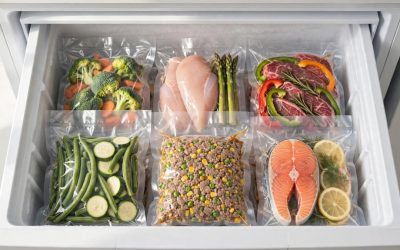
Choosing the right 8 x 12 vacuum sealer bags can help reduce freezer burn, simplify meal preparation, and keep food organized without wasting packaging material. These quart-size bags are practical for everyday portions, but their texture, thickness, heat resistance, and machine compatibility matter more than the dimensions alone.
What makes 8 x 12 vacuum sealer bags worth buying?
The 8-by-12-inch format offers a practical balance between storage capacity and packaging efficiency. Unlike oversized bags that consume unnecessary material, this size accommodates many individual meals, meat portions, and ingredients while leaving enough room for a secure seal when filled correctly.
For most households using an external vacuum sealer, pre-cut embossed quart-size bags are a sensible starting point. Chamber vacuum sealer owners should instead check whether their machines support smooth pouches of the same dimensions.
The main benefits include:
-
Convenient pre-cut dimensions for repetitive food preparation.
-
Reduced packaging waste when storing individual portions.
-
Easier organization inside refrigerators and freezers.
-
Less preparation time compared with cutting bags from rolls.
-
Compatibility with many household vacuum sealing machines when the appropriate bag construction is selected.
-
Reduced exposure to air when the vacuum and seal remain intact.
However, these bags are not universally compatible, and their advertised dimensions do not represent the amount of usable interior space.
Understanding the actual storage capacity
Although an 8-by-12-inch vacuum bag is commonly marketed as a quart-size product, its practical capacity depends on the thickness and shape of the contents. The side seams, bottom seam, and empty space required above the food all reduce the usable interior area compared with the advertised dimensions.
A flat chicken breast occupies the available space differently from a thick steak, a block of cheese, or a collection of irregularly shaped vegetables.
Before purchasing a large package, consider the foods you seal most frequently rather than relying exclusively on the quart-size designation.
| Food type | Suitability | Main consideration |
|---|---|---|
| Chicken breasts | Excellent | Keep portions flat |
| Boneless steaks | Excellent | Allow sufficient sealing space |
| Ground beef portions | Excellent | Flatten before freezing |
| Chopped vegetables | Good | Prepare appropriately before sealing |
| Cheese portions | Good | Avoid unnecessary compression |
| Whole chickens | Poor | Larger bags are generally necessary |
| Large bone-in cuts | Limited | Size and puncture resistance |
| Soups and sauces | Conditional | Requires suitable liquid handling |
The best way to estimate capacity is to measure the largest portion you normally package and account for its thickness as well as its length and width.
When pre-cut bags are better than vacuum rolls
Pre-cut bags eliminate the need to measure, cut, and create a bottom seal for every new package. This convenience becomes particularly valuable when processing several similar portions at once, although continuous vacuum rolls remain more flexible when food dimensions vary significantly between packages.
Pre-cut bags are especially useful for:
-
Weekly meal preparation.
-
Dividing bulk meat purchases.
-
Organizing individual freezer portions.
-
Packaging similar amounts of dried ingredients.
-
Preparing multiple sous vide portions.
Vacuum sealer rolls are better suited to irregularly shaped foods, long cuts of meat, or households that frequently switch between small and large portions.
A combination of quart-size pre-cut bags and a wider vacuum roll is often more practical than relying exclusively on either format.
How to choose 8 x 12 vacuum sealer bags for your machine
Machine compatibility should be the first consideration before comparing bag prices, thickness, or package quantities. Two products with identical dimensions may use entirely different air-removal designs, making one suitable for a conventional countertop vacuum sealer and the other unsuitable.
The most important distinction is whether your machine removes air directly through the bag opening or evacuates air from an enclosed chamber.
Embossed bags for external vacuum sealers
External vacuum sealers generally require textured bags that maintain small air channels between the plastic surfaces during suction. Without these channels, the bag walls can collapse together before enough air escapes, leaving unwanted air pockets even when the machine completes its normal cycle.
Embossed bags may also be described as:
-
Textured vacuum bags.
-
Channel vacuum bags.
-
Air-channel bags.
-
External suction vacuum bags.
-
Out-of-chamber vacuum pouches.
The texture can appear as a diamond pattern, raised channels, or another structured surface. The exact pattern is less important than whether the construction supports effective air extraction with your machine.
Many FoodSaver, Weston, Nesco, and similar countertop machines use this general bag format, although compatibility should always be checked against the particular model.
Buy embossed bags if your machine draws air through an open bag positioned across a vacuum channel.
Smooth bags for chamber vacuum sealers
Chamber vacuum sealers remove air from the enclosure surrounding the package instead of depending exclusively on suction through textured channels inside the bag. This operating principle allows compatible machines to use smooth-sided pouches, which may provide lower consumable costs for frequent sealing.
Smooth chamber pouches are particularly useful for:
-
High-volume food preparation.
-
Packaging meat in bulk.
-
Suitable liquid and marinade applications.
-
Commercial kitchen preparation.
-
Households with dedicated chamber vacuum machines.
Do not assume that smooth pouches will work with a standard external suction sealer simply because the bag opening fits across its sealing bar.
A machine with specialized bag support may offer additional compatibility, but its instruction manual should determine the final decision.
Checking sealing bar width and bag compatibility
An eight-inch-wide bag must fit within the effective sealing width of the machine, with its opening positioned flat across the appropriate sealing surface. The physical width of the appliance is not a reliable measurement because the actual heating element and vacuum channel may be considerably narrower.
Check the following before purchasing:
-
Maximum supported bag width.
-
Recommended bag surface texture.
-
Compatible film thickness.
-
Required headspace above the food.
-
Moist or dry sealing settings.
-
Any restrictions on third-party consumables.
| Machine type | Recommended bag | What to verify |
|---|---|---|
| External suction sealer | Embossed bag | Supported width and texture |
| Chamber vacuum sealer | Smooth chamber pouch | Chamber and sealing bar dimensions |
| Handheld vacuum sealer | Compatible valve bag | Valve connection and bag design |
| Heat-only bag sealer | Compatible heat-sealable film | Film material and thickness |
A handheld vacuum pump normally needs a compatible valve-equipped bag rather than an ordinary open-ended vacuum pouch.
Similarly, a heat-only impulse sealer can close suitable plastic packaging but does not necessarily remove the air inside it.
Bag thickness, material quality, and sealing performance
Vacuum bag durability depends on more than the advertised thickness. Film construction, puncture resistance, barrier performance, seam quality, and the ability to form a consistent heat seal all influence whether a package remains airtight during handling, refrigeration, freezing, or approved cooking applications.
A thicker bag is not automatically better if its material is incompatible with your machine or difficult to seal reliably.
Choosing between 3 mil, 4 mil, and heavier bags
Vacuum packaging thickness is commonly expressed in mils, with one mil representing one-thousandth of an inch. Manufacturers may describe the thickness of individual film layers or bag sides differently, so thickness figures should be interpreted alongside the product’s construction rather than compared in isolation.
| Thickness | Typical consideration | Potential limitation |
|---|---|---|
| 3 mil | Routine food packaging | Less protection against sharp edges |
| 4 mil | Additional material for demanding use | May cost more |
| 5 mil or heavier | Applications requiring extra durability | May require compatible sealing settings |
These are general purchasing considerations rather than guaranteed performance ratings. A well-constructed thinner bag can outperform a poorly manufactured thicker alternative.
For everyday boneless meat, dry ingredients, and ordinary freezer portions, standard-duty bags are often sufficient.
Consider heavier construction when packaging:
-
Foods with exposed bones.
-
Hard or irregular ingredients.
-
Packages that will be moved frequently.
-
Bulk freezer portions exposed to repeated handling.
-
Products with sharp frozen edges.
Even heavy-duty bags can puncture. Appropriate food-safe bone protection or an alternative packaging arrangement may still be necessary.
Understanding multilayer plastic construction
Many food vacuum pouches use multilayer plastic films designed to combine sealing performance with resistance to air and moisture transmission. Different layers perform different functions, which explains why ordinary plastic storage bags are generally unsuitable substitutes for purpose-built vacuum packaging.
When comparing product descriptions, look for clearly stated material information rather than relying on promotional terms such as commercial grade or professional strength.
Useful purchasing information includes:
-
Intended food-contact application.
-
Film material and construction.
-
Freezer suitability.
-
Approved cooking temperatures, when applicable.
-
Manufacturer sealing instructions.
-
Storage and reuse limitations.
A BPA-free claim alone does not establish suitability for every cooking temperature, microwave setting, or prolonged hot-water application.
The manufacturer must specifically support the intended use.
Why seal quality matters more than thickness alone
An expensive bag offers little practical benefit if its opening develops an incomplete or contaminated seal. Moisture, food residue, folds, and incorrect placement can interrupt the bond between the film surfaces, allowing air to gradually enter even when the plastic itself remains undamaged.
Before investing in a thicker or more expensive bag, check whether your existing sealing problems originate from the packaging material or the sealing process.
Inspect finished packages for:
-
A continuous seal across the entire opening.
-
No visible wrinkles crossing the seal.
-
No food residue trapped in the sealing area.
-
No punctures or tears.
-
No unexpected loosening during storage.
Where supported by the manufacturer, a second parallel seal can provide additional closure redundancy. However, it cannot compensate for punctures elsewhere in the bag or fundamentally incompatible packaging material.
Selecting vacuum bags for different food storage needs
The ideal vacuum bag depends on what happens after the food is sealed. A package intended for long-term freezer storage faces different conditions from one used for refrigerated meal preparation or sous vide cooking, making application-specific material selection an important part of the buying process.
Best 8 x 12 vacuum sealer bags for freezer storage
Freezer storage benefits from durable vacuum bags that limit exposure to air and resist damage during handling. Quart-size embossed bags are particularly useful for dividing larger grocery purchases into manageable portions, provided the food fits comfortably and the finished seal remains intact.
Prioritize these characteristics:
-
Multilayer film specifically rated for freezer use.
-
Reliable heat-sealing performance.
-
Suitable puncture resistance.
-
Transparent packaging for easy identification.
-
Sufficient space for labeling and dating.
-
Compatibility with your vacuum sealer.
Ground beef, boneless chicken, pork chops, and individual steak portions are practical candidates for this size.
Flattening suitable foods before freezing also makes packages easier to stack and can promote more even freezing and thawing.
Vacuum packaging can help preserve food quality by limiting air exposure, but it does not make frozen food immune to deterioration indefinitely.
Choosing bags for sous vide cooking
Sous vide applications require vacuum bags that can tolerate the intended water temperature and cooking duration. Standard freezer suitability does not automatically establish cooking compatibility, so buyers should verify the manufacturer’s temperature and usage guidance before placing sealed food into a heated water bath.
Important considerations include:
-
Explicit sous vide compatibility.
-
Maximum permitted cooking temperature.
-
Suitable food-contact materials.
-
Reliable seam construction.
-
Compatibility with prolonged water immersion.
-
Appropriate handling of seasonings and liquids.
A bag advertised as suitable for sous vide should still be used within its documented limitations.
Avoid treating microwave-safe, freezer-safe, and boil-safe descriptions as interchangeable. Each application can expose packaging to different conditions.
For households that regularly prepare individual steaks, chicken portions, or other suitable sous vide recipes, quart-size bags can reduce unnecessary packaging material compared with larger alternatives.
Choosing bags for moist foods and marinades
Moist ingredients can create difficulties for external suction vacuum sealers because liquid may travel toward the opening during air extraction. This movement can contaminate the sealing surface or enter the machine, making both bag selection and preparation technique important for dependable results.
Several approaches can help manage moisture:
-
Chill suitable ingredients before packaging.
-
Pat excessive surface moisture from solid foods.
-
Freeze suitable liquids before using an external suction sealer.
-
Use the machine’s moist-food setting when available.
-
Consider bags designed with an absorbent liquid-blocking strip.
-
Use a compatible chamber vacuum sealer for appropriate liquid applications.
Liquid-blocking bags may help manage small amounts of meat juices, but they do not necessarily make an external suction machine suitable for sealing unrestricted quantities of liquid.
For soups, sauces, and liquid-heavy marinades, follow the machine manufacturer’s liquid-handling instructions.
Choosing bags for dry ingredients
Dry ingredients generally present fewer moisture-related sealing difficulties than fresh meat or liquid-rich foods. However, fine particles, sharp ingredients, and delicate products can introduce other challenges, especially when strong suction pulls material toward the bag opening or compresses fragile contents.
Quart-size vacuum bags may be suitable for:
-
Dried beans.
-
Properly dried fruit.
-
Nuts.
-
Rice.
-
Dried pasta.
-
Certain shelf-stable snack ingredients.
Fine powders require additional care because particles can interfere with the seal or enter an external machine’s vacuum system.
Delicate foods may benefit from a pulse-vacuum setting or another manufacturer-approved method that provides greater control over compression.
Vacuum packaging should only be used for shelf-stable storage when the food itself is appropriate for that storage method.
How to compare vacuum bag brands and product designs
Brand recognition can provide a useful starting point, but the most suitable bag is one that meets your machine and storage requirements. Comparing actual product construction, supported applications, and package quantities is more informative than choosing exclusively by familiar branding or promotional claims.
The following products illustrate different purchasing options rather than representing a performance-tested ranking.
Avid Armor quart vacuum sealer bags
Avid Armor offers pre-cut eight-by-twelve-inch vacuum bags designed for external suction vacuum sealers. The manufacturer identifies its quart-size product as embossed and suitable for several food storage and cooking applications, making it a relevant option for households using conventional countertop machines.
Key specifications:
-
Dimensions: 8 x 12 inches.
-
Package quantity: 100 bags.
-
Format: Pre-cut.
-
Surface construction: Embossed.
-
Machine type: External suction vacuum sealer.
-
Manufacturer-listed applications: Freezing and sous vide cooking.
Buy if:
-
You regularly package individual meat portions.
-
Your machine requires embossed vacuum bags.
-
You prefer ready-to-use packaging over continuous rolls.
Skip if:
-
Your chamber machine requires smooth pouches.
-
You primarily package large cuts of meat.
-
You need a different bag width for your appliance.
The manufacturer’s published specifications establish the intended application, but they do not independently demonstrate superiority over competing brands.
Weston quart vacuum sealer bags
Weston offers an eight-by-twelve-inch pre-cut vacuum bag format intended for compatible heat-seal vacuum packaging systems. Its quart-size dimensions make it relevant for buyers who already use conventional countertop sealing equipment and want a straightforward consumable for routine food preparation.
Key specifications:
-
Dimensions: 8 x 12 inches.
-
Available configuration: 100 pre-cut bags.
-
Product format: Quart-size vacuum bags.
-
Intended compatibility: Suitable external vacuum sealing systems.
Buy if:
-
You own a compatible Weston or similar vacuum sealer.
-
You frequently divide groceries into smaller portions.
-
You prefer a conventional pre-cut bag design.
Skip if:
-
Your machine specifically requires smooth chamber pouches.
-
You need specialized liquid-blocking features.
-
Your typical portions exceed the usable interior dimensions.
Confirm the current package configuration and compatibility statement before placing an order, particularly when purchasing through third-party sellers.
FoodVacBags liquid-block quart bags
FoodVacBags offers a specialized quart-size design that incorporates an absorbent strip intended to help manage liquid near the sealing area. This configuration addresses a common difficulty with moist ingredients, although buyers must still follow the liquid restrictions and operating instructions of their machines.
Key specifications:
-
Dimensions: 8 x 12 inches.
-
Product format: Pre-cut quart vacuum bags.
-
Specialized feature: Absorbent liquid-blocking strip.
-
Intended machine type: Compatible external vacuum sealers.
Buy if:
-
Meat juices frequently interfere with your sealing process.
-
You package moist but predominantly solid ingredients.
-
Your machine supports the specified bag construction.
Skip if:
-
You primarily package dry ingredients.
-
You intend to vacuum seal unrestricted quantities of liquid.
-
You need smooth chamber pouches.
The additional feature is most worthwhile when moisture management is a recurring problem rather than an occasional inconvenience.
FoodVacBags chamber sealer pouches
FoodVacBags also offers eight-by-twelve-inch pouches specifically intended for chamber vacuum sealing equipment. Unlike embossed consumables for conventional external suction machines, this product category serves buyers whose equipment can remove air using the controlled environment inside a vacuum chamber.
Key specifications:
-
Dimensions: 8 x 12 inches.
-
Product category: Chamber vacuum sealer pouches.
-
Available configuration: Bulk packaging.
-
Intended equipment: Compatible chamber vacuum sealers.
Buy if:
-
You own a compatible chamber machine.
-
You package food frequently.
-
Your normal portions fit quart-size pouches.
Skip if:
-
Your machine requires embossed bags.
-
You seal food only occasionally.
-
You cannot reasonably use or store a large supply.
Check the individual product’s film thickness, cooking suitability, and supported sealing conditions before purchasing a bulk package.
Evaluating package quantities and long-term ownership costs
Vacuum bags are recurring consumables, which means their long-term cost can be more significant than an individual package price suggests. A sensible purchasing strategy balances unit cost, expected usage, storage requirements, and the possibility of discovering compatibility problems after buying in bulk.
Choosing between small and bulk packages
Smaller packages allow buyers to evaluate machine compatibility and sealing consistency before committing to a larger supply. Bulk packages can offer better purchasing efficiency for regular users, but their value decreases considerably if the bags are unsuitable for the appliance or everyday food portions.
| Package quantity | Recommended use |
|---|---|
| 25–50 bags | Occasional use or initial compatibility testing |
| 100 bags | Regular household food preparation |
| 200–300 bags | Frequent meal preparation and bulk groceries |
| 500 bags or more | High-volume users with established requirements |
A household using ten bags per week would consume a 100-count package in approximately ten weeks.
At the same usage rate, a 500-count package would last approximately fifty weeks.
Before purchasing larger quantities, ensure that the bags can be stored according to the manufacturer’s recommendations without exposure to excessive heat, moisture, or physical damage.
Calculating the actual cost per bag
Comparing package prices without accounting for quantity can lead to misleading conclusions about value. The cost of each usable bag provides a more meaningful comparison, particularly when choosing between standard embossed products, specialized liquid-block designs, and compatible bulk packaging.
Divide the total purchasing cost by the number of bags included.
The following examples are hypothetical calculations, not current retail prices.
| Example package | Example cost | Cost per bag |
|---|---|---|
| 50 bags | $9.00 | $0.18 |
| 100 bags | $15.00 | $0.15 |
| 200 bags | $26.00 | $0.13 |
| 500 bags | $55.00 | $0.11 |
Also consider:
-
Shipping charges.
-
Applicable taxes.
-
Bags wasted through incorrect sizing.
-
Replacement bags required after sealing failures.
-
Additional costs for specialized materials.
A cheaper bag that frequently requires replacement can cost more in practice than a slightly more expensive alternative that performs consistently with your equipment.
Which features are worth paying extra for?
Premium packaging features are most valuable when they solve a specific problem in your kitchen. Additional film thickness, moisture-control strips, and specialized cooking compatibility can justify higher consumable costs, but purchasing every available feature is unnecessary for straightforward food storage.
Consider paying more for:
-
Greater puncture resistance when packaging irregular ingredients.
-
Documented cooking compatibility for sous vide.
-
Moisture-management features when sealing juicy foods.
-
Reliable compatibility with your machine.
-
Clearly documented material specifications.
Features that may offer limited value include decorative printing, unnecessary package sizes, or heavy-duty construction for applications that do not require additional material.
For basic freezer storage, a consistently sealing standard-duty embossed bag may offer better practical value than a more expensive specialized design.
How to use quart-size vacuum bags effectively
Even well-designed vacuum bags can perform poorly when overloaded, incorrectly positioned, or exposed to unsuitable sealing conditions. Developing a consistent packaging routine helps buyers distinguish genuine material problems from avoidable preparation mistakes while reducing unnecessary consumable waste.
Preparing and filling the bag correctly
Successful vacuum packaging begins with selecting a portion that fits comfortably inside the bag. Overfilling creates tension around the food, reduces available sealing space, and increases the likelihood that moisture, wrinkles, or food particles interfere with the machine’s heating element.
Follow this preparation routine:
-
Select a clean bag compatible with your machine.
-
Prepare and appropriately chill the food.
-
Fold the bag opening outward while filling when practical.
-
Place the food inside without overstretching the material.
-
Unfold and clean the sealing area.
-
Leave the headspace required by the machine manufacturer.
-
Position the opening correctly inside the sealing system.
-
Run the appropriate vacuum and sealing cycle.
-
Inspect the finished seal.
-
Label the package with its contents and date.
Keeping the opening clean is particularly important when packaging raw meat, marinades, or ingredients coated with oils and seasonings.
Preventing punctures and air leaks
A vacuum bag may lose its tight appearance because of damaged film, incomplete sealing, or unsuitable handling after packaging. Identifying the location and cause of the problem is important before replacing an entire supply of bags or assuming that a thicker material will automatically resolve the issue.
Common causes include:
-
Sharp bones or frozen food edges.
-
Wrinkles crossing the sealing area.
-
Food particles trapped inside the seal.
-
Damaged machine gaskets.
-
Incorrect bag positioning.
-
Incompatible film construction.
-
Excessive handling or abrasion.
If a bag repeatedly loses its vacuum, inspect both the seam and the film surrounding the food.
When repackaging perishable food, consider its storage history and food safety rather than assuming that restoring the vacuum makes it safe again.
Organizing vacuum-sealed food in the freezer
Uniform quart-size bags can make freezer organization easier when their contents are packaged into relatively flat portions. Consistent labeling and sensible arrangement help households locate ingredients, monitor storage dates, and avoid purchasing duplicate groceries simply because existing supplies are difficult to identify.
Useful organization practices include:
-
Label packages before freezing.
-
Include the food name and packaging date.
-
Record portion weight when helpful.
-
Freeze suitable portions flat.
-
Group similar ingredients together.
-
Keep older packages accessible.
-
Avoid placing sharp frozen packages against delicate bags.
Flat packages can be arranged vertically inside suitable freezer bins once frozen.
This approach works particularly well for ground meat, individual boneless cuts, and other foods that can be packaged without excessive thickness.
Food safety and vacuum packaging limitations
Removing air from a food package can support quality preservation, but it does not sterilize the contents or eliminate the need for proper temperature control. Safe vacuum packaging requires suitable ingredients, clean equipment, appropriate storage conditions, and careful handling throughout preparation and consumption.
Refrigeration and freezer requirements
Perishable foods remain perishable after vacuum sealing. Meat, poultry, seafood, and prepared meals that ordinarily require refrigeration or freezing must continue to be stored under appropriate temperature conditions, even when their packaging looks intact and the vacuum appears to have been maintained.
Follow these general precautions:
-
Keep refrigerated foods at 40°F or below.
-
Maintain freezer temperatures at 0°F or below.
-
Minimize the time perishable food spends at room temperature.
-
Follow established food-specific storage recommendations.
-
Do not rely on vacuum sealing to make perishable food shelf-stable.
-
Observe any special thawing instructions for vacuum-packaged seafood.
Vacuum packaging is not a replacement for pressure canning, dehydration, or other validated preservation processes.
Can vacuum sealer bags be reused?
Reusing vacuum bags may reduce packaging waste in limited circumstances, but previous food contact, material damage, and manufacturer restrictions must be considered. A bag that appears clean or undamaged is not necessarily appropriate for another application, particularly after contact with raw animal products.
Avoid reusing bags that have contained:
-
Raw meat.
-
Raw poultry.
-
Raw seafood.
-
Ingredients that are difficult to clean completely.
-
Foods that have spoiled.
-
Contents that damaged the packaging.
Also discard bags with punctures, weakened seams, or heat-related deterioration.
For any permitted reuse, follow the manufacturer’s cleaning instructions and ensure that enough material remains to create a new, reliable seal.
Frequently asked questions
Vacuum bag purchasing decisions often involve practical questions about dimensions, third-party compatibility, cooking applications, and packaging alternatives. Understanding these differences helps buyers avoid unnecessary replacements and select consumables that match both their appliances and normal food preparation habits.
Are eight-by-twelve-inch vacuum bags quart size?
Many manufacturers classify eight-by-twelve-inch vacuum bags as quart-size packaging for household food storage. However, quart-size labeling should be treated as a general product category rather than a guarantee of usable liquid capacity, particularly when seam construction and required sealing space differ.
For irregular ingredients, compare the actual dimensions of the food with the available interior area before purchasing.
Will generic vacuum bags work with FoodSaver machines?
Many third-party embossed bags are designed for compatibility with conventional FoodSaver external suction machines. Nevertheless, compatibility depends on the particular appliance, supported bag width, film construction, and operating requirements rather than the presence of a generic compatibility statement alone.
Testing a small package before buying in bulk is a practical way to confirm that the bags seal reliably with your specific appliance.
Can ordinary zipper bags replace vacuum sealer bags?
Ordinary zipper storage bags generally lack the air channels and heat-sealable construction required by conventional external suction vacuum sealers. Although some alternative food packaging techniques use specialized zipper bags, these products should not automatically be treated as interchangeable with purpose-built vacuum pouches.
Use the packaging type specified by the machine manufacturer, especially when preparing food for prolonged storage or heated cooking applications.
Should I choose quart-size or gallon-size vacuum bags?
Quart-size bags are generally more economical for individual portions and smaller ingredient quantities, whereas gallon-size packaging provides additional room for bulky cuts and larger meals. The correct choice depends on actual food dimensions and required sealing space rather than household size alone.
Keep both sizes available if your routine includes individual meal preparation and occasional bulk food storage.
Why do vacuum bags lose their vacuum after sealing?
A package that gradually fills with air may have a puncture, an incomplete seam, or another packaging defect. Moisture and wrinkles are common sealing obstacles, while sharp ingredients and rough handling can damage the film after the initial vacuum cycle has been completed.
Inspect the complete package, review the machine’s operating instructions, and test another compatible bag to help isolate the cause.
Conclusion
For everyday food storage, choose pre-cut quart-size embossed bags that match your external vacuum sealer, or smooth pouches approved for your chamber machine. Prioritize reliable sealing, appropriate material strength, and verified cooking compatibility before purchasing in bulk, and maintain proper food storage temperatures.
More from Amazon
Programs that pair well with the guide above. Offers and eligibility are set by Amazon and may change.
Set up recurring deliveries of everyday items on eligible products. Terms and savings are set by Amazon.
Explore Subscribe & SaveCollect the home and kitchen items you want in one registry that guests can shop from.
Create a wedding registryFree shipping on eligible items, Prime Video and more. Eligible new members can start with a free trial.
Start a Prime free trialAudiobooks and podcasts to listen to on the go. Eligible new members can start with a free trial.
Try Audible freeAs an Amazon Associate we earn from qualifying purchases.