The best container to store soup in freezer spaces is a freezer-safe, airtight container with enough room for liquid expansion. Glass works well for reheating, plastic offers affordable everyday storage, and silicone trays simplify portion control. Choosing the right size and material helps preserve flavor and reduce food waste.
How to choose the best container to store soup in freezer
Choosing a soup storage container involves more than finding a lid that closes securely. The container must accommodate expanding liquids, tolerate freezing temperatures, minimize air exposure, and fit your available storage space without making thawing or reheating unnecessarily difficult.
For most households, a rigid, rectangular freezer-safe container with a secure lid offers the best combination of convenience, durability, and organization. However, the ideal material depends on your meal preparation habits.
| Container type | Best for | Main advantage | Main limitation |
|---|---|---|---|
| Glass containers | Freezing and reheating | Stain and odor resistance | Heavy and breakable |
| Plastic containers | Everyday meal prep | Affordable and lightweight | May stain or absorb odors |
| Silicone freezer trays | Individual portions | Easy portion removal | May require secondary packaging |
| Freezer bags | Limited freezer space | Space-efficient storage | Vulnerable to punctures |
| Freezer-safe Mason jars | Broth and stock | Reusable construction | Requires careful expansion space |
| Stainless steel containers | Durable storage | Impact resistance | Cannot be microwaved |
Before purchasing a container set, consider how frequently you freeze soup, how many portions you prepare, and whether you prefer reheating directly in the original container.
Essential features of a good soup freezer container
A dependable soup container should provide consistent performance throughout the complete storage cycle, from filling and freezing to thawing and cleaning. Features that improve durability and handling are generally more valuable than decorative designs or unnecessary accessories.
Look for the following characteristics:
-
Freezer-safe construction suitable for temperatures of 0°F.
-
Food-contact materials appropriate for the intended application.
-
Secure, tight-fitting lids that limit air exposure.
-
Adequate space for liquid expansion.
-
Stackable or space-efficient exterior dimensions.
-
Wide openings for filling, cleaning, and removing frozen contents.
-
Microwave compatibility if you intend to reheat directly.
-
Clearly marked capacity or maximum fill lines.
Removable silicone gaskets can make maintenance easier, provided they can be cleaned thoroughly and reinstalled correctly.
Replacement lid availability is another useful consideration because a damaged closure can make an otherwise functional container unsuitable for freezer storage.
Choosing the right capacity for individual servings
Container capacity determines how conveniently you can freeze and reheat soup without creating additional leftovers. Smaller containers work well for individual lunches, while larger containers are better suited to family dinners, batch cooking, and homemade stock prepared for future recipes.
| Container capacity | Recommended application |
|---|---|
| 4–8 fl oz | Concentrated stock and small recipe portions |
| 8–12 fl oz | Small side servings |
| 16 fl oz | Individual soup lunches |
| 24 fl oz | Larger individual meals |
| 32 fl oz | Multiple smaller servings |
| 48–64 fl oz | Family meals and larger batches |
These capacities represent nominal container sizes. The actual quantity of soup should be smaller because liquids require expansion space when freezing.
For households that regularly prepare different recipes, purchasing two or three complementary container sizes is usually more practical than buying a large set with identical capacities.
Comparing the best materials for freezing soup
The material used in a soup container affects its weight, resistance to staining, storage efficiency, and suitability for reheating. Understanding these differences helps you avoid purchasing containers that perform well in the freezer but become inconvenient when preparing meals later.
Glass freezer containers for everyday reheating
Freezer-safe glass containers are particularly useful for people who prefer storing, thawing, and reheating meals in the same vessel. Their nonporous surfaces generally resist lingering food odors and discoloration better than many plastic alternatives, especially when storing tomato-based soups.
Key advantages include:
-
Excellent visibility of stored contents.
-
Resistance to food stains and persistent odors.
-
Reusable construction.
-
Microwave compatibility when specifically approved.
-
Easy cleaning of smooth interior surfaces.
-
Suitability for serving meals directly.
Potential disadvantages include:
-
Greater weight than plastic.
-
Risk of breakage when dropped.
-
Sensitivity to sudden temperature changes.
-
Higher storage weight when freezing multiple portions.
Not every glass container is designed for freezing. Ordinary drinking glasses, recycled commercial jars, and unsuitable glass bowls should not be treated as freezer-safe packaging.
Choose a product specifically approved for freezer storage, and check whether the manufacturer permits direct transfer between the freezer and microwave.
Glass is especially practical for people who freeze lunches at home and prefer to minimize transferring food between different dishes.
Plastic containers for affordable bulk storage
Freezer-safe plastic containers provide a lightweight and economical solution for households preparing large quantities of soup. Their lower weight makes them easier to handle when stacking several meals, while flexible construction can offer practical advantages during everyday kitchen use.
The most useful plastic soup containers typically feature:
-
Freezer-rated food-contact plastic.
-
Secure snap-on or screw-top lids.
-
Wide openings.
-
Stackable construction.
-
Easy-to-read capacity measurements.
-
Microwave-safe bases when reheating is required.
Plastic containers may develop discoloration from ingredients such as turmeric, tomatoes, and strongly colored spices. Some may also retain odors after repeated use.
Inspect older containers for cracks, warping, and damaged closures. A container that previously worked well may no longer provide a dependable seal after extensive use.
Avoid assuming that every takeout container is suitable for prolonged freezing. Dedicated freezer containers are a better starting point when repeated storage is part of your routine.
Silicone freezer trays for portion-controlled meals
Silicone freezer trays allow soup to be divided into consistent portions that can be removed after freezing. Their flexible construction makes releasing frozen blocks easier than removing food from many rigid containers, which is especially helpful when preparing ingredients for several future meals.
Common silicone tray capacities include:
-
Half-cup portions for concentrated sauces.
-
One-cup portions for stock and small servings.
-
Two-cup portions for individual soup meals.
Silicone trays are particularly effective when freezing soups that will later be transferred into separate freezer bags or rigid containers.
For example, freezing a batch of vegetable soup in measured blocks allows you to select only the amount needed for lunch without thawing the remaining portions.
However, some silicone trays have covers intended primarily for stacking rather than airtight long-term storage. Check the lid design before using a tray as the final storage container.
For extended storage, transferring frozen portions into suitable airtight packaging can help limit air exposure and preserve freezer organization.
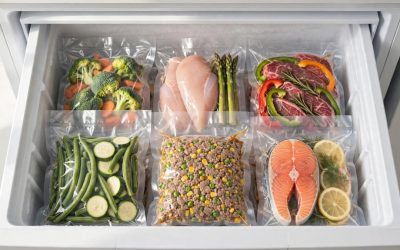
Freezer bags for compact kitchens
Dedicated freezer bags offer a flexible storage alternative for households with limited freezer capacity. When filled appropriately and frozen flat, they can create thin, stackable packages that use available drawer or shelf space more efficiently than many bulky rigid containers.
Benefits of freezer bags include:
-
Compact storage before and after use.
-
Convenient flat freezing.
-
Easy labeling.
-
Flexible portion sizing.
-
Relatively low initial purchasing cost.
Their main disadvantages are the possibility of punctures, difficulty filling without support, and the inconvenience of handling liquid soup before freezing.
Choose bags specifically designed for freezer storage rather than standard sandwich bags.
Support the bag upright inside a bowl while filling, remove unnecessary air without eliminating required expansion space, and check the closure before placing it in the freezer.
Unless specifically approved for heating, transfer the soup into a suitable dish or saucepan before reheating.
Freezer-safe Mason jars for homemade stock
Wide-mouth glass jars designed for both freezing and canning can provide reusable storage for soups, stocks, and broths. Their relatively simple construction makes cleaning straightforward, although their rigid shape requires careful attention to liquid expansion and temperature changes.
Choose jars with:
-
Explicit manufacturer approval for freezing.
-
Wide openings.
-
Straight or appropriately tapered sides.
-
Suitable lids.
-
Clearly understood filling limits.
Avoid ordinary reused commercial glass jars and narrow-neck bottles that are not designed for freezer applications.
Straight-sided freezer-safe jars are generally easier to empty because frozen contents are less likely to become trapped beneath a narrow shoulder.
Mason jars are useful for broth used in future recipes, but rectangular containers may provide better space efficiency in crowded freezer drawers.
Stainless steel containers for durable food storage
Stainless steel containers appeal to households that want reusable freezer storage without the weight and breakability of glass. Their suitability for soup depends on the manufacturer’s freezer approval, the effectiveness of the lid, and whether the design accommodates expansion as liquids freeze.
Consider stainless steel if you prioritize:
-
Resistance to accidental drops.
-
Durable construction for repeated use.
-
Resistance to food discoloration.
-
Reusable alternatives to disposable packaging.
Unlike transparent containers, stainless steel models make identifying frozen contents more difficult without labels.
They also cannot be used in conventional microwave ovens. You will need to transfer the soup into another suitable vessel for microwave reheating or use an appropriate stovetop method.
For most households, glass and plastic provide greater everyday convenience, while stainless steel offers advantages for buyers who prioritize durability.
Choosing containers based on your favorite soup recipes
Different soups respond differently to freezing because their ingredients contain varying amounts of water, fat, starch, and dairy. Selecting a container that matches the recipe can improve portion management and simplify reheating, although packaging cannot prevent every change in food texture.
The best container to store soup in freezer for meal prep
For weekly meal preparation, rectangular glass or rigid plastic containers with secure lids are generally the most practical choice. Their uniform dimensions simplify stacking, while individual portions allow you to reheat a complete lunch without repeatedly thawing a larger batch.
Choose containers with approximately 20–24 fl oz of nominal capacity if your usual lunch contains around two cups of soup. This provides additional room for expansion, depending on the container’s shape and filling instructions.
A practical five-day meal preparation setup includes:
-
Five individual freezer-safe containers.
-
Matching airtight lids.
-
Sufficient expansion space in every container.
-
Labels identifying the recipe and preparation date.
Glass works particularly well for meals reheated at home or in an office microwave, while lightweight plastic may be more convenient when transporting lunch.
Containers for chicken noodle and vegetable soup
Broth-based soups generally contain substantial amounts of liquid, making expansion space especially important during freezing. Wide-opening rigid containers simplify filling and serving, while silicone portion trays provide flexibility when you want to combine smaller quantities for different meals.
Chicken noodle soup can develop softer noodles after freezing and reheating. For better texture, consider freezing the broth, chicken, and vegetables separately from the cooked pasta.
Recommended container characteristics include:
-
Wide openings.
-
Secure closures.
-
Sufficient liquid expansion space.
-
Easy-to-clean interior surfaces.
-
Appropriate individual or family-sized capacity.
Glass containers are particularly convenient for reheating individual portions, whereas freezer bags can help accommodate larger quantities of broth in limited space.
Containers for creamy soups and chowders
Cream-based soups require additional consideration because dairy ingredients and certain starches may separate or develop undesirable textures after freezing. A suitable storage container can protect the soup from external odors and moisture loss, but it cannot eliminate ingredient-related changes.
For creamy tomato soup, mushroom soup, or chowder, consider freezing the soup base before adding cream when the recipe allows.
Rigid glass containers are a useful choice because they resist discoloration and simplify cleaning after storing rich ingredients.
During reheating, stir frequently and use a controlled heating method appropriate for the recipe. A separated texture does not necessarily indicate spoilage, but safe storage history remains essential.
Containers for bone broth and homemade stock
Homemade stock is often used in smaller quantities for sauces, rice dishes, gravies, and other recipes. Freezing stock in measured portions makes it easier to access the required amount without thawing an entire container, which is particularly beneficial for frequent home cooks.
The most useful formats include:
-
Half-cup silicone trays for small recipes.
-
One-cup silicone trays for everyday cooking.
-
Freezer-safe pint jars for medium portions.
-
Flat freezer bags for larger quantities.
For greater storage efficiency, transfer frozen stock portions from silicone molds into suitable airtight freezer bags.
This approach keeps the trays available for additional batches and reduces the amount of permanent freezer space occupied by rigid containers.
How to prevent soup containers from cracking or leaking
Even freezer-rated containers can fail when filled incorrectly, exposed to sudden temperature changes, or closed with damaged lids. Proper preparation is particularly important for liquid-rich foods because expansion during freezing can place significant pressure on container walls and closures.
Leave enough room for liquid expansion
Soup contains water that increases in volume as it freezes. Completely filling a rigid container can place pressure on the lid and surrounding walls, potentially causing deformation, leakage, or glass breakage. The appropriate expansion space depends on container shape and soup consistency.
General soup-freezing guidance recommends:
| Soup consistency | Suggested headspace |
|---|---|
| Mostly solid, chunky soup | At least ½ inch |
| Mostly liquid soup or broth | At least 1½ inches |
Follow the container manufacturer’s maximum fill line and any application-specific instructions when available.
Avoid filling containers to their advertised maximum capacity simply because the lid still closes.
For buyers who regularly freeze two-cup portions, choosing containers with a slightly larger nominal capacity provides more flexibility.
Prevent thermal shock in glass containers
Glass containers can crack when subjected to rapid temperature changes, even when they are designed for freezer storage. Moving a very hot container into the freezer or exposing frozen glass to an unsuitable high-temperature surface creates unnecessary stress on the material.
To reduce the risk:
-
Cool soup promptly using appropriate food-safe methods.
-
Avoid pouring boiling soup into cold glass.
-
Do not place hot glass directly into the freezer.
-
Follow manufacturer-approved thawing and reheating instructions.
-
Discard chipped or cracked containers.
-
Check whether lids are suitable for microwave use.
A freezer-safe label does not automatically establish that a container can move directly from the freezer into a hot oven.
Getting the best value from reusable soup containers
The cheapest container set is not necessarily the most economical choice over time. Replacement frequency, usable capacity, lid durability, cleaning requirements, and freezer organization all contribute to the overall value of a storage system used regularly for homemade meals.
Which features are worth paying extra for?
Premium container features are worthwhile when they address a recurring storage problem. A more durable closure, replaceable gasket, or accurately marked portion line can provide meaningful convenience, while decorative finishes and unnecessarily complicated designs may contribute little to everyday performance.
Prioritize spending on:
-
Reliable freezer-rated construction.
-
Durable, securely fitting lids.
-
Replaceable seals or closures.
-
Useful portion markings.
-
Stackable shapes.
-
Appropriate reheating compatibility.
For occasional freezing, a basic set of freezer-safe plastic containers may be sufficient. Frequent meal preparation can justify investing in glass containers or reusable silicone portion molds.
Calculate the actual cost per usable container
Comparing container sets requires checking how many complete storage vessels are included. Some packages count lids as separate pieces, meaning a twelve-piece set may contain only six containers. This distinction can significantly affect purchasing value when comparing different brands.
The following examples illustrate hypothetical costs rather than current retail prices.
| Container set | Complete containers | Example price | Cost per container |
|---|---|---|---|
| Basic plastic set | 10 | $15 | $1.50 |
| Premium plastic set | 6 | $24 | $4.00 |
| Glass set | 5 | $30 | $6.00 |
| Heavy-duty glass set | 4 | $32 | $8.00 |
Check the usable capacity of each container as well. A lower price per container offers limited value if the containers are too small for your normal soup portions.
How to freeze and reheat soup safely
Choosing suitable packaging is only one part of preserving homemade soup. Cooling, freezing, thawing, and reheating practices also influence food safety and eating quality. An expensive container cannot compensate for food that has been improperly handled before freezing or after removal.
Use the following routine:
-
Divide freshly prepared soup into smaller, shallow portions.
-
Cool promptly rather than leaving a large pot at room temperature.
-
Refrigerate or freeze within two hours, or within one hour when ambient temperatures exceed 90°F.
-
Leave sufficient expansion space inside each container.
-
Close the containers securely and label them.
-
Maintain a freezer temperature of 0°F or below.
-
Reheat using an appropriate food-safe method.
Reheat leftovers to at least 165°F throughout, and bring soups to a boil. Follow the container manufacturer’s temperature restrictions and transfer the soup to another vessel when necessary.
For best quality, aim to consume frozen vegetable and meat soups within two to three months. Food kept continuously frozen at 0°F can remain safe longer, although its quality may decline.
Common mistakes when buying soup freezer containers
Many soup storage problems originate from purchasing containers based exclusively on price, appearance, or advertised capacity. Checking material suitability, closure design, and actual storage requirements before ordering can prevent unnecessary replacements and make weekly meal preparation more efficient.
Avoid these common purchasing mistakes:
-
Buying ordinary glass containers without freezer approval.
-
Selecting containers too small to accommodate liquid expansion.
-
Assuming silicone tray covers are always airtight.
-
Purchasing oversized containers for individual meals.
-
Confusing microwave compatibility with freezer-to-microwave approval.
-
Counting lids as complete storage containers.
-
Reusing unsuitable disposable takeout packaging indefinitely.
-
Choosing containers without measuring available freezer space.
For most kitchens, a combination of individual rigid containers and silicone portion trays provides greater flexibility than a single oversized storage set.
Conclusion
Choose freezer-safe glass containers for convenient reheating, rigid plastic for economical everyday storage, or silicone trays for measured portions. Match container capacity to your normal serving size, leave adequate expansion space, and use secure lids to protect soup quality throughout frozen storage.
More from Amazon
Programs that pair well with the guide above. Offers and eligibility are set by Amazon and may change.
Set up recurring deliveries of everyday items on eligible products. Terms and savings are set by Amazon.
Explore Subscribe & SaveCollect the home and kitchen items you want in one registry that guests can shop from.
Create a wedding registryFree shipping on eligible items, Prime Video and more. Eligible new members can start with a free trial.
Start a Prime free trialAudiobooks and podcasts to listen to on the go. Eligible new members can start with a free trial.
Try Audible freeAs an Amazon Associate we earn from qualifying purchases.