Our Top Picks
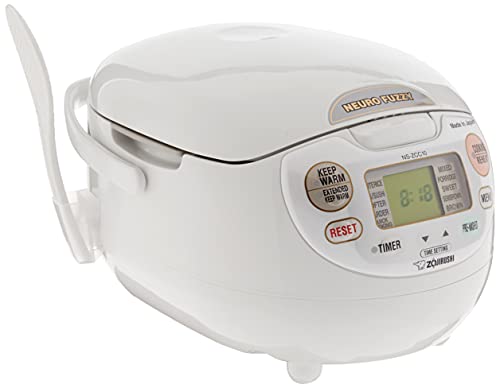 Best overall for meal prepZojirushi Ns ZCC10 Neuro Fuzzy Rice Cooker and5.5-Cup uncooked rice13 x 8.1 x 10.1 Inches3.1 PoundsCheck on Amazon
 Best for big weekly batchesZojirushi Neuro Fuzzy 10-Cup Rice Cooker and Warmer10-Cup uncooked rice14.5 x 9.5 x 11.5 Inches1 PoundsCheck on Amazon
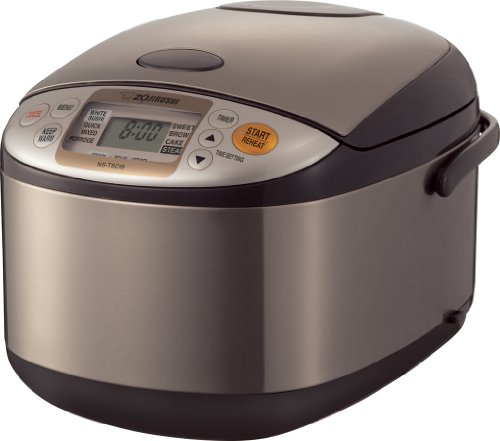 Best value large-capacityZojirushi NS-TSC18 Micom Rice Cooker and Warmer10 cups11.1 x 9.9 x 15 Inches11 PoundsCheck on Amazon
 Best induction all-rounderZojirushi Nw QAC10 5.5 Cup Induction Rice Cooker9.25 x 12.25 x 7.8814.2 x 12.5 x 9.7 Inches10.75 PoundsCheck on Amazon
 Best premium rice qualityZojirushi NW-JEC10BA Pressure Induction Heating5.5-Cup13.6 x 10.75 x 8.5 inchesCheck on Amazon
The short answer: the Zojirushi NS-ZCC10 Neuro Fuzzy is the best Zojirushi rice cooker for most meal preppers, and the 10-cup Neuro Fuzzy is the runner-up if you cook for a whole week at a time. The 5.5-cup NS-ZCC10 handles a normal Sunday batch of rice, has a delay timer for set-and-forget mornings, and sits in the middle of the Zojirushi price range. If your batches are bigger than about ten cups of cooked rice, step up to the 10-cup model; if you want the glossiest rice money can buy, look at the pressure induction cooker further down.
Disclosure: this page contains affiliate links. If you buy through a product card, the site may earn a small commission at no extra cost to you. Picks are based on research of manufacturer specs, listings and published reviews, not on in-house testing.
Top Picks at a Glance
- Best overall for meal prep: Zojirushi NS-ZCC10 Neuro Fuzzy (5.5-cup)
- Best for big weekly batches: Zojirushi 10-cup Neuro Fuzzy (NS-ZCC18 line)
- Best value large-capacity: Zojirushi NS-TSC18 Micom (10-cup)
- Best PFAS-free pan: Zojirushi NS-TPC10XT Micom
- Best induction all-rounder: Zojirushi NW-QAC10 Induction
- Best premium rice quality: Zojirushi NW-JEC10BA Pressure Induction (made in Japan)
- Best for one or two people: Zojirushi Micom 3-Cup Compact
Comparison Table: Zojirushi Models for Meal Prep
| Model | Best for | Capacity (uncooked) | Heating | Wattage | Watch for | Price tier |
|---|---|---|---|---|---|---|
| NS-ZCC10 Neuro Fuzzy | Most households | 5.5 cups (1.0 L) | Neuro Fuzzy logic | 680 W | Maxes out around ten cooked cups | Mid-range |
| 10-cup Neuro Fuzzy (NS-ZCC18) | Weekly batches | 10 cups (1.8 L) | Neuro Fuzzy logic | 1,000 W | Larger footprint | Upper mid-range |
| NS-TSC18 Micom | Big batches on a tighter budget | 10 cups (1.8 L) | Micom | 820 W | Fewer fine-tuning options than Neuro Fuzzy | Mid-range |
| NS-TPC10XT Micom | PFAS-free pan | 5.5 cups | Micom | Not listed | Newer model, fewer long-term reports | Mid-range |
| NW-QAC10 Induction | Flexible cooking | 5.5 cups | Induction | 1,080 W | Costs well above Micom models | Premium |
| NW-JEC10BA Pressure IH | Best rice texture | 5.5 cups | Pressure induction | Not listed | Highest price in the line-up | Premium |
| Micom 3-Cup Compact | 1-2 people, small kitchens | 3 cups | Micom | Not listed | Too small for family batches | Mid-range |
Zojirushi measures rice in its own 180 ml cup, which is about three-quarters of a standard US cup. A 5.5-cup model is therefore a 1.0 liter cooker, and a 10-cup model is 1.8 liters. Wattage figures come from a published specification roundup; where no figure was found, the table says so.
1. Zojirushi NS-ZCC10 Neuro Fuzzy: Best Overall for Meal Prep
Zojirushi Ns ZCC10 Neuro Fuzzy Rice Cooker and Warmer (White) | Automatic keep-warm, delay timer
One of the home product options compared in this guide.
View on AmazonKey specs: 5.5-cup (1.0 L) uncooked capacity; Neuro Fuzzy logic; automatic keep-warm; delay timer; about 680 W; white finish in this listing.
Best for: households of two to four who want one batch of rice to cover most of the week. Skip if: you regularly cook for six or more, or you want pressure-cooked texture.
The NS-ZCC10 is the model most published roundups treat as the default Zojirushi, and it earns that by being a balanced machine rather than an extreme one. Neuro Fuzzy logic means the cooker adjusts heating during the cycle based on sensor readings instead of running a fixed program, which is why it copes well with different rice types and amounts. For meal prep, that consistency matters more than any single feature: you want batch three to taste like batch one.
A 5.5-cup load yields up to roughly ten cups of cooked rice, which is about eight to ten lunch-sized portions at a cup each. That is a real Sunday batch for one or two adults, or a base for a family that also rotates quinoa and pasta. The delay timer is the other meal-prep win: rinse and load the pot at night, and fresh rice is ready when you start prepping at midday.
Maintenance is straightforward. The inner pan and lid parts come out for washing, and the nonstick pan should be cleaned with a soft sponge only. Because this is a micro-computer cooker with a long cord and a fixed base, plan on wiping the exterior and steam vent after each batch rather than submerging anything.
Pros:
- Even results across white, sushi and brown rice settings, according to published reviews
- Delay timer for overnight loading
- Capacity suits most weekly batches
Cons:
- Not large enough for big families
- Nonstick pan needs gentle utensils and a soft sponge
2. Zojirushi 10-Cup Neuro Fuzzy: Best for Big Weekly Batches
Zojirushi Neuro Fuzzy 10-Cup Rice Cooker and Warmer (Premium White) | Automatic keep-warm
One of the home product options compared in this guide.
View on AmazonKey specs: 10-cup (1.8 L) uncooked capacity; Neuro Fuzzy logic; automatic keep-warm; about 1,000 W for the NS-ZCC18 line; premium white finish in this listing.
Best for: families of five or more and anyone prepping two weeks of grain bowls at once. Skip if: you cook rice for one or two, since small loads work poorly in a big pot.
This is the same Neuro Fuzzy platform as the NS-ZCC10 with a bigger pan. A 1.8 liter pan holds roughly 1.8 times the rice of the 1.0 liter model, so a full pot becomes the foundation for a family-size week of lunches. If your plan is one big Sunday cook followed by portioning into containers, this is the model that stops you from running two cycles back to back.
The size comes with a rule worth knowing: rice cookers perform best when filled to at least about half capacity, and quality drops with very small amounts in a large pot. If you will often cook two or three cups, buy the 5.5-cup model instead. If most of your batches are six cups or more, the 10-cup is the better long-term choice.
Counter space is the practical cost. This cooker is noticeably larger than the 5.5-cup version, so measure under your cabinets before ordering, and check that the cord reaches an outlet you can use on prep day.
Pros:
- Enough capacity for large-family weekly prep
- Same Neuro Fuzzy logic as the best-selling 5.5-cup
- Delay timer and keep-warm for staggered meals
Cons:
- Poor fit for tiny batches
- Larger footprint and higher price than the 5.5-cup
3. Zojirushi NS-TSC18 Micom: Best Value for Large Capacity
Zojirushi NS-TSC18 Micom Rice Cooker and Warmer – 1.8 Liters
One of the home product options compared in this guide.
View on AmazonKey specs: 1.8 L (10-cup) capacity; Micom control; about 820 W; LCD controls and automatic keep-warm per the Zojirushi line.
Best for: larger batches when you do not need the finest rice tuning. Skip if: you specifically want Neuro Fuzzy logic or induction heating.
The NS-TSC18 is the 10-cup Zojirushi that costs less than the Neuro Fuzzy version. Micom (micro-computer) control still runs a programmed cooking curve with a timer and keep-warm, which is a major step up from a basic on/off cooker. One published roundup chose this model as its overall winner for larger meals, which fits its role here: a dependable, big-capacity workhorse.
The compromise is nuance. A Neuro Fuzzy cooker keeps adjusting as it senses what is happening in the pot; a Micom cooker follows a more fixed program. For plain white rice you may never notice. If you cook sushi rice, brown rice or mixed grains every week and care about small texture differences, the Neuro Fuzzy models are worth the premium.
For meal prep specifically, the 1.8 L pan gives you the same batch size as the more expensive 10-cup, which makes this the budget route to big weekly volume inside the Zojirushi line.
Pros:
- Large capacity at a lower tier than the Neuro Fuzzy 10-cup
- Timer and keep-warm for flexible prep days
- Simple controls
Cons:
- Less adaptive than Neuro Fuzzy models
- Same large footprint as other 10-cup models
4. Zojirushi NS-TPC10XT Micom: Best PFAS-Free Pick

Zojirushi NS-TPC10XT Micom Rice Cooker & Warmer (with PFAS-Free Nonstick), 5.5-Cup, Stainless Brown
One of the home product options compared in this guide.
View on AmazonKey specs: 5.5-cup capacity; Micom control; PFAS-free nonstick pan per the listing; stainless brown finish.
Best for: buyers who want a Zojirushi without PFAS in the cooking surface. Skip if: you want the longest track record; this is a newer model.
Zojirushi states that this model’s pan and food-contact surfaces are free of PFAS, PTFE, PFOA and BPA. If you cook rice several times a week and want to limit conventional nonstick coatings, that is a meaningful difference, and it is the main reason to choose this over the NS-ZCC10.
In practice, you get a familiar Micom rice cooker with a 5.5-cup pan: the same batch size as the best-overall pick, with a simpler control style. Because the model is recent, there are fewer long-term reports on coating durability than for older Zojirushi cookers, so treat the first few months as a test of how the pan holds up to your cleaning routine.
Whatever pan you choose, the care rules are similar: no metal utensils, no abrasive pads, and rinse promptly after serving. Rice starch that dries on the pan is the usual cause of sticking and scratching.
Pros:
- PFAS-free cooking surface per the maker
- Same 5.5-cup batch size as the best-selling model
- Micom control with timer features
Cons:
- Newer, with less long-term feedback
- Micom rather than Neuro Fuzzy logic
5. Zojirushi NW-QAC10 Induction: Best Flexible All-Rounder
Zojirushi Nw QAC10 5.5 Cup Induction Rice Cooker and Warmer (Black) | Custom cooking pan, double nonstick coating, LCD controls, delay timer
One of the home product options compared in this guide.
View on AmazonKey specs: 5.5-cup uncooked capacity; induction heating; custom cooking pan with double nonstick coating; LCD controls; about 1,080 W.
Best for: meal preppers who cook more than white rice. Skip if: you only make plain rice and want to keep the price down.
Induction heating warms the entire pan more evenly than a plate heater under the pot, and the 1,080 W rating gives it extra headroom. A published roundup lists this model at up to ten cooked cups per batch and calls it the most flexible meal-prep pick, which is a fair description: brown rice, mixed grains and porridge-style dishes benefit from steady, even heat.
The weekly-prep logic is simple. If your plan includes steel-cut oats, congee or mixed-grain bowls alongside rice, induction gives you more control and more forgiving results. If you eat white rice five days a week and nothing else, the Neuro Fuzzy NS-ZCC10 does that job for considerably less.
The 10-cup sibling, the NW-QAC18, exists if you want induction at a larger size, but it is a bigger step up in price and footprint.
Pros:
- Even heating suits brown rice and mixed grains
- Higher wattage than Micom and Neuro Fuzzy models
- Double nonstick coating on a custom pan
Cons:
- Premium tier price
- Extra capability is wasted if you cook only plain white rice
6. Zojirushi NW-JEC10BA Pressure Induction: Best Premium Rice Quality
Zojirushi NW-JEC10BA Pressure Induction Heating (IH) Rice Cooker & Warmer, 5.5-Cup, Made in Japan
Chosen because it offers heating.
View on AmazonKey specs: 5.5-cup capacity; pressure induction heating (IH); made in Japan per the listing; rice cooker and warmer.
Best for: people who eat rice daily and want the best texture available from this brand. Skip if: price matters more than marginal texture gains.
Pressure induction cookers raise the pressure inside the pot during cooking, which published reviews associate with glossier, chewier short-grain rice and softer brown rice. This is the top end of the Zojirushi range, and it is priced accordingly. The same reviewers who praise it note that the difference is easiest to taste in sushi and short-grain rice.
For meal prep, there is an under-discussed benefit: rice that starts out moister and better textured tends to reheat more pleasantly from the fridge or freezer. That is a reasonable expectation rather than a measured result, and it depends on cooling and storing the rice correctly (covered in the buying guide below).
Treat this as a long-term purchase. If you cook rice most days, the per-use cost over several years is smaller than it looks. If you cook rice twice a week, a Neuro Fuzzy model gets you most of the way there.
Pros:
- Top-tier rice texture according to published reviews
- Pressure plus induction handles short-grain, brown and mixed rice well
- Made in Japan per the listing
Cons:
- Highest price tier
- Same 5.5-cup capacity as far cheaper models
7. Zojirushi Micom 3-Cup Compact: Best for One or Two People

Zojirushi Micom 3-Cup Compact Size, Multiple Settings, Stainless Steel Made, Built-In Retractable Power Cord and Easy to Transport Rice Cooker and Warmer
One of the home product options compared in this guide.
View on AmazonKey specs: 3-cup capacity; Micom control; stainless steel body; built-in retractable power cord; multiple cooking settings per the listing.
Best for: singles, couples and small kitchens. Skip if: you need more than a few portions per batch.
A published review ranked this compact model as best overall for small households, and the reasons are practical: it stores easily, the cord retracts into the body, and it includes settings such as GABA brown rice and oatmeal according to that review. For one person prepping four or five lunches, three cups of uncooked rice is plenty.
Its limit is arithmetic. Three Zojirushi cups of uncooked rice produce a modest batch of cooked rice, which covers a few days for a couple but not a full week for a family. If you will outgrow it, or you host often, the 5.5-cup NS-ZCC10 is the safer choice.
It is also the easiest model to leave out on a small counter, which matters more than people expect: a cooker that stays out gets used, and one that lives in a cupboard does not.
Pros:
- Compact with retractable cord
- Includes brown rice and oatmeal settings
- Well suited to 1-2 person weekly prep
Cons:
- Too small for family-size batches
- Fewer portions per cycle than 5.5-cup models
Also Consider
Zojirushi NP-NWC10XB Pressure Induction (premium alternative)

Zojirushi Np NWC10XB Pressure Ih Rice Cooker 5.5 Cup (Black) | Nonstick inner pan
One of the home product options compared in this guide.
View on AmazonAnother 5.5-cup pressure induction cooker, with AI-style learning and a platinum-infused pan according to one published review. Choose it over the NW-JEC10BA if it is the one you can find; the two sit in the same premium bracket. The trade-off is the same: you pay a lot for texture gains that are most noticeable with short-grain rice.
Tiger JBV-A10U Micom (budget alternative)

TIGER JBV-A10U 5.5-Cup Micom Rice Cooker, with Tacook Food Steamer Tray | Tacook steamer tray
One of the home product options compared in this guide.
View on AmazonA 5.5-cup Micom cooker with a Tacook steamer tray, so you can steam vegetables or protein over the rice in one cycle. It sits in the lower price tier and suits meal preppers who want a complete bowl from one machine. The trade-off is that it is a simpler cooker without Zojirushi’s Neuro Fuzzy tuning.
CUCKOO CR-0675FG Micom (large-batch alternative)
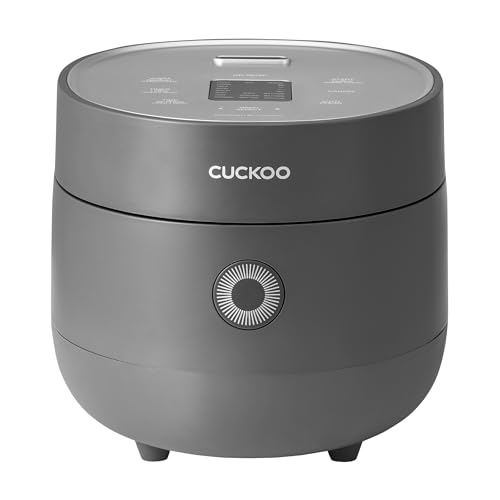
CUCKOO Micom Fuzzy Logic Rice Cooker, 12-Cup Cooked, Gray, CR-0675FG | 6-Cup Uncooked Capacity, Nonstick Inner Pot, 10 Cooking Modes, Quick White Rice in 28-36 Minutes, Auto Clean
One of the home product options compared in this guide.
View on AmazonA fuzzy-logic Micom cooker rated for 6 cups uncooked (12 cups cooked), which is slightly more than a 5.5-cup Zojirushi. One mainstream review used Cuckoo’s 6-cup Micom as its budget pick, noting good rice though not at the level of the top choice. The trade-off is texture and finer adjustments versus the Zojirushi models above.
How We Chose
This ranking is research-based and does not rely on in-house product testing. We compared Zojirushi’s current rice cooker line on the criteria that matter for weekly meal prep, then cross-checked specs against product listings, the maker’s published information and several independent reviews and roundups.
- Batch capacity: how many cooked portions one cycle produces.
- Heating technology: Micom, Neuro Fuzzy, induction or pressure induction, and what each does for texture.
- Timer and keep-warm: delay timers and warm modes that fit around a work schedule.
- Pan and cleaning: coating type, how easy the parts are to clean and whether PFAS-free options exist.
- Footprint: counter space and cord length for real kitchens.
- Value: price tier relative to what the model adds.
Because the keyword is about Zojirushi, all seven main picks are Zojirushi models. The “Also Consider” section brings in other brands so you can see where Zojirushi’s competitors fit. Specs we could not confirm are marked “not listed” rather than guessed.
Buying Guide: Choosing a Zojirushi Rice Cooker for Meal Prep
How big should it be?
Work backwards from portions. Decide how many days of rice you want to cook at once and how much cooked rice each meal uses, then match the cooker. As a rule of thumb, a 3-cup cooker suits one or two people, a 5.5-cup cooker handles up to about ten cooked cups, and a 10-cup cooker is for large families or double-batch preppers.
| Household | Typical weekly rice plan | Suggested size |
|---|---|---|
| 1 person, 4-5 lunches | One small batch, 1 cup per meal | 3-cup |
| 2 adults, lunches and some dinners | One medium batch | 5.5-cup |
| Family of 4 | One large or two medium batches | 5.5-cup or 10-cup |
| Family of 5+, or two-week prep | Large batch, freezer portions | 10-cup |
Do not oversize. Cookers work best when filled to at least about half capacity, so a 10-cup model used for two cups of rice will give weaker results than a smaller one.
Micom, Neuro Fuzzy, induction or pressure induction?
Micom is the entry point: programmed cooking curves, timer and keep-warm. Neuro Fuzzy adds adaptive heating that responds to what the pot is doing. Induction heats the pan itself for more even results, and pressure induction adds pressure for the best texture. For plain white rice, Micom and Neuro Fuzzy are excellent. For brown rice, mixed grains and sushi rice, step up to induction.
| Technology | What it adds | Best for | Price tier |
|---|---|---|---|
| Micom | Programmed cycles, timer, keep-warm | Everyday white rice | Mid-range |
| Neuro Fuzzy | Adaptive heating through the cycle | Mixed rice types, consistency | Mid to upper mid-range |
| Induction | Even heating of the whole pan | Brown rice, grains, porridge | Premium |
| Pressure induction | Pressure plus induction | Short-grain and sushi rice | Premium |
How should you use the timer and keep-warm?
The delay timer is the single best meal-prep feature: load rinsed rice and water the night before, set the timer, and the rice is done when you are ready to portion it. Keep-warm is for serving, not storage. Zojirushi’s manuals advise against keeping rice warm for longer than 12 hours, and some third-party guides say extended modes stretch this to 24 hours. Treat those as upper limits and plan to portion and cool the rice well before then.
How do you store rice safely for the week?
Cooked rice can carry bacteria that survive cooking, so speed matters. Portion it into shallow containers as soon as it is cool enough to handle, refrigerate within two hours, and eat refrigerated rice within three to four days, following general USDA leftover guidance. For longer storage, freeze individual portions in airtight containers immediately after cooking. Reheat until steaming hot throughout, and do not reheat the same portion repeatedly. If rice has been left at room temperature for a long time, discard it.
| Stage | What to do | Timing |
|---|---|---|
| After cooking | Fluff, portion into shallow containers | Within 30 minutes of finishing |
| Cooling | Let steam escape, then close lids | Refrigerate within 2 hours |
| Fridge storage | Airtight containers | Up to 3-4 days |
| Freezer storage | Single portions, flat, airtight | Best quality within about 1-3 months |
| Reheating | Splash of water, cover, heat until steaming hot | Reheat once only |
What about the pan, coating and cleaning?
Most Zojirushi pans are nonstick, so use the supplied plastic paddle, avoid metal and abrasive pads, and wash the pan soon after serving. If you want to avoid conventional nonstick coatings, the NS-TPC10XT is the PFAS-free option in this list. Check each model’s manual for which parts are dishwasher safe; do not assume the inner pan is.
Do you need extras?
A scale and a set of matching containers make the weekly routine far smoother than any cooker feature. Our guides to the best digital food scales for meal prep and glass meal prep containers with locking lids cover both. If you want a cooker that also pressure cooks soups and stews, see the best multicooker for bulk meal prep.
Mistakes to Avoid
- Buying too big. A 10-cup cooker is not better if you cook two cups at a time.
- Skipping the rinse. Rinsing white rice removes surface starch and gives separate grains that reheat better.
- Using keep-warm as storage. It is for the next meal, not tomorrow.
- Packing hot rice in sealed containers. Trapped steam makes rice soggy and slows cooling, which is a safety issue.
- Using metal utensils. They scratch the nonstick coating and shorten the pan’s life.
- Ignoring water lines. Use the pan’s marked water levels for each rice type; Zojirushi cups are not US cups.
FAQ
Which Zojirushi rice cooker is best for meal prep?
The NS-ZCC10 Neuro Fuzzy is the best all-round choice, because its 5.5-cup capacity covers a typical weekly batch and its delay timer fits a busy schedule. Move up to the 10-cup Neuro Fuzzy if you cook for a large family or prep two weeks at once.
How much rice does a 5.5-cup Zojirushi make?
A 5.5-cup model, which is a 1.0 liter cooker, makes up to roughly ten cups of cooked rice. Zojirushi cups are about three-quarters of a US cup, so five and a half Zojirushi cups is not five and a half US cups. That is enough for around eight to ten lunch-sized portions.
Can I keep rice warm in a Zojirushi all week?
No. Zojirushi’s manuals advise against keeping rice warm for more than about 12 hours, and some models with extended keep-warm reach 24 hours. For meal prep, portion and cool the rice, then refrigerate or freeze it instead of leaving it on warm.
How long does cooked rice last in the fridge?
Cooked rice keeps for about three to four days in the fridge when it is cooled and refrigerated within two hours. Some blogs claim longer, but the USDA’s general leftover guidance is the safer rule. If you will not eat it in that window, freeze it in single portions.
Can you freeze rice cooked in a rice cooker?
Yes. Portion the rice into airtight containers or freezer bags right after cooking, flatten the portions and freeze them. Quality is best within roughly one to three months. Reheat with a splash of water until steaming hot.
Is a Zojirushi worth it over a cheaper rice cooker?
If you cook rice several times a week, usually yes. Zojirushi’s cooking programs, timers and build quality are what published roundups praise most. If you cook rice rarely, a budget Micom cooker from Tiger or Cuckoo is the more sensible spend.
Is induction heating worth the extra cost?
For plain white rice, often not. For brown rice, sushi rice and mixed grains, induction models like the NW-QAC10 give more even results. Choose induction if you cook a variety of grains regularly.
Can a rice cooker replace a slow cooker or pressure cooker for meal prep?
No. A rice cooker is built for rice and grains, and a few models steam or cook porridge, but it will not braise a roast or pressure cook beans. For stews and soups, see our comparison of pressure cooker versus slow cooker for weeknight meal prep.
Which Zojirushi Rice Cooker Should You Buy?
Pick the NS-ZCC10 Neuro Fuzzy if you want one cooker that fits most kitchens and most weekly plans. Pick the 10-cup Neuro Fuzzy for large families, or the NS-TSC18 Micom for the same size at a lower tier. Choose the NS-TPC10XT if a PFAS-free pan matters to you, the NW-QAC10 if you cook brown rice and mixed grains, and the NW-JEC10BA if you want the best texture in the range and are happy to pay for it. If you live alone or share a small kitchen, the Micom 3-Cup Compact is enough. When in doubt, build your weekly routine around the meal prep workflow first, then buy the cooker that fits it.
Last updated: October 2026