
Key takeaways
- Table of Contents 4 sections 9 min read 1 How to Choose the Right Vacuum Sealer 1.1 Suction Power and Pump Performance 1.2 Machine Type: External Clamp vs. Chamber 1.3 Sealing Bar Width and Heat Settings 1.4 Integrated Accessories and…
What's inside
How to choose a vacuum sealer comes down to matching suction strength, bag compatibility, and control settings with your food storage habits. Whether buying in bulk or freezing weekly meal prep, picking the right appliance preserves freshness. Our guide simplifies features so you buy the exact model for your kitchen.
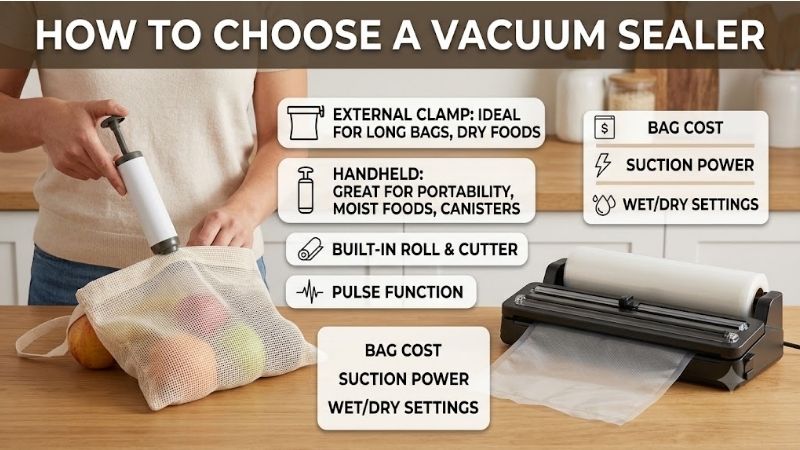
How to Choose the Right Vacuum Sealer
Understanding how to choose a vacuum sealer requires evaluating your cooking frequency, kitchen counter layout, and food storage goals. Investing in a quality unit stops freezer burn while reducing costly grocery waste. Comparing core mechanisms ensures long-term efficiency and convenience for every single home meal prep session.
Suction Power and Pump Performance
Suction power determines how effectively a sealer removes atmospheric oxygen from the bag interior. Models equipped with dual vacuum pumps create a tighter pull, securing delicate items and heavy cuts of meat alike. Evaluating motor strength guarantees consistent air extraction that extends overall food preservation across every batch.
Inconsistent suction leaves residual air pockets behind, leading to premature food spoilage inside freezer storage. Higher air displacement rates allow quick processing when sealing bulk packages after wholesale grocery runs. Investing in strong pump performance keeps your frozen protein fresh and flavorful for up to several years.
Machine Type: External Clamp vs. Chamber
Deciding between an external clamp sealer and a chamber unit depends heavily on budget and food type. An external clamp sealer evacuates air directly from textured bags, making it compact and affordable for standard dry foods. This style suits typical home kitchens where counter space and portability remain top daily priorities.
Conversely, a chamber vacuum sealer handles soups, marinades, and liquids without pulling moisture into the machine. Although chamber models carry higher price tags and bulky frames, they utilize cheaper smooth pouches. Selecting the proper design matches your primary recipe ingredients and routine bulk sealing demands.
Sealing Bar Width and Heat Settings
Sealing bar width dictates the maximum bag size you can process in a single sealing session. A standard wide bar creates a reliable airtight seal across various package dimensions without leaking. Advanced machines feature customizable heat settings engineered specifically for handling moist and dry modes without melting thin plastic.
Dual heating wires offer extra structural protection against leaks when packaging juicy meats or marinated stews. Having dedicated temperature control prevents incomplete seals that compromise frozen food quality. Choosing a unit with adjustable heat elements ensures dependable performance across diverse plastic bag materials.
Integrated Accessories and Controls
Built-in roll storage and bag cutter features streamline custom packaging creation directly on your kitchen counter. Integrated sliding blades yield clean cuts rapidly without searching for household scissors during meal prep. External accessory ports allow connection to canisters or wine stoppers for extended pantry storage options.
A dedicated pulse vacuum feature gives manual control over negative pressure when packaging soft baked goods or berries. Precise pulse buttons prevent crushing delicate croissants while removing maximum air from the bag interior. These convenience features save valuable preparation time during busy evening cooking routines.
Top Picks for Home Vacuum Sealers
When researching how to choose a vacuum sealer for home kitchens, top models offer unique balances of power and value. We evaluated leading appliances on Amazon for durability, ease of use, and suction performance. Below are the standout machines suited for different cooking habits, budgets, and counter space constraints.
NESCO Deluxe VS-12 Vacuum Sealer
Ideal for batch preppers and budget shoppers, this model provides versatile dual vacuum pumps for strong suction. It features adjustable pressure settings and a double heat seal option to protect moist foods securely. Integrated roll storage with a built-in cutter makes fashioning custom bags effortless during large meal prep sessions.
However, the wide chassis occupies significant counter real estate and takes up noticeable cabinet storage space. The locking handle requires firm downward pressure, which might feel stiff during the first few uses. Overall, its impressive feature set and reliable performance make it the best overall value choice for most households.
[Image ALT: NESCO Deluxe VS-12 Vacuum Sealer for food preservation]
Anova Precision Vacuum Sealer Pro
Designed for frequent cooks and sous vide cooking enthusiasts, this heavy-duty unit offers robust extraction power. It features wet food modes, a low-pressure pulse setting, and double sealing strips for total bag security. The built-in hose port connects easily to external accessories for marinating proteins in specialized containers.
On the downside, its premium price tag is higher than basic entry-level sealers on the market today. The heavy body is less convenient to lift frequently out of deep pantry shelves for quick sealing tasks. Despite the higher cost, its commercial-grade reliability makes it an excellent long-term kitchen investment.
[Image ALT: Anova Precision Vacuum Sealer Pro for sous vide cooking]
FoodSaver FM2100 Vacuum Sealer Machine
Tailored for everyday home cooks who prioritize speed, this machine simplifies regular food storage tasks. It uses an intuitive latch mechanism along with a wide heat-sealing bar for quick, consistent operation. Compatibility with standard textured vacuum sealer bags ensures you can easily restock supplies from wholesale suppliers.
However, it lacks an automatic bag feeder, requiring manual alignment before starting each extraction cycle. The motor operates with a noticeable noise level that might prove loud in quiet kitchen environments. Nevertheless, its solid construction and five-year limited warranty provide great long-term peace of mind.
[Image ALT: FoodSaver FM2100 Vacuum Sealer Machine for freezer storage]
NutriChef PKVS18SL Automatic Vacuum Sealer
Perfect for beginners and small apartment kitchens, this compact unit offers a streamlined control panel. It includes soft-touch digital buttons with dry and moist food modes for straightforward daily operation. The slim, lightweight design slides effortlessly into drawers, making storage completely hassle-free after cooking.
Because it lacks built-in roll storage or an internal cutter, you must slice bag rolls manually with scissors. The single heat seal wire requires extra care when packaging liquid-heavy marinades to avoid minor leaks. Still, its affordable price point makes it an ideal starter option for casual food preservation.
[Image ALT: NutriChef PKVS18SL Automatic Vacuum Sealer for small kitchens]
Weston Professional Advantage 65-0501-W
Engineered for hunters, gardeners, and bulk meat processors, this machine delivers commercial-grade strength. A fan-cooled motor allows continuous operation without overheating during long, intense sealing sessions. Its wide sealing bar creates heavy-duty seals that resist punctures when handling bone-in cuts of protein.
However, its industrial appearance lacks the sleek aesthetic found on modern countertop appliances. It carries a heavy steel frame and occupies substantial space, making it impractical for quick single-item seals. For high-volume processing, its rugged build provides unmatched durability that withstands heavy demands.
[Image ALT: Weston Professional Advantage Vacuum Sealer for bulk meat]
| Feature / Model | NESCO Deluxe VS-12 | Anova Precision Pro | FoodSaver FM2100 | NutriChef PKVS18SL | Weston Advantage |
|---|---|---|---|---|---|
| Best For | Overall Value | Sous Vide / Frequent | Everyday Reliability | Beginners / Budget | Heavy Duty / Hunters |
| Pump Type | Dual Vacuum Pump | High Flow Pump | Standard Single Pump | Compact Single Pump | Commercial Piston |
| Sealing Mode | Double / Moist / Dry | Double / Pulse / Wet | Moist / Dry | Moist / Dry | Manual / Automatic |
| Roll Storage & Cutter | Integrated | Integrated | Integrated | External Only | External Only |
| Warranty | 1 Year | 2 Years | 5 Years | 1 Year | 1 Year |
Frequently Asked Questions
Answering questions on how to choose a vacuum sealer helps clarify proper maintenance, bag selection, and operation rules. Understanding these practical details prevents common kitchen mistakes while extending appliance lifespan. Here are expert responses to frequent queries buyers raise before purchasing a new sealer.
Can You Use Any Plastic Bags With a Vacuum Sealer?
No, external clamp sealers require textured or embossed bags featuring interior air channels for proper suction. Plain, smooth sandwich bags collapse instantly at the sealing bar, preventing the machine from evacuating internal air. Using appropriate vacuum sealer bags ensures strong seals and stops frustrating operational jams.
However, chamber sealers utilize smooth, untextured pouch bags because air is evacuated from the entire internal chamber. Check your machine manufacturer specifications to purchase compatible pouch materials that prevent melted plastic residue. Using correct bag types maintains consistent airtight protection across all stored food.
How Do You Vacuum Seal Liquids Without Making a Mess?
Sealing liquids with an external sealer requires pre-freezing soups or sauces in containers until solid first. Once frozen into blocks, transfer the food into standard vacuum bags for a clean, airless seal without liquid spills. Alternatively, selecting moist and dry modes reduces pump speed to prevent drawing moisture.
If you frequently package marinades or stocks raw, consider investing in an advanced chamber unit instead. Chamber sealers maintain equal atmospheric pressure inside and outside the bag, completely preventing liquid overflow. Proper technique protects internal machine valves from liquid damage during suction cycles.
Is a Double Heat Seal Necessary for Freezer Storage?
A double heat seal provides extra security by creating two parallel welded lines across the bag opening. This redundant seal prevents air leakage if moisture or grease gets trapped along the primary sealing line. It offers superior protection when storing juicy meat cuts or freezing food for long multi-year periods.
While single heat seals work well for dry goods, double seals significantly reduce freezer burn risks on raw proteins. Choosing a unit with double sealing capability ensures package integrity even during accidental freezer bumps. This added safety mechanism prevents food loss and safeguards your grocery investment over time.
How Do You Clean and Maintain a Vacuum Sealer?
Maintaining your machine involves wiping down the exterior body and cleaning the removable drip tray after every use. Liquid drip trays catch excess moisture during sealing and should be washed with warm soapy water. Keeping the vacuum chamber clean prevents bacteria buildup and maintains strong rubber gasket suction.
Inspect foam gaskets regularly for cracks, debris, or indentation marks that could cause air leaks during operation. Store the machine with the locking latch disengaged to prevent compressing the sealing gaskets permanently over time. Proper daily care ensures consistent vacuum performance and extends total appliance lifespan.
Final Thoughts
Learning how to choose a vacuum sealer empowers you to reduce food waste, organize freezer space, and save money on bulk groceries. By evaluating pump suction, sealing options, and physical dimensions, you can confidently select the ideal model for your kitchen. Invest in the right appliance today to elevate your meal prep routine.


