Key takeaways
-
Fits inside appropriately sized kitchen drawers.
-
Requires relatively little countertop depth.
-
Supports vertical storage when not in use.
-
Accommodates standard household vacuum packaging.
-
Reduces permanent countertop clutter.
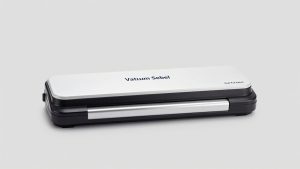
These FoodSaver Space Saving Food Vacuum Sealer reviews examine whether the VS1200 Series delivers practical food preservation without occupying excessive kitchen space. Its compact construction, full-width bag compatibility, and straightforward controls suit everyday meal preparation, although advanced users may prefer additional features.
FoodSaver Space Saving Food Vacuum Sealer reviews: Quick verdict
The FoodSaver Space Saving VS1200 Series is a practical choice for households that want conventional vacuum sealing functionality in a compact appliance. This review focuses on the US-market VS1260 configuration, which includes accessory connectivity and a starter packaging kit for everyday food preservation.
| Evaluation criteria | Assessment |
|---|---|
| Product | FoodSaver VS1260 |
| Product series | VS1200 |
| Manufacturer item number | 2174660 |
| Vacuum sealer type | External suction |
| Best for | Small kitchens and everyday meal prep |
| Dimensions | 16.2 × 5.4 × 3 inches |
| Compatible roll width | Up to 11 inches |
| Vertical storage | Supported |
| Seal-only function | Yes |
| Accessory connection | Yes |
| Integrated bag cutter | No |
| Warranty | Five-year limited warranty |
| Main advantage | Compact storage design |
| Main limitation | Limited advanced vacuum controls |
The VS1260 is particularly attractive for apartment residents, small families, and occasional bulk grocery shoppers who do not want a large vacuum sealing appliance permanently occupying their kitchen countertops.
However, households processing hundreds of food packages or frequently vacuum sealing liquids should consider more specialized equipment.
This evaluation uses manufacturer documentation, US retailer information, and independent coverage of the VS1200 Series. It does not claim original detailed research.
Design and build quality
The FoodSaver Space Saving series addresses one of the most common drawbacks of conventional vacuum sealers: appliance size. Its elongated body and relatively shallow construction allow it to fit into storage locations that may not accommodate larger automatic vacuum sealing systems with integrated roll compartments.
Compact dimensions and vertical storage
The VS1260 measures approximately 16.2 inches wide, 5.4 inches deep, and 3 inches high. These dimensions make it particularly convenient for households with limited kitchen storage, although buyers should also account for the additional working space required when preparing and positioning vacuum bags.
The compact construction offers several practical advantages:
-
Fits inside appropriately sized kitchen drawers.
-
Requires relatively little countertop depth.
-
Supports vertical storage when not in use.
-
Accommodates standard household vacuum packaging.
-
Reduces permanent countertop clutter.
Vertical storage is an important advantage over appliances that must remain horizontally positioned.
For example, an apartment resident can use the vacuum sealer during weekly grocery preparation and store it upright afterward, freeing space for other kitchen activities.
However, the machine still measures more than 16 inches across. Measure your available drawer or cabinet before purchasing.
Push-to-lock mechanism and storage position
A reliable locking mechanism helps maintain consistent contact between the bag, vacuum channel, and sealing element. The FoodSaver Space Saving design incorporates a push-to-lock system together with a dedicated storage position that addresses the needs of users who regularly put the appliance away.
Independent coverage from Bon Appétit highlighted the usefulness of the storage position.
This feature allows the lid to remain secured without maintaining the same compression applied to the gasket during operation.
Keeping a vacuum sealer fully locked during prolonged storage can contribute to unnecessary gasket compression. A dedicated storage position provides a convenient way to avoid this problem while preventing the lid from opening unexpectedly.
This is especially useful when storing the machine vertically or moving it between a drawer and the countertop.
Controls and operating interface
The VS1260 uses straightforward button controls rather than a complicated digital interface. Its primary operating functions cover conventional vacuum sealing, sealing without air extraction, and compatible accessory use, making it approachable for buyers who have never owned a vacuum sealer.
| Control | Function |
|---|---|
| Vac/Seal | Removes air and seals compatible bags |
| Seal Only | Creates a closure without vacuum extraction |
| Accessory | Operates compatible external storage accessories |
| Push-to-Lock | Secures the appliance for operation |
| Storage position | Supports appropriate storage between uses |
The simplified interface is useful for everyday packaging tasks.
However, buyers looking for programmable vacuum levels, adjustable sealing temperatures, or dedicated pulse controls may prefer a more advanced machine.
Sealing performance and everyday functionality
The FoodSaver Space Saving VS1260 is designed around conventional household food packaging rather than specialized commercial processing. Its practical usefulness depends on bag positioning, ingredient preparation, moisture management, and the number of sealing cycles required during each food preparation session.
Vacuum sealing meat and poultry
Raw meat is one of the most practical applications for an external vacuum sealer because individually packaged portions can be organized conveniently inside a freezer. The VS1260 accommodates standard household vacuum bags, making it suitable for many steaks, chicken breasts, pork chops, and similar ingredients.
The machine is particularly relevant for:
-
Individually portioned chicken breasts.
-
Ground beef packages.
-
Pork chops and tenderloins.
-
Boneless steaks.
-
Family-sized meat portions.
-
Prepared freezer ingredients.
Vacuum packaging can help reduce freezer burn by limiting unnecessary air exposure around frozen food.
For particularly moist meat, briefly firming the surface in the freezer before packaging may make it easier to keep juices away from the sealing area.
Sharp bones require additional attention because they can puncture flexible packaging even when the original closure is properly formed.
Handling moist ingredients and liquids
External vacuum sealers remove air directly through a compatible bag opening, which creates challenges when packaging ingredients containing substantial moisture. The VS1260 is suitable for properly prepared household foods, but it should not be treated as a chamber vacuum sealer for unrestricted liquid packaging.
For soups, sauces, and broths, freeze appropriate portions in suitable containers before transferring them into compatible vacuum bags.
This approach helps prevent liquid from entering the suction channel or contaminating the sealing surface.
The same principle applies to heavily marinated meat.
If liquid-rich packaging represents most of your storage requirements, a chamber vacuum sealer may be a more appropriate investment.
The compact FoodSaver is better suited to conventional freezer preparation than frequent direct packaging of liquids.
Sealing delicate foods without excessive compression
Delicate ingredients require a different approach from dense meat because flexible vacuum packaging can compress their structure. Crackers, pastries, soft bread, and fresh berries may become damaged when excessive air is removed, making appropriate preparation and alternative packaging methods important.
The Seal Only function is useful when you want to close a compatible bag without applying vacuum pressure.
For soft foods intended for frozen storage, pre-freezing can help them maintain their shape.
Consider compatible rigid vacuum containers when packaging particularly fragile ingredients.
These alternatives are useful because the VS1260 does not offer the same range of dedicated pressure-adjustment controls available on certain advanced vacuum sealing machines.
Bag compatibility and ongoing packaging costs
Replacement packaging is an important ownership consideration because vacuum sealers depend on compatible consumable materials. The FoodSaver VS1260 supports conventional FoodSaver vacuum bags and rolls, while its accessory connection extends functionality to appropriately designed reusable storage products.
Standard bags and custom-length rolls
The VS1260 starter kit includes an 11-inch-wide vacuum sealing roll alongside precut quart-size and gallon-size bags. These packaging formats provide flexibility for different food portions, although the machine does not include an integrated cutting mechanism for preparing custom-length bags.
The published US starter kit contains:
-
One vacuum sealing machine.
-
One 11-inch × 8-foot vacuum sealing roll.
-
Six precut quart-size bags.
-
Six precut gallon-size bags.
-
Handheld adapter.
-
Accessory hose.
Using continuous rolls can be particularly useful for irregularly shaped ingredients.
A long pork tenderloin, for example, may require a different package length from several individual hamburger patties.
You will need scissors or a separate cutter when preparing bags from a roll.
Reusable bags and accessory compatibility
Accessory connectivity improves the usefulness of a compact vacuum sealer by supporting additional storage formats beyond conventional heat-sealed bags. The VS1260 includes accessory components intended for compatible FoodSaver products, providing options for households that frequently open and reseal stored ingredients.
Depending on compatibility, accessory applications may include:
-
FoodSaver vacuum zipper bags.
-
Compatible vacuum storage containers.
-
Appropriate Mason jar sealing accessories.
-
Supported handheld sealing attachments.
Reusable accessories can be particularly useful for suitable dry pantry ingredients and foods accessed regularly.
However, the accessory hose alone does not guarantee compatibility with every container or Mason jar.
A suitable adapter may need to be purchased separately.
Vacuum sealing a Mason jar also does not replace traditional canning or make perishable ingredients safe for room-temperature storage.
Calculating the real cost of replacement bags
The initial appliance price represents only part of the overall cost of vacuum sealing. Households that package food frequently should also consider replacement bags, continuous rolls, compatible accessories, and material wasted when packages need to be sealed again because of preparation errors.
The following example uses hypothetical packaging costs rather than current retailer prices.
| Ownership expense | Example calculation |
|---|---|
| Replacement bag roll | $15 |
| Usable packages per roll | 30 |
| Cost per package | $0.50 |
| Monthly package usage | 20 |
| Monthly packaging cost | $10 |
| Annual packaging cost | $120 |
A household using 20 bags each month would spend approximately $120 annually on packaging under these assumptions.
The actual cost depends on roll prices, package dimensions, and the amount of material required for each closure.
Buying compatible rolls in larger quantities may help reduce per-package expenses, provided the packaging quality and compatibility are appropriate.
FoodSaver Space Saving Food Vacuum Sealer reviews: What owners should know
Customer feedback can provide useful context about appliance handling, convenience, and recurring difficulties. However, the FoodSaver Space Saving collection includes multiple configurations, and reviews displayed together on retailer or manufacturer pages may not always describe the identical VS1260 starter kit.
Positive customer feedback
Positive feedback published on FoodSaver’s US product page includes observations about straightforward operation and convenient bag positioning once users become familiar with the appliance. The compact design is also an important purchasing consideration for households that prefer storing appliances between uses.
Common purchasing advantages supported by the product design include:
-
Relatively compact appliance dimensions.
-
Straightforward button controls.
-
Convenient storage between sealing sessions.
-
Compatibility with established FoodSaver packaging.
-
Useful accessory options.
-
Flexible packaging for individual meals.
These characteristics are particularly attractive to first-time vacuum sealer buyers.
The appliance does not require users to configure complicated pressure settings before performing routine packaging tasks.
Negative feedback and operating limitations
Some customer feedback describes difficulties achieving effective vacuum extraction when the packaging is not positioned correctly. This highlights the importance of understanding the appliance’s bag alignment requirements, particularly for users accustomed to larger machines with different loading mechanisms.
Potential frustrations include:
-
Incorrect bag positioning.
-
Interrupted vacuum extraction.
-
Additional effort when preparing custom-length bags.
-
Limited advanced operating controls.
-
Required cooling periods between sealing cycles.
One reviewer on the manufacturer’s website described resolving an unsuccessful vacuum cycle by reopening the appliance and repositioning the bag.
This represents an individual experience rather than evidence of a universal product defect.
The manufacturer’s US VS1260 product page displayed an aggregate rating of 4.0 out of 5 from 202 reviews when consulted on November 24, 2026. However, the review collection includes comments referring to other VS1200 Series configurations, so the rating should not be interpreted as exclusive to the VS1260 bundle.
Cleaning, maintenance, and expected usability
Regular maintenance is important for any external vacuum sealer because food residue, moisture, and damaged sealing components can interfere with operation. The FoodSaver Space Saving design benefits from correct cleaning and storage practices, particularly when the appliance is used frequently for raw meat.
Cleaning after vacuum sealing food
Food particles and liquids can accumulate around the sealing channel during ordinary use. Cleaning the appliance according to its instructions helps maintain suitable operating conditions and reduces the likelihood of residue interfering with subsequent packages, especially when preparing different food varieties.
For routine maintenance:
-
Disconnect the appliance before cleaning.
-
Allow heated components to cool.
-
Remove visible food particles.
-
Clean accessible components according to the instructions.
-
Avoid immersing the electrical appliance in water.
-
Inspect sealing surfaces before subsequent use.
Do not scrape the heating element with sharp metal tools or use abrasive cleaning products unless specifically permitted by the manufacturer.
After packaging raw meat, follow suitable sanitation procedures before handling ready-to-eat foods.
Cooling requirements during bulk packaging
Repeated sealing cycles generate heat around the sealing element, making cooling intervals an important consideration for households preparing numerous freezer packages. Compact household vacuum sealers should be operated within their recommended limits rather than treated as continuous-duty commercial equipment.
FoodSaver Consumer Care recommends waiting at least 20 seconds between sealing cycles in its guidance for the related VS1210 Space Saving model.
Owners should follow the instructions supplied with their exact appliance.
If the machine overheats, stop operation and allow it to cool before continuing.
These operating considerations are unlikely to cause substantial inconvenience when preparing a few packages at a time. However, they become more important during lengthy meat-processing sessions.
Who should buy the FoodSaver Space Saving vacuum sealer?
The VS1260 offers the greatest purchasing value when compact storage, routine food packaging, and simple controls are more important than advanced customization. Its design addresses ordinary household requirements, but buyers with specialized food-processing needs may benefit from a different appliance category.
Buy it if you:
-
Live in an apartment or small home.
-
Have limited countertop or cabinet space.
-
Regularly prepare individual freezer meals.
-
Purchase meat in moderate quantities.
-
Prefer simple appliance controls.
-
Want compatibility with FoodSaver accessories.
-
Need a vacuum sealer that can be stored vertically.
-
Are purchasing your first household vacuum sealer.
Skip it if you:
-
Frequently package large quantities of liquid.
-
Require bags wider than 11 inches.
-
Need an integrated bag cutter.
-
Prefer dedicated pulse vacuum controls.
-
Regularly process exceptionally large cuts of meat.
-
Require commercial-duty operating capacity.
For ordinary household meal preparation, the compact design offers a sensible balance between functionality and storage convenience.
How it compares with other vacuum sealer designs
The Space Saving series occupies a useful position between small handheld vacuum devices and larger countertop sealing systems. Understanding these alternatives can help shoppers determine whether compact dimensions justify the trade-offs involving automation, packaging preparation, and specialized operating features.
| Feature | FoodSaver VS1260 | Larger automatic sealer | Chamber sealer |
|---|---|---|---|
| Storage footprint | Compact | Generally larger | Generally substantial |
| Standard bag heat sealing | Yes | Usually supported | Supported with suitable pouches |
| Integrated roll cutter | No | Model-dependent | Model-dependent |
| Liquid packaging | Requires preparation | Often requires preparation | Generally more convenient |
| Vacuum customization | Limited | Model-dependent | Often adjustable |
| Vertical storage | Supported | Model-dependent | Generally unsuitable |
| Best application | Everyday household use | Frequent batch packaging | Moist foods and specialized preparation |
A larger automatic model may justify its additional footprint when integrated accessories and automated packaging features are used regularly.
For shoppers primarily concerned about sealing soups, broths, and marinades, chamber technology addresses a more relevant practical limitation.
The FoodSaver VS1260 remains particularly appealing when appliance storage space is the deciding factor.
Food safety considerations
Vacuum sealing helps protect food quality but does not eliminate microorganisms or replace appropriate temperature-controlled storage. Owners should maintain safe refrigeration and freezing practices regardless of how securely a package appears to be sealed or how much surrounding air has been removed.
Follow these essential precautions:
-
Refrigerate perishable ingredients at 40°F or below.
-
Maintain frozen foods at 0°F or below.
-
Label packages with their contents and dates.
-
Avoid treating vacuum packaging as a substitute for canning.
-
Do not assume vacuum sealing resets food storage deadlines.
-
Follow suitable thawing instructions for vacuum-packaged fish.
-
Discard food that has been handled or stored unsafely.
FoodSaver’s freshness claims should be understood as potential quality benefits under appropriate storage conditions rather than universal extensions of safe food storage periods.
Frequently asked questions
The FoodSaver Space Saving series raises practical questions about packaging compatibility, storage orientation, operating capacity, and appliance limitations. Clarifying these details before purchasing helps buyers select the correct configuration and avoid unnecessary spending on incompatible replacement accessories.
Does the FoodSaver Space Saving vacuum sealer cut bags?
The VS1260 does not feature an integrated roll cutter, so users need to prepare custom-length packaging with scissors or a separate cutting tool. This manual preparation requirement is one of the trade-offs associated with the appliance’s compact construction and simplified storage design.
Precut bags offer an alternative for users who prefer avoiding this additional preparation step.
Can you use generic vacuum sealer bags?
The appliance is designed around compatible FoodSaver vacuum packaging, although suitable third-party textured vacuum bags may also work when their dimensions and material properties match the machine’s requirements. Buyers should verify compatibility before purchasing large quantities of replacement packaging.
Ordinary smooth food storage bags are not generally suitable for conventional external vacuum extraction.
Is the FoodSaver VS1260 worth buying?
The VS1260 is worth considering when compact storage and straightforward household vacuum sealing are your main priorities. Its conventional packaging capacity and accessory support address many everyday requirements, although buyers who need advanced controls or intensive processing should consider other designs.
Compare the complete starter kit, warranty, and replacement packaging costs before making your final decision.
Conclusion
The FoodSaver VS1260 is a practical vacuum sealer for small kitchens, routine meal preparation, and freezer organization. Its compact body, vertical storage position, and accessory support provide meaningful convenience. Choose a larger or chamber-style machine if you frequently process bulk foods or liquids.
More from Amazon
Programs that pair well with the guide above. Offers and eligibility are set by Amazon and may change.
Set up recurring deliveries of everyday items on eligible products. Terms and savings are set by Amazon.
Explore Subscribe & SaveCollect the home and kitchen items you want in one registry that guests can shop from.
Create a wedding registryFree shipping on eligible items, Prime Video and more. Eligible new members can start with a free trial.
Start a Prime free trialAudiobooks and podcasts to listen to on the go. Eligible new members can start with a free trial.
Try Audible freeAs an Amazon Associate we earn from qualifying purchases.