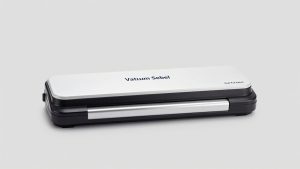
Key takeaways
-
Manual sealing control.
-
Dry and moist food settings.
-
Compatible embossed bags and rolls.
-
Accessible vacuum channel.
-
Removable drip tray when available.
-
Adequate sealing bar width.
-
Clearly documented operating intervals.
Choosing a vacuum sealer for long term storage requires more than comparing suction power. External sealers work well for everyday freezer storage, chamber machines suit frequent bulk packaging, and high-barrier materials are preferable for suitable emergency food supplies. Proper packaging and storage conditions are equally important.
How to choose a vacuum sealer for long term storage
A dependable vacuum sealing system should match the foods you intend to preserve, the expected storage duration, and your available storage conditions. While removing excess air can help maintain food quality, the machine, packaging material, and storage environment must work together to deliver practical results.
For most households, an external suction vacuum sealer with adjustable settings, a manual sealing function, and compatible freezer bags offers the best balance of functionality and affordability.
A chamber vacuum sealer becomes more attractive when processing large quantities of food, packaging suitable liquids, or performing frequent sealing cycles.
| Vacuum sealer type | Best for | Compatible packaging | Main limitation |
|---|---|---|---|
| External suction sealer | Frozen meat and everyday groceries | Embossed bags and rolls | Limited liquid handling |
| Chamber vacuum sealer | Bulk food preparation | Compatible chamber pouches | Larger initial investment |
| Handheld vacuum sealer | Frequently accessed ingredients | Compatible valve bags | No permanent heat seal |
| Mason jar vacuum sealer | Suitable dry pantry ingredients | Compatible jars and lids | Limited packaging flexibility |
| Heat impulse sealer | High-barrier emergency food packaging | Compatible foil-laminate pouches | Does not independently remove air |
The appropriate choice depends on whether long-term storage means several months in a freezer or extended storage of suitable dry ingredients in a pantry.
These are different applications with different packaging requirements.
Understanding what long-term food storage means
Long-term food storage can involve preserving frozen meat for future meals, organizing a rotating pantry inventory, or preparing properly dried emergency food supplies. Each application requires a different approach because food moisture, fat content, temperature, and packaging barriers influence storage quality.
| Storage objective | Recommended approach |
|---|---|
| Weekly meal preparation | External or handheld vacuum sealer |
| Several months of frozen meat storage | Heat-sealed freezer bags |
| Bulk meat processing | Chamber or heavy-duty external sealer |
| Rotating dry pantry inventory | Vacuum bags or compatible glass jars |
| Extended emergency food storage | Appropriate high-barrier packaging |
| Liquid-rich foods | Compatible chamber sealer or pre-freezing |
A household storing steaks in a chest freezer has different requirements from someone packaging dried white rice and beans for emergency preparedness.
Do not select a machine exclusively according to advertised food freshness multipliers. These claims cannot establish a universal safe storage duration.
Comparing vacuum sealer types for extended food storage
The vacuum sealing mechanism determines which packaging materials a machine can use and how effectively it handles different ingredients. Understanding these operating differences helps buyers avoid expensive equipment that offers unnecessary features or lacks compatibility with their preferred storage materials.
External suction vacuum sealers for everyday freezer storage
External suction vacuum sealers remove air through the open end of a compatible textured bag before creating a permanent heat seal. Their relatively straightforward construction makes them practical for households that regularly purchase meat, vegetables, and other ingredients intended for frozen storage.
Look for the following features:
-
Manual sealing control.
-
Dry and moist food settings.
-
Compatible embossed bags and rolls.
-
Accessible vacuum channel.
-
Removable drip tray when available.
-
Adequate sealing bar width.
-
Clearly documented operating intervals.
External suction machines are particularly useful for dividing bulk grocery purchases into individual portions.
Their main limitation is liquid management. Soups, sauces, and juicy ingredients may require pre-freezing to prevent liquid from entering the vacuum channel.
Buy if: You mainly package solid foods for household freezer storage.
Skip if: You regularly vacuum seal unrestricted liquids or need commercial-scale processing capacity.
Chamber vacuum sealers for frequent bulk packaging
Chamber vacuum sealers remove air from an enclosure surrounding the entire food package before completing the sealing process. This operating principle provides greater flexibility for compatible smooth pouches and suitable liquid-rich ingredients, making chamber machines attractive for frequent packaging tasks.
Their main advantages include:
-
Compatibility with economical smooth chamber pouches.
-
Controlled packaging of suitable liquids.
-
Convenient processing of repeated food portions.
-
Adjustable vacuum and sealing settings on selected models.
-
Greater flexibility for frequent food preparation.
However, chamber sealers require sufficient countertop space and typically involve a larger initial investment.
The chamber’s internal dimensions also determine the maximum practical food size.
Before purchasing, measure the largest meat cuts or food portions you expect to package.
Buy if: You frequently process bulk groceries, homemade stock, or large quantities of meat.
Skip if: You only vacuum seal a few individual food portions each week.
Handheld vacuum sealers for frequently accessed foods
Handheld vacuum sealers use dedicated valves to remove air from compatible zipper bags and rigid containers. Their compact construction makes them convenient for ingredients that are regularly opened and resealed, although their packaging limitations reduce their suitability for some extended storage applications.
Handheld machines are useful for:
-
Suitable dry snacks.
-
Refrigerated cheese.
-
Frequently accessed pantry ingredients.
-
Small portions of vegetables.
-
Compatible reusable storage containers.
Freezer suitability depends on the specific bag or container.
Some reusable valve bags support freezing, while ordinary vacuum zipper bags may not be recommended for prolonged freezer storage.
Buy if: Your priority is convenient everyday access and repeated resealing.
Skip if: You require permanent heat seals or high-volume freezer packaging.
Mason jar vacuum sealers for dry pantry organization
Mason jar vacuum sealers provide an alternative packaging format for suitable dry ingredients already considered shelf-stable. Compatible glass jars offer reusable storage and a strong barrier against moisture and oxygen transmission, provided the lids and sealing surfaces remain in good condition.
Electric jar vacuum sealers are especially convenient for storing:
-
White rice.
-
Dried beans.
-
Dry pasta.
-
Commercially dried herbs.
-
Suitable dried grains.
Regular-mouth and wide-mouth compatibility is worth checking before purchasing a machine.
However, Mason jar vacuum sealing is not equivalent to canning. It does not provide the validated heat treatment required to make perishable foods shelf-stable.
Buy if: You primarily organize suitable dry pantry ingredients in reusable glass jars.
Skip if: You intend to vacuum package fresh meals for room-temperature storage.
Essential features for reliable long-term vacuum sealing
Vacuum sealer specifications should be evaluated according to their practical effect on packaging reliability. Strong suction alone cannot compensate for incompatible bags, contaminated sealing surfaces, or inadequate heat sealing, making consistent operation more important than selecting the highest advertised power rating.
Choosing a vacuum sealer for long term storage with reliable seals
Seal integrity is one of the most important considerations when food will remain packaged for extended periods. A continuous heat seal helps prevent air from entering through the bag opening, while adjustable sealing settings can improve compatibility with different food types and supported packaging materials.
Prioritize machines that offer:
-
A dedicated manual seal function.
-
Consistent heat-sealing performance.
-
Adjustable sealing duration when necessary.
-
Moist and dry food settings.
-
Replaceable sealing components.
-
Double-seal capability when appropriate.
A double seal can provide additional closure redundancy, particularly when packaging food for prolonged freezer storage.
However, additional seals cannot compensate for damaged bags or punctures caused by sharp ingredients.
Before committing to a large packaging session, test several compatible bags and inspect their completed seals.
Suction pressure and adjustable vacuum control
Vacuum pressure influences how much air a machine can remove from compatible packaging, but maximum suction is not equally important for every food. Delicate ingredients may require controlled compression, while dense meat portions and dry grains can generally tolerate more aggressive vacuum extraction.
Manufacturers may express vacuum pressure using different units, including:
-
Kilopascals (kPa).
-
Inches of mercury (inHg).
-
Millibars (mbar).
Compare pressure specifications only when they use equivalent measurement conditions and definitions.
Pulse vacuum control is particularly useful when packaging bread, fragile ingredients, or moist foods that require closer monitoring during air extraction.
Avoid paying substantially more for an advertised suction rating unless the additional performance addresses an established packaging requirement.
Sealing bar width and food capacity
The effective sealing width determines which bag sizes a vacuum sealer can accommodate. Although narrower machines may be sufficient for individual food portions, wider sealing bars provide additional flexibility for bulk groceries, irregular meat cuts, and customized packaging rolls.
| Sealing width | Typical application |
|---|---|
| 8 inches | Small portions and narrow bags |
| 11–12 inches | General household food storage |
| 15 inches or wider | Larger cuts and specialized packaging |
An approximately 11- to 12-inch sealing bar is a practical starting point for most households using standard quart and gallon vacuum bags.
Buyers processing large roasts or game meat may benefit from a wider machine.
For chamber vacuum sealers, check both sealing bar width and usable chamber dimensions.
Continuous operation and overheating protection
Frequent vacuum sealing sessions can place additional demands on the machine’s heating element and pump. Appliances designed primarily for occasional household use may require cooling intervals between cycles, while heavy-duty models may support more intensive operation under their specified operating conditions.
Check the manufacturer documentation for:
-
Recommended operating intervals.
-
Maximum consecutive sealing cycles.
-
Overheating protection.
-
Motor cooling arrangements.
-
Maintenance requirements.
-
Replacement gasket availability.
A machine that requires frequent cooling periods may become inconvenient when packaging dozens of food portions.
If you process bulk groceries only once or twice each month, a conventional household model may still provide sufficient capacity without the expense of commercial equipment.
Choosing the best vacuum bags for long-term storage
Packaging materials directly influence how well stored food is protected against air exposure, moisture loss, and physical damage. Even a powerful vacuum sealer cannot provide dependable results when its bags are unsuitable for the intended storage duration, temperature, or machine configuration.
Embossed vacuum bags for external suction machines
Embossed vacuum bags contain textured air channels that allow conventional external suction machines to remove air before creating a heat seal. Their versatility makes them suitable for numerous household freezer applications, provided the material and dimensions match the machine’s operating requirements.
For routine frozen food storage, prioritize:
-
Food-contact materials.
-
Freezer-rated construction.
-
Appropriate film thickness.
-
Reliable heat-sealing compatibility.
-
Suitable puncture resistance.
Standard embossed bags are practical for meat, properly prepared vegetables, and suitable frozen meals.
For sharp bones or irregular frozen ingredients, consider stronger packaging and appropriate food-safe protective materials.
Smooth chamber pouches for bulk food storage
Smooth chamber pouches are designed for machines that evacuate air from the surrounding chamber rather than relying on textured channels within each bag. They can provide economical packaging for frequent users, although film specifications and sealing requirements vary considerably between products.
These bags are particularly attractive for households that regularly package numerous individual portions.
Before purchasing chamber pouches, verify:
-
Supported bag dimensions.
-
Film thickness.
-
Recommended sealing duration.
-
Freezer suitability.
-
Cooking compatibility when required.
Ordinary smooth chamber pouches generally should not be substituted for embossed bags in conventional external suction machines.
Mylar-type bags for extended emergency food storage
High-barrier foil-laminate packaging, commonly described as Mylar-type bags, can offer additional protection for suitable dry emergency food supplies. Its barrier properties differ from those of ordinary transparent vacuum bags, making packaging construction an important consideration for extended room-temperature storage.
| Feature | Standard vacuum bags | High-barrier foil-laminate bags |
|---|---|---|
| Typical application | Freezer storage | Suitable dry emergency foods |
| Transparency | Usually transparent | Often opaque |
| Light protection | Limited | Generally stronger |
| Oxygen barrier | Depends on film construction | Potentially greater |
| Sealing compatibility | Vacuum sealer dependent | Material and sealer dependent |
Do not assume that every conventional vacuum sealer can remove air from or reliably heat-seal smooth foil-laminate bags.
Suitable oxygen absorbers and compatible heat-sealing equipment may be preferable for certain validated dry food storage applications.
Only use reduced-oxygen emergency packaging with appropriately dry, shelf-stable ingredients.
Matching your vacuum sealer to different foods
Different food categories require different preparation and packaging methods because moisture, fat content, texture, and storage temperature affect their stability. Selecting equipment according to the ingredients you actually purchase can provide better value than investing in unnecessary vacuum sealing capabilities.
Vacuum sealing meat for extended freezer storage
Meat benefits from packaging that limits air exposure and moisture loss during frozen storage. External suction sealers are practical for ordinary household portions, while chamber machines may be more convenient for frequent bulk processing and ingredients containing considerable surface moisture.
For dependable meat packaging:
-
Divide the meat into meal-sized portions.
-
Keep the ingredients appropriately chilled.
-
Briefly pre-freeze moist portions when necessary.
-
Select compatible freezer-rated bags.
-
Protect the bag against sharp bones.
-
Keep the sealing surfaces clean.
-
Vacuum seal and inspect the package.
-
Label and freeze promptly.
A strong seal helps maintain food quality, but it does not eliminate the need for proper freezer temperatures.
For long-term frozen meat storage, prioritize packaging reliability rather than advertised multi-year freshness claims.
Vacuum sealing rice, beans, and dry grains
Suitable dry pantry ingredients require packaging that protects against environmental moisture, pests, and unnecessary air exposure. Vacuum sealing can support these objectives, but extended emergency storage also requires attention to the food’s original moisture content, fat content, and packaging barrier properties.
White rice and dried beans are generally more practical for extended dry storage than ingredients containing substantial amounts of natural oils.
Brown rice, for example, contains more oils than white rice and can develop rancidity sooner.
For rotating pantry supplies, compatible vacuum bags or glass jars may be sufficient.
For extended emergency reserves, consider appropriate high-barrier packaging and validated storage guidance.
Vacuum sealing soups, sauces, and homemade stock
Liquid-rich foods can be difficult to package using conventional external suction vacuum sealers because the pump may draw liquid toward the sealing channel. Freezing liquids before packaging provides a practical alternative for households that do not own a compatible chamber machine.
A suitable preparation method involves cooling the food promptly, dividing it into freezer-safe containers, and freezing it until solid before vacuum packaging.
Chamber vacuum sealers that explicitly support liquid applications provide another option.
For households that frequently prepare homemade broth, soup, or sauces, chamber equipment may justify its additional cost through greater convenience.
For occasional use, pre-freezing generally eliminates the need to purchase a specialized machine.
How long can vacuum-sealed food be stored?
The appropriate storage period depends on the food itself, its preparation history, packaging integrity, and storage temperature. Vacuum sealing may help maintain quality, but it should not be used to extend established food safety limits without validated evidence for the particular application.
The following freezer storage periods are general US quality guidelines rather than guaranteed vacuum-sealed shelf lives.
| Food | Recommended freezer quality period |
|---|---|
| Raw ground beef | 3–4 months |
| Raw beef steaks | 4–12 months |
| Whole raw chicken | 12 months |
| Raw chicken pieces | 9 months |
| Fatty fish | 2–3 months |
| Cooked meat leftovers | 2–6 months |
| Soups and stews | 2–3 months |
Food maintained continuously at 0°F or below can remain safe indefinitely if it was safe when frozen, although its eating quality can decline.
Vacuum sealing does not provide a universal shelf-life multiplier, and no machine can guarantee identical results for every ingredient.
Calculating the long-term cost of vacuum sealing equipment
The initial appliance price represents only part of the total cost of a vacuum sealing system. Replacement bags, sealing components, accessories, and packaging waste can influence long-term ownership expenses, particularly for households that regularly process bulk groceries or maintain substantial freezer inventories.
Comparing machine costs and consumable expenses
An external suction machine generally requires textured bags, whereas compatible chamber machines can use smooth pouches that may cost less per package. Frequent users should compare the complete cost of purchasing and operating each system rather than focusing exclusively on the appliance price.
The following figures are hypothetical examples, not current retail prices.
| Cost factor | External sealer | Chamber sealer |
|---|---|---|
| Example machine cost | $100 | $400 |
| Example cost per bag | $0.30 | $0.12 |
| Annual bag consumption | 500 | 500 |
| Annual bag expenditure | $150 | $60 |
| First-year total | $250 | $460 |
| Five-year total | $850 | $700 |
These calculations exclude electricity, maintenance, taxes, and shipping.
The example illustrates why a more expensive chamber machine can become financially attractive for frequent users.
At lower annual packaging volumes, an external suction machine may remain the more economical choice.
Which premium features are worth paying extra for?
Additional vacuum sealer features are worthwhile when they address recurring problems in your storage routine. Adjustable sealing controls, wider sealing bars, and durable construction may provide substantial benefits, while unnecessary accessories and specialized settings can increase costs without improving everyday packaging results.
Consider paying more for:
-
Reliable sealing performance.
-
Adjustable vacuum and sealing controls.
-
Wider sealing bars for large foods.
-
Documented support for frequent operation.
-
Replaceable gaskets and sealing components.
-
Chamber functionality for frequent liquid packaging.
Avoid purchasing commercial equipment solely because you want food to last longer.
Proper storage conditions and appropriate packaging remain essential regardless of equipment price.
Common mistakes when buying vacuum sealers
Many long-term storage problems originate from selecting equipment without considering packaging compatibility, food preparation, or storage conditions. Reviewing these requirements before purchasing can prevent unnecessary equipment upgrades and reduce the risk of wasting large quantities of food or packaging supplies.
Avoid these common mistakes:
-
Choosing a machine based exclusively on suction power.
-
Assuming every vacuum bag has identical oxygen barrier properties.
-
Purchasing smooth bags for an incompatible external sealer.
-
Using vacuum sealing as a replacement for canning.
-
Storing vacuum-sealed perishable foods at room temperature.
-
Ignoring recommended machine cooling intervals.
-
Purchasing a chamber machine without checking its internal dimensions.
-
Assuming all foods remain fresh for several years after vacuum sealing.
For vacuum-packaged fish, follow package-specific thawing instructions, including removing the fish from reduced-oxygen packaging before refrigerator thawing when required.
Frequently asked questions
Buyers considering vacuum sealers for extended storage often have questions about equipment durability, emergency food supplies, and the limitations of reduced-oxygen packaging. Understanding these factors helps determine whether a conventional household appliance or a specialized packaging system is the more appropriate investment.
Is a chamber vacuum sealer better for long-term storage?
A chamber vacuum sealer can be more convenient for frequent bulk packaging, compatible liquids, and economical smooth pouches. However, an external suction machine can also provide dependable frozen food packaging when appropriate bags, reliable sealing procedures, and suitable storage temperatures are used.
Choose a chamber machine for processing convenience rather than assuming it automatically provides longer safe storage periods.
Can vacuum-sealed food last for 25 years?
Certain properly prepared dry foods may support extended storage under carefully controlled conditions using suitable high-barrier packaging. However, ordinary household vacuum sealing does not establish a universal 25-year shelf life, particularly for ingredients containing significant moisture or natural oils.
Follow food-specific storage recommendations instead of relying on a general multi-year preservation claim.
Can vacuum sealing replace oxygen absorbers?
Vacuum sealing physically removes much of the air from compatible packaging, while oxygen absorbers reduce available oxygen through a different process. Their suitability depends on the food, packaging material, and storage objective, particularly when preparing appropriately dry ingredients for extended emergency storage.
Neither method should be used to make perishable or inadequately dried foods shelf-stable.
Conclusion
An external suction sealer is a practical choice for everyday freezer storage, while chamber machines offer greater convenience for frequent bulk packaging. For suitable emergency dry foods, prioritize appropriate high-barrier materials. Match your equipment to the ingredients and maintain safe storage conditions.
More from Amazon
Programs that pair well with the guide above. Offers and eligibility are set by Amazon and may change.
Set up recurring deliveries of everyday items on eligible products. Terms and savings are set by Amazon.
Explore Subscribe & SaveCollect the home and kitchen items you want in one registry that guests can shop from.
Create a wedding registryFree shipping on eligible items, Prime Video and more. Eligible new members can start with a free trial.
Start a Prime free trialAudiobooks and podcasts to listen to on the go. Eligible new members can start with a free trial.
Try Audible freeAs an Amazon Associate we earn from qualifying purchases.