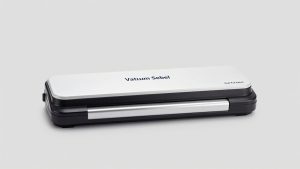
Key takeaways
-
Best overall candidate: FoodSaver FM2000.
-
Best for integrated bag preparation: FoodSaver FM2100.
-
Best for adjustable vacuum control: NESCO VS-12 Deluxe.
-
Best for compact kitchens: FoodSaver V2244.
-
Best for everyday food preservation: Anova Precision Vacuum Sealer Pro.
-
Best for smaller compatible bags: NutriChef PKVS18BK.
The best vacuum sealer for dry aging combines accessible manual controls, reliable heat sealing, and compatibility with breathable aging membranes. The FoodSaver FM2000 is a practical starting point, while NESCO and other alternatives offer additional flexibility for home cooks preparing large cuts of premium beef.
Best vacuum sealer for dry aging at a glance
Dry-aging bags work differently from conventional food preservation bags because their specialized membranes permit moisture transfer during aging. Choosing a suitable vacuum sealer therefore requires more attention to manual controls, sealing compatibility, and bag placement than maximum suction pressure.
A simple external vacuum sealer with a manually locking lid is generally the most practical starting point for UMAi Dry bags. More advanced machines can also be considered, provided their operating controls and sealing elements support the specific aging membrane.
Quick verdict:
-
Best overall candidate: FoodSaver FM2000.
-
Best for integrated bag preparation: FoodSaver FM2100.
-
Best for adjustable vacuum control: NESCO VS-12 Deluxe.
-
Best for compact kitchens: FoodSaver V2244.
-
Best for everyday food preservation: Anova Precision Vacuum Sealer Pro.
-
Best for smaller compatible bags: NutriChef PKVS18BK.
These recommendations distinguish machines that closely match the bag manufacturer’s recommended design from alternatives that require additional compatibility checks.
Quick comparison of the six vacuum sealers
The following machines offer different combinations of manual operation, bag preparation features, and conventional food preservation capabilities. Their suitability for dry aging depends on the selected membrane, available vacuum assistance accessories, and the manufacturer’s specific operating instructions.
| Vacuum sealer | Best for | Key advantage | Compatibility consideration |
|---|---|---|---|
| FoodSaver FM2000 | Most home users | Simple manual operation | Matches recommended sealer design |
| FoodSaver FM2100 | Regular meat preparation | Integrated roll storage | Confirm membrane width |
| NESCO VS-12 Deluxe | Adjustable suction | Manual seal and pulse controls | Test specialty membrane |
| FoodSaver V2244 | Compact kitchens | Simple lid-and-latch design | Limited advanced controls |
| Anova Precision Vacuum Sealer Pro | Multipurpose preservation | Pulse and double sealing | Confirm third-party bag compatibility |
| NutriChef PKVS18BK | Smaller compatible bags | Compact external design | Restricted sealing width |
How the products were selected
Selection prioritizes the operating characteristics that matter specifically when handling breathable aging membranes rather than ordinary vacuum bags. Manufacturer specifications, dry-aging bag recommendations, and independent vacuum sealer evaluations inform the comparison, without claiming original detailed research.
The main evaluation criteria include:
-
Manual control over air extraction and sealing.
-
Compatibility with specialized aging membranes.
-
Accessible vacuum channels.
-
Suitable sealing bar width.
-
Ability to accommodate large beef cuts.
-
Conventional food preservation versatility.
-
Cleaning and maintenance requirements.
Direct dry-aging compatibility takes priority over advanced automation. A machine that performs exceptionally well with ordinary freezer bags may still require adjustments when handling smooth, breathable aging membranes.
Top six vacuum sealers for dry aging beef
The most effective vacuum sealer for dry aging is not necessarily the most powerful or expensive model. Machines with accessible sealing channels and straightforward manual controls can be easier to use with specialty membranes than fully automated appliances designed exclusively for conventional food packaging.
FoodSaver FM2000 – Best overall candidate
The FoodSaver FM2000 closely follows the manual external-sealer design recommended by UMAi Dry for applying breathable aging membranes. Its straightforward operation makes it an attractive starting point for beginners who want to prepare large beef cuts without investing in unnecessary automation.
Key features:
-
External channel-style vacuum system.
-
Manual lid operation.
-
Automatic vacuum and seal function.
-
Separate sealing control.
-
Removable drip tray.
-
Compatibility with standard FoodSaver storage bags and rolls.
Why it stands out
The FM2000’s greatest advantage is its relatively simple operating design. Specialty dry-aging membranes may require a vacuum assistance strip to establish an airflow pathway through the bag opening.
Unlike highly automated vertical sealers, manually operated horizontal machines generally provide better access to the sealing area.
The FM2000 also remains useful after aging is complete. Owners can use conventional vacuum bags to package appropriately prepared steaks for freezer storage.
Its limited advanced settings may be inconvenient for delicate foods, but extensive pressure customization is not necessarily required when applying dry-aging membranes.
Pros:
-
Straightforward operating controls.
-
Accessible vacuum channel.
-
Closely matches the recommended sealer design.
-
Useful for everyday food preservation.
-
Established accessory ecosystem.
Cons:
-
Limited suction adjustment.
-
No integrated bag roll storage.
-
Exact membrane compatibility should be confirmed.
Buy if: You want a straightforward machine primarily for specialty aging bags and occasional meat preservation.
Skip if: You regularly package delicate foods and require dedicated pulse control.
FoodSaver FM2100 – Best for integrated bag preparation
The FoodSaver FM2100 offers a similar external vacuum sealing approach while adding integrated bag preparation features. Its built-in roll storage and cutting mechanism make it particularly attractive to households that regularly purchase large cuts of beef and prepare customized freezer portions.
Key features:
-
External vacuum sealing mechanism.
-
Manual locking system.
-
Integrated bag roll storage.
-
Built-in bag cutter.
-
Separate heat-sealing control.
-
Accessory compatibility for additional preservation tasks.
Why it stands out
The FM2100 is particularly useful for buyers who intend to use their vacuum sealer throughout the entire meat preparation workflow.
Although specialized dry-aging bags are purchased separately, ordinary bag rolls can be useful when packaging finished portions for freezing.
The integrated cutter reduces the need for scissors when preparing custom-length storage bags.
For example, households purchasing an entire striploin can use the specialty aging membrane for the aging stage and compatible conventional packaging for subsequent freezer storage.
The primary limitation is that integrated roll storage does not automatically establish compatibility with breathable membranes. The aging bag’s opening must still fit the sealing area correctly.
Pros:
-
Convenient integrated bag cutter.
-
Accessible horizontal sealing area.
-
Useful for frequent meat portioning.
-
Established FoodSaver accessory system.
-
Straightforward operating design.
Cons:
-
Larger than basic external sealers.
-
Limited advanced pressure customization.
-
Specialty aging bags require separate purchase.
Buy if: You regularly prepare and package large quantities of meat.
Skip if: You prefer the smallest possible appliance or already own a suitable manual sealer.
NESCO VS-12 Deluxe – Best for adjustable vacuum control
The NESCO VS-12 Deluxe combines a manually locking lid with adjustable vacuum pressure and multiple heat-sealing options. These features make it a promising candidate for experienced home cooks who want greater control when preparing specialty aging membranes and conventional food storage bags.
Key specifications:
-
Motor power: 130 watts.
-
Manufacturer-rated vacuum: 25.1 inHg.
-
Maximum supported conventional bag width: 11.8 inches.
-
Vacuum settings: Normal and Gentle.
-
Manual pulse vacuum control.
-
Dry, Moist, and Double sealing options.
-
Integrated roll storage and cutter.
Why it stands out
The VS-12 provides greater control over suction than many basic vacuum sealing appliances. Its pulse function allows users to manage air extraction manually, while its separate sealing control offers flexibility when preparing different packaging materials.
This is useful when the objective is establishing membrane contact rather than removing every possible air pocket.
Its optional double-sealing feature also provides additional flexibility for conventional freezer packaging.
However, a double seal designed for ordinary bags should not be assumed to satisfy the specific bonding requirements of every dry-aging membrane. Follow the membrane manufacturer’s instructions and confirm compatibility before purchasing the machine specifically for aging.
Pros:
-
Adjustable vacuum pressure.
-
Dedicated manual sealing function.
-
Optional double heat seals.
-
Wide conventional bag compatibility.
-
Integrated bag preparation accessories.
Cons:
-
More settings to learn.
-
Larger countertop footprint.
-
Model-specific dry-aging validation remains limited.
Buy if: You want adjustable vacuum operation for multiple food packaging applications.
Skip if: You only need a simple machine for occasional specialty membrane application.
FoodSaver V2244 – Best for compact kitchens
The FoodSaver V2244 provides a straightforward external sealing system with dedicated vacuum and heat-sealing controls. Its simple construction makes it particularly appealing to households with limited appliance storage space or buyers who prefer fewer operating settings during meat preparation.
Key features:
-
Compact horizontal construction.
-
Separate Seal button.
-
Automatic Vacuum & Seal function.
-
Manual lid operation.
-
External accessory compatibility.
-
Conventional vacuum bag and roll support.
Why it stands out
The V2244 follows the uncomplicated operating approach associated with traditional channel-style sealers.
Independent testing by TechGearLab found it effective for conventional food vacuum sealing, although some sealing tasks took longer than competing machines.
For dry-aging applications, maximum operating speed is less important than compatibility and control. A slower machine can still be suitable when preparing individual large cuts rather than processing dozens of packages consecutively.
The V2244 deserves consideration for buyers who want a simple appliance without integrated roll storage or extensive electronic settings.
As with the FM2000, confirm that the selected aging bag and vacuum assistance accessory can be used with its sealing system.
Pros:
-
Compact construction.
-
Accessible sealing controls.
-
Straightforward operation.
-
Independent conventional sealing evidence.
-
Suitable for occasional food preservation.
Cons:
-
Limited advanced controls.
-
Slower sealing in some conventional food tests.
-
No integrated roll preparation system.
Buy if: Kitchen storage space is limited and simplicity matters.
Skip if: You frequently prepare large batches requiring advanced vacuum adjustments.
Anova Precision Vacuum Sealer Pro – Best for everyday versatility
The Anova Precision Vacuum Sealer Pro combines adjustable vacuum operation, integrated bag preparation, and double heat sealing in a multipurpose countertop appliance. It is particularly attractive to sous vide enthusiasts who also want to explore specialty dry-aging applications after confirming compatibility.
Key features:
-
External vacuum sealing system.
-
Dedicated Dry and Moist settings.
-
Manual Pulse Vacuum function.
-
Separate Seal function.
-
Double heat-sealing elements.
-
Integrated bag storage and cutter.
-
One-handed locking mechanism.
Why it stands out
The Pro offers considerable flexibility for ordinary food preservation and cooking preparation.
Its manual pulse mode allows users to regulate air extraction, while its separate sealing control provides alternatives to relying exclusively on automatic vacuum cycles.
These capabilities are promising when evaluating specialty membrane applications.
However, direct compatibility with UMAi Dry bags has not been established by the cited Anova product documentation. Its double-sealing system is designed primarily around conventional vacuum packaging requirements.
Buyers should therefore confirm membrane compatibility with the relevant manufacturers rather than purchasing solely because the machine performs well with standard bags.
Pros:
-
Flexible manual controls.
-
Integrated bag preparation.
-
Double heat-sealing capability.
-
Useful for sous vide cooking.
-
Strong multipurpose functionality.
Cons:
-
Specialty membrane compatibility remains conditional.
-
More advanced than necessary for occasional aging.
-
Requires additional countertop space.
Buy if: You want a versatile food preservation machine and can verify specialty bag compatibility.
Skip if: Dry-aging membrane application is your only purchasing priority.
NutriChef PKVS18BK – Best for smaller compatible bags
The NutriChef PKVS18BK is a compact external vacuum sealer offering selectable food modes and accessible electronic controls. Its relatively simple construction makes it worth considering for general preservation, although buyers must carefully evaluate sealing dimensions before purchasing specialty dry-aging membranes.
Key features:
-
External vacuum extraction.
-
Dry and Moist operating modes.
-
Heat-sealing mechanism.
-
Electronic control panel.
-
Compact countertop design.
-
LED operating indicators.
Why it stands out
NutriChef’s compact design is useful for households that do not want a large food preservation appliance.
The manufacturer describes the PKVS18BK as a channel-style vacuum sealer, making its basic operating principle relevant to specialty membrane applications.
However, bag width represents an important limitation. Published information concerning supported bag dimensions is not entirely consistent across manufacturer and retailer listings.
Large ribeye and striploin aging bags may exceed the usable sealing area unless the bag manufacturer specifies an appropriate application technique.
The PKVS18BK is therefore a conditional alternative rather than the strongest first purchase for large dry-aging projects.
Pros:
-
Compact countertop footprint.
-
Simple electronic controls.
-
Dedicated moisture settings.
-
Useful for ordinary food storage.
-
Convenient for smaller compatible packages.
Cons:
-
Bag width limitations require verification.
-
Limited independent dry-aging performance evidence.
-
Less suitable for oversized beef cuts.
Buy if: You primarily need a compact conventional sealer and have confirmed membrane dimensions.
Skip if: You regularly prepare large whole ribeye or striploin sections.
Dry-aging bags vs conventional vacuum sealing bags
Understanding packaging differences is essential before choosing a vacuum sealer for meat aging. Conventional vacuum bags are designed to restrict exposure to surrounding air, whereas specialty dry-aging membranes permit controlled moisture transfer and support a fundamentally different aging environment.
| Feature | Specialty dry-aging bags | Conventional vacuum bags |
|---|---|---|
| Primary purpose | Bag-assisted dry aging | Food preservation and wet aging |
| Moisture transfer | Permeable | Designed to restrict transfer |
| Oxygen permeability | Specialized membrane properties | Typically oxygen-barrier construction |
| Surface drying | Supported under appropriate conditions | Limited |
| Sealing requirements | Membrane-specific | Conventional heat sealing |
| Typical application | Large beef cuts | Food portions and freezer storage |
Why ordinary vacuum bags cannot replace dry-aging membranes
Standard vacuum bags are designed to retain food moisture while limiting exposure to surrounding air. This makes them appropriate for conventional food preservation but unsuitable as direct replacements for breathable membranes intended to facilitate moisture loss during the dry-aging process.
Leaving beef inside ordinary vacuum packaging does not reproduce traditional dry-aging conditions.
Wet aging and dry aging differ in moisture loss, environmental conditions, and resulting flavor characteristics.
A powerful vacuum sealer cannot overcome the fundamental limitations of an inappropriate bag material.
Always purchase packaging specifically designed for the intended aging method.
Why maximum suction pressure is not the main priority
Specialty dry-aging membranes do not require the same packaging characteristics as traditional oxygen-barrier vacuum bags. The objective of applying a breathable membrane is to establish suitable contact with the meat surface according to the bag manufacturer’s instructions.
UMAi Dry specifically explains that small residual air pockets do not necessarily indicate unsuccessful membrane application.
This changes how buyers should evaluate vacuum sealers.
Rather than prioritizing the highest advertised pressure rating, consider whether the machine provides accessible controls and a practical way to establish membrane contact.
How to choose a vacuum sealer for dry aging
Choosing a suitable machine begins with identifying the exact dry-aging membrane you intend to purchase. Once the bag manufacturer’s requirements are established, compare sealing bar dimensions, operating controls, appliance construction, and additional features that may benefit other kitchen tasks.
What makes the best vacuum sealer for dry aging compatible?
Compatibility depends on several interacting factors, including membrane construction, the machine’s extraction mechanism, sealing element design, and any required airflow assistance accessory. Buyers should verify these characteristics before committing to a particular appliance or purchasing expensive cuts of beef.
Important considerations include:
-
Manually accessible sealing channel.
-
Separate heat-sealing control.
-
Suitable sealing bar width.
-
Compatible membrane material.
-
Appropriate vacuum assistance accessories.
-
Manufacturer-supported sealing procedure.
A manual external vacuum sealer generally provides a practical starting point for UMAi Dry applications.
Highly automated appliances may be more difficult to configure because their sensors and automatic operating sequences are designed around conventional packaging.
Check sealing bar width before buying
Large beef cuts require specialty bags with sufficiently wide openings to accommodate their shape. A compact vacuum sealer may work well for everyday food portions but provide insufficient usable sealing width for certain ribeye, striploin, or other large-cut aging membranes.
Compare the usable sealing width against the dimensions specified by the bag manufacturer.
Do not rely exclusively on the machine’s overall width because its actual heating element may be considerably shorter.
Avoid improvised sealing techniques unless explicitly supported by the membrane manufacturer.
Prioritize accessible manual controls
Manual controls allow users to manage extraction and sealing independently rather than relying entirely on automated cycle completion. This flexibility is particularly valuable when working with specialty packaging materials that behave differently from the embossed bags supplied with most external vacuum sealers.
Useful controls include manual sealing, pulse vacuum, and cycle cancellation.
However, these features do not guarantee compatibility with every membrane.
A basic lid-and-latch model supported by the bag manufacturer may be a better purchase than a sophisticated appliance with unverified compatibility.
Food safety considerations for home dry aging
Dry aging involves holding raw beef under controlled conditions for an extended period, making food safety more important than the vacuum sealer itself. A suitable membrane does not replace appropriate refrigeration, hygienic handling, temperature monitoring, or reliable control of the aging environment.
Aging should not be attempted in a refrigerator that cannot maintain the conditions specified by the product manufacturer.
Important precautions include:
-
Use appropriate fresh beef from a reliable supplier.
-
Verify refrigerator temperatures with an independent thermometer.
-
Maintain suitable airflow.
-
Prevent cross-contamination with other foods.
-
Follow the membrane manufacturer’s validated instructions.
-
Avoid extending aging periods based solely on appearance or smell.
If your equipment cannot reliably maintain the required environment, purchasing professionally dry-aged beef is the safer alternative.
Frequently asked questions
Dry-aging equipment raises several practical questions concerning sealing compatibility, specialized bags, refrigeration, and alternative equipment. Understanding these distinctions can prevent unnecessary appliance purchases and reduce the likelihood of using unsuitable packaging for an extended meat-aging project.
Do you need a vacuum sealer for dry aging beef?
A vacuum sealer is not essential for every dry-aging method. Traditional controlled aging cabinets do not necessarily require bags, while certain specialty membrane manufacturers provide application techniques that do not depend on an external vacuum sealing appliance.
If purchasing UMAi Dry products, consult its current instructions to determine whether a supported no-sealer method is available.
A vacuum sealer remains useful for subsequent conventional freezer packaging.
Can a chamber vacuum sealer work with dry-aging bags?
Some specialty membranes can be applied using compatible chamber vacuum sealers, but successful operation depends on the specific machine and packaging material. Chamber systems may require different operating adjustments from conventional channel-style appliances, making universal compatibility difficult to assume.
UMAi Dry acknowledges that chamber sealers can be used but may require additional practice.
Buying an expensive chamber machine exclusively for dry aging is generally unnecessary when a suitable manual external model is available.
Can dry-aged beef be vacuum-sealed and frozen?
Conventional vacuum packaging can be useful after a properly controlled dry-aging process has been completed. Appropriately prepared portions can be packaged for frozen storage using compatible food preservation bags rather than the breathable membrane used during the aging stage.
Use safe handling procedures and freeze the prepared portions promptly.
Vacuum packaging helps preserve frozen food quality but cannot make improperly aged meat safe to consume.
Conclusion
The FoodSaver FM2000 is a practical starting point for specialty dry-aging membranes, while the NESCO VS-12 offers greater control for multipurpose packaging. Prioritize verified bag compatibility, accessible sealing controls, and reliable refrigeration rather than purchasing the machine with the strongest advertised suction.
More from Amazon
Programs that pair well with the guide above. Offers and eligibility are set by Amazon and may change.
Set up recurring deliveries of everyday items on eligible products. Terms and savings are set by Amazon.
Explore Subscribe & SaveCollect the home and kitchen items you want in one registry that guests can shop from.
Create a wedding registryFree shipping on eligible items, Prime Video and more. Eligible new members can start with a free trial.
Start a Prime free trialAudiobooks and podcasts to listen to on the go. Eligible new members can start with a free trial.
Try Audible freeAs an Amazon Associate we earn from qualifying purchases.