Our Top Picks


A big chef knife earns its place for cabbage, squash and piles of onions, yet much of weekly meal prep is smaller work. Garlic needs peeling and mincing, peppers need their cores removed, and apples need wedging. A petty knife, the Japanese utility knife sized between a paring knife and a chef knife, handles that middle ground with far more control than a long blade can offer.
This guide compares five petty and utility knives from established makers, from a plain five inch workhorse to layered Japanese blades with fine edges. Each one is a single knife, not a set, and each suits vegetable prep and the small jobs that fill a meal prep session.
As an Amazon Associate, we earn from qualifying purchases.
Quick answer
For most home cooks, the Shun Classic Blonde Master Utility brings a keen VG-MAX edge and a longer blade that covers both board work and in hand trimming. Choose the MAC Professional five inch model for a thin, light blade, the Sakai Takayuki petty for a classic 150 mm shape, and the Yoshihiro or Shun Premier for refined steel and finish.
How to choose
Blade length shapes everything. Petty knives usually run from about 120 mm to 150 mm, roughly five to six inches. A five inch blade feels nimble for peeling and coring in the hand. A 150 mm blade adds reach for slicing cheese, portioning cooked chicken or working through a melon on the board.
Think about where the knife will work. In hand jobs such as peeling apples and trimming sprouts favor a shorter, lighter blade. Board jobs such as mincing garlic and halving cherry tomatoes favor a longer blade with knuckle clearance to keep your fingers clear of the surface.
Steel decides how the edge behaves and how you maintain it. Hard Japanese steels such as VG-MAX and VG10 take a fine edge and hold it through many prep sessions, but they can chip if twisted against a hard pit or bone. AUS-10 and molybdenum alloy steels feel more forgiving and respond well to honing and whetstone care. Whichever steel you pick, plan on hand washing and prompt drying, since a dishwasher cycle is rough on fine edges and wooden handles.
Handle shape matters more on a small knife than on a big one, because your whole hand wraps close to the blade. Western handles suit a firm grip during board work. Traditional octagonal Japanese handles feel light and balanced for pinch grips and in hand work, and they suit left and right handed cooks alike.
Edge style is the final check. A plain edge gives clean slices and sharpens on a whetstone in the usual way. A serrated edge bites through tomato skin and crusty rolls, though it needs a different sharpening approach and leaves a rougher cut on delicate produce. Most kitchens do better with a plain edge as the main petty knife.
MAC Professional Paring and Utility Knife 5 Inch

The MAC Professional five inch paring and utility knife is the plain, purposeful pick in this group. MAC built its name on thin blades ground for smooth cutting, and this small model follows the same approach. The narrow blade slips around cores, peels fruit held in the hand and trims blemishes from vegetables without the bulk of a chef knife.
Control is the main strength here. You can choke up on the handle for detail work, guide the tip through a pepper to lift out the core, or make short draw cuts through a ripe tomato. The alloy steel blade and wood handle keep the knife light during a long session of peeling and trimming. It will not replace a chef knife for a halved cabbage, but as a daily small knife for produce and garnish work it covers the brief neatly.
Specs
- Blade length: 5 inches
- Blade material: Alloy steel
- Handle material: Wood
- Blade edge: Plain
- Construction type: Forged
- Item weight: 3.84 ounces
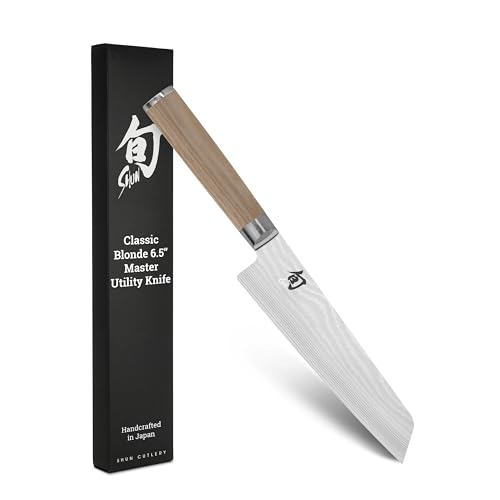
Shun Classic Blonde 6.5 Inch Master Utility Knife
The Shun Classic Blonde Master Utility is the longest knife in this guide at 6.5 inches, and that extra reach changes what a petty style knife can do. Shun describes it as a specialized tool for trimming vegetables and slicing meats and cheeses with precision, and the wider blade gives it presence for board work that a five inch blade handles less comfortably.
The blade pairs a VG-MAX cutting core with Damascus stainless steel cladding, ground to a precise 16 degree edge, so daily prep means clean cuts through peppers, cucumbers and cooked chicken, with a fine tip for detail work. The blonde Pakkawood handle has the D shape familiar from the Shun Classic line and sits securely in the hand. Choose it if your meal prep leans toward larger small jobs such as slicing cheese, portioning melon or trimming a pork tenderloin.
Specs
- Blade length: 6.5 inches
- Blade material: VG-MAX core with Damascus stainless steel cladding
- Handle material: Pakkawood
- Blade edge: Plain
- Item length: 12 inches
- Item weight: 7 ounces
- Dishwasher safe: No
Sakai Takayuki 15004 Petty Knife
The Sakai Takayuki 15004 petty knife offers the classic 150 mm petty shape from a long established Sakai maker, without layered cladding or decorative finish. The 5.9 inch blade is the size many cooks settle on: long enough for board work on small produce, short enough for peeling and trimming held in the hand.
At 100 grams the knife stays light through a full prep session, which matters when the work is repetitive, such as peeling a bag of carrots, trimming green beans or slicing mushrooms. The listing describes the blade as Japanese steel, and the plain profile keeps the focus on a clean, even edge rather than surface pattern. The listing gives little beyond size and weight, but the core shape and size are exactly what a petty knife should be.
Specs
- Blade length: 5.9 inches (150 mm)
- Item weight: 100 grams
- Knife type: Petty knife
- Steel: Japanese steel
Yoshihiro Inox AUS-10 Ice Hardened Petty Knife 6 Inch
The Yoshihiro Inox petty knife is forged from a single piece of ice hardened AUS-10 stainless steel. Yoshihiro explains that the ice hardening process quenches the steel at temperatures below zero to draw out hardness while keeping enough resilience for consistent work on garnish and firmer produce alike.
The six inch blade handles bigger jobs than a paring knife can manage, from slicing small fruits and vegetables to light work as a small chef knife. The traditional octagonal Shitan rosewood handle gives a light, balanced feel, and a wooden saya sheath is included to guard the edge. Pick this knife if you want a hand forged Japanese petty with a traditional handle. The AUS-10 steel is stain resistant, which eases daily care, though Yoshihiro still advises sharpening on Japanese water stones.
Specs
- Blade length: 6 inches (150 mm)
- Blade material: AUS-10 high carbon stainless steel, ice hardened
- Construction: Forged from a single piece of steel
- Handle: Octagonal Shitan rosewood
- Included accessory: Wooden saya sheath
- Stain resistant: Yes
Shun Premier 6.5 Inch Serrated Utility Knife
The Shun Premier serrated utility knife takes a different approach to the petty role. Its 6.5 inch blade combines serrated sections near the front and back of the edge with a fine plain section in the middle, so it can bite into tomato skin or a crusty roll and still finish a smooth slice through the soft interior.
The blade uses a VG-MAX core with 68 layer Damascus cladding, hand sharpened to a 16 degree edge, and the walnut PakkaWood handle follows the rounded Premier profile many cooks find comfortable during longer sessions. Shun describes the knife as made for trimming vegetables and slicing meats and cheeses, which matches the jobs where serrations help most: tomatoes, citrus and cured meats.
Choose it as a companion petty rather than your only small knife. Serrations shine on skins and crusts but leave a rougher cut on delicate herbs, and they need a tapered rod or professional care when the edge dulls.
Specs
- Blade length: 6.5 inches
- Blade material: VG-MAX steel with 68 layer Damascus cladding
- Handle material: Walnut PakkaWood
- Edge profile: Serrated front and back sections with a fine middle edge
- Edge angle: 16 degrees, hand sharpened
Who should skip
Skip a petty knife if your prep is mostly large volume chopping. A chef knife or santoku handles cabbage, squash and piles of onions with more knuckle clearance and weight, and a petty blade will feel slow for that work.
Skip the hard Japanese steels here if the knife will meet frozen food, bones or hard pits, or if it will be tossed in a drawer without a guard. Fine edges chip under twisting and impact, and a softer, thicker utility knife will forgive rough handling more readily. Skip the serrated Shun Premier as a sole small knife if you plan to sharpen at home on a flat stone, and skip the longer 6.5 inch models if your hands are small or your board space is tight.
FAQ
What is a petty knife used for in meal prep?
A petty knife covers the small, frequent jobs between paring and chopping: peeling and coring fruit, trimming vegetables, mincing garlic and herbs, slicing cheese and cooked meats, and portioning small proteins. It handles detail work that a chef knife feels clumsy doing.
Which petty knife size is right for home cooking?
A 150 mm blade, about six inches, is the most versatile size because it works both in the hand and on the board. A five inch blade suits cooks who mostly peel and trim in the hand, while a 6.5 inch utility blade suits cooks who want one compact knife for small board work as well.
How do I care for a Japanese petty knife?
Wash the knife by hand, dry it right away and store it in a sheath, on a magnetic strip or in a block slot so the edge stays guarded. Sharpen on a whetstone when honing no longer brings the edge back, and keep the blade away from bones and hard pits that can chip a fine edge.
Can a petty knife replace a paring knife and a chef knife?
A petty knife can cover most paring knife work, since it peels, cores and trims with a longer blade that also works on a board. It cannot replace a chef knife for large produce, heavy chopping or tasks that need knuckle clearance and blade weight.
Final verdict
A petty knife is the small blade that quietly handles most of meal prep, and the five picks here cover the main ways cooks use one. The Shun Classic Blonde Master Utility is the broadest single choice, with a 6.5 inch VG-MAX blade that moves from board work to trimming without feeling bulky. The MAC Professional is the nimble pick for in hand work, the Sakai Takayuki offers the classic 150 mm shape in a light, plain form, and the Yoshihiro adds a forged AUS-10 blade with a traditional handle and a saya. Add the Shun Premier serrated utility when tomatoes and crusty bread feature often in your weekly prep.
Product and ASIN Reference
| Product | ASIN |
|---|---|
| MAC Professional Paring and Utility Knife 5 Inch | B000N5FDQI |
| Shun Classic Blonde 6.5 Inch Master Utility Knife | B09J21V99K |
| Sakai Takayuki 15004 Petty Knife | B0013CZYD2 |
| Yoshihiro Inox AUS-10 Ice Hardened Petty Knife 6 Inch | B00BUAFVOY |
| Shun Premier 6.5 Inch Serrated Utility Knife | B004M42HIS |
FAQ
What is a petty knife used for in meal prep?
Which petty knife size is right for home cooking?
How do I care for a Japanese petty knife?
Can a petty knife replace a paring knife and a chef knife?
More from Amazon
Programs that pair well with the guide above. Offers and eligibility are set by Amazon and may change.
Set up recurring deliveries of everyday items on eligible products. Terms and savings are set by Amazon.
Explore Subscribe & SaveCollect the home and kitchen items you want in one registry that guests can shop from.
Create a wedding registryFree shipping on eligible items, Prime Video and more. Eligible new members can start with a free trial.
Start a Prime free trialAudiobooks and podcasts to listen to on the go. Eligible new members can start with a free trial.
Try Audible freeAs an Amazon Associate we earn from qualifying purchases.